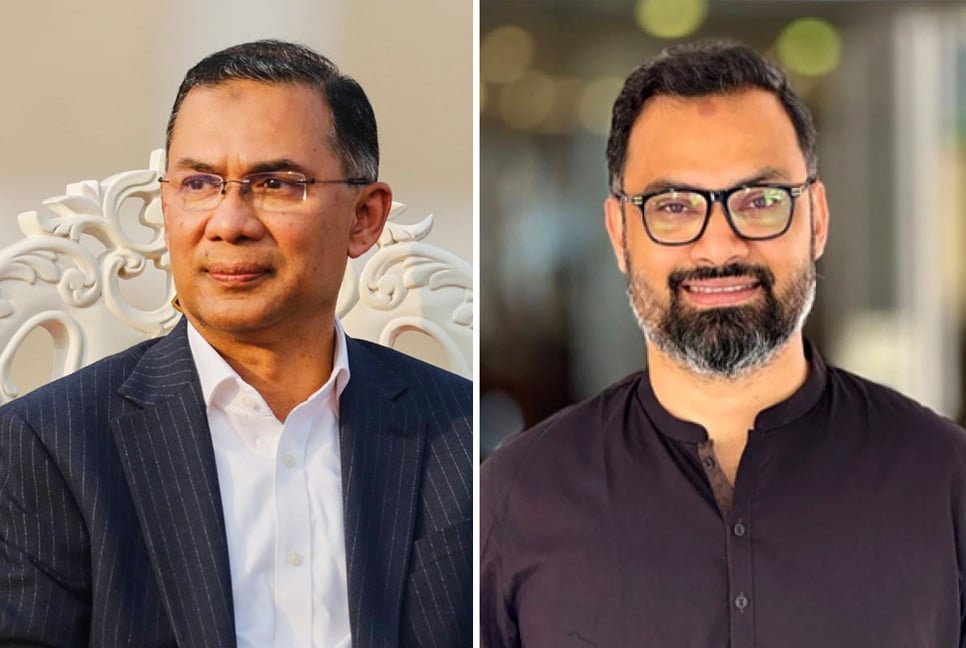
Across Bangladesh’s political horizon, countless figures have emerged, and just as many have disappeared. Some blazed with brilliance, while others were but brief sparks. Yet certain names remain permanently woven into the country’s history—shaped by adversity, perseverance, struggle, and visions for the future. In today’s political scene, Tarique Rahman is one such figure.
Public expectation of him, the anticipation that has gathered in the popular imagination about the future, and the medical crisis of his mother, Khaleda Zia—all these have combined to give the term “waiting” a new meaning in Bangladesh’s political lexicon.
Is Bangladesh truly waiting for Tarique Rahman? Yes—but this is not merely a matter of party politics. It encompasses political equilibrium, the lack of capable leadership, the trajectory of democratic advancement, and the emotional concern of a nation for an ailing mother. This reflection captures that reality, where political analysis, historical comparison, societal anticipation, and maternal sentiment converge into a single current.
Bangladesh currently stands at the threshold of a peculiar division.
Mutual respect is absent in the political arena, debate and reasoned discourse are scarce, and opposition politics has scarcely been practised for many years. Over the past 18 years, the ruling party’s political dominance has been so extensive that the need for alternative voices is now felt more acutely than ever. One-party tendencies never create lasting stability; rather, they sow the seeds of new crises. Today, the country faces a shortage of leadership capable of restoring balance to its multi-party democracy.
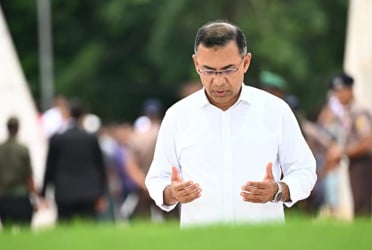
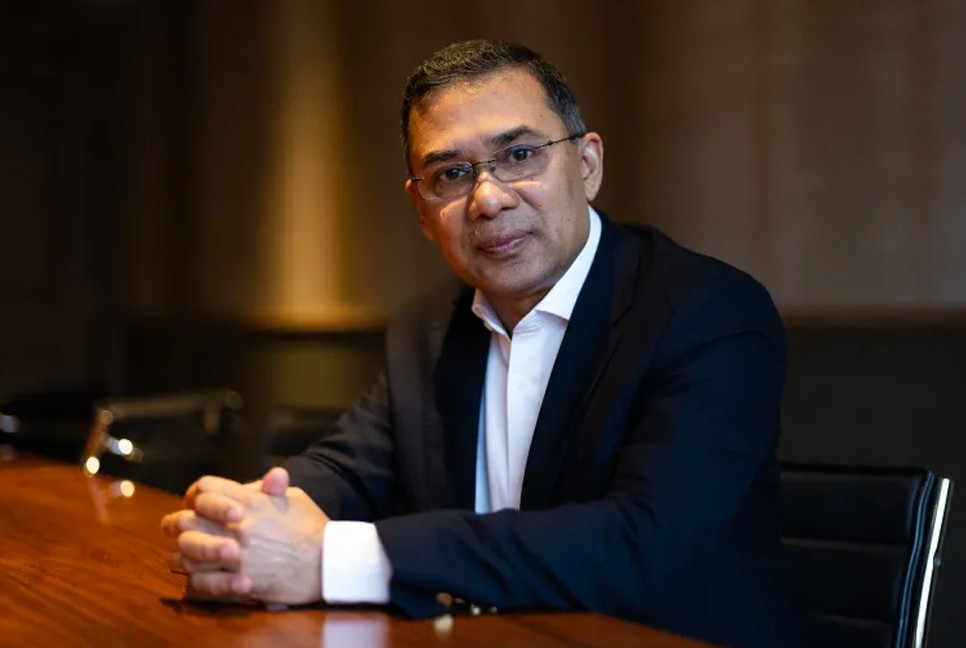
In addressing this crisis, public attention has naturally turned to Tarique Rahman, currently the acting chairman of the BNP. The expectations surrounding him extend beyond party organisation—they encompass hopes for a rebalanced national political landscape.
In the continuum of history, Tarique Rahman has become a symbol of political legacy. He is heir to a political heritage that contributed to Bangladesh’s multi-party democracy, market-oriented economy, and robust state institutions.
Ziaur Rahman’s political philosophy combined pragmatism with nationalism. Tarique Rahman has inherited this philosophy, but he emerges not merely as a successor, rather as a symbol of a new generation of leadership. His organisational role in rebuilding the BNP has been unparalleled. Between 2001 and 2006, he worked to strengthen the party’s structure, particularly at the grassroots level, integrating educated youth into politics, adopting modern communication methods, and introducing political training programmes. These initiatives established him as an inevitable prospect for future political leadership.
The political crisis of 2007 was one of Bangladesh’s most challenging periods. Under the pressure of a military-backed caretaker government, with arrests and harassment, every attempt was made to break him. Yet history shows that “leadership that does not falter in the storm ensures the future.” It is here that Tarique Rahman’s political character manifested most strongly.
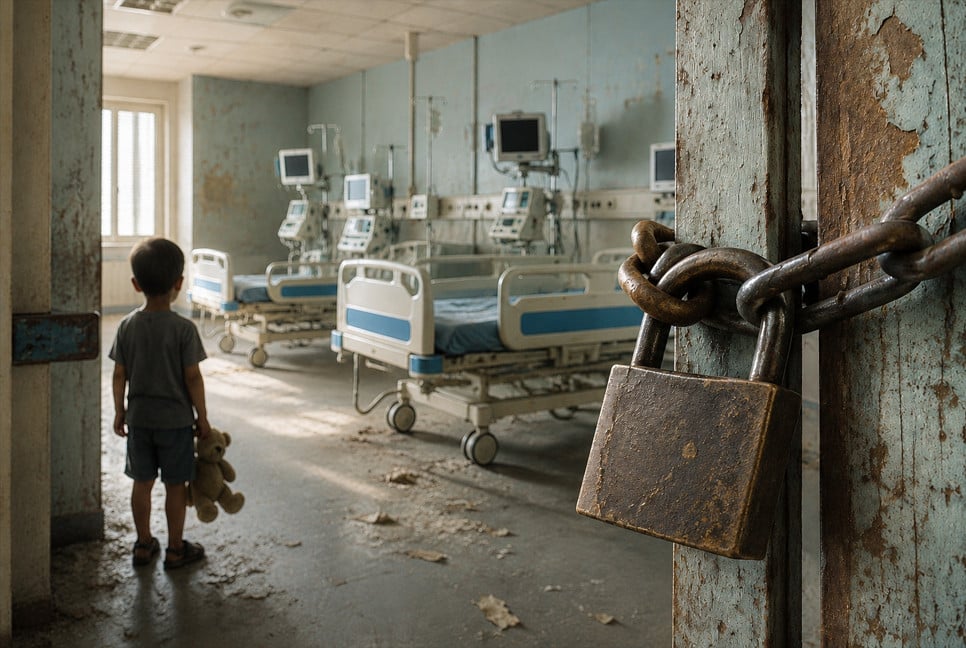
Khaleda Zia’s illness, a mother’s plea, and the nation’s collective sentiment have now become intertwined. Bangladeshis are deeply emotional in politics—this truth cannot be denied. To the people, Khaleda Zia is not only a three-time prime minister; she is a mother, a resilient woman, and a life-long fighter. She is gradually becoming physically weak on the hospital bed. According to medical professionals, she faces liver complications, kidney issues, scars from prolonged political persecution, and age-related frailty. These factors render her vulnerable and dependent. Her illness is no longer a private matter; it has become a national concern, eliciting empathetic public discourse. The people demand her proper treatment, recovery, and dignity. They wish for her to regain health swiftly and to continue providing courageous leadership in the nation’s difficult times. Above political divides, the prevailing sentiment is deeply human: a mother wishes to see her son, and wants him to stand by her.
A mother on her sickbed desires to see her child—this transcends politics; it is the language of the heart. When a national leader is unwell and the political field unstable, the country naturally looks to his successor. This successor currently lives in exile in London for medical treatment. The separation between two worlds, a mother’s plea, and a nation’s expectation converge at a single point. Thus, the unprecedented popular support for Tarique Rahman today embodies both reality and emotion.
Why do people wait for him? The answer lies in the prolonged political one-sidedness that has driven the public to seek new leadership. Tarique Rahman is the most powerful symbol to fill this void. His political discourse aligns with contemporary needs, emphasising the restoration of democracy, transparent elections, rule of law, youth empowerment, and protection of state resources. He directs party policy from afar, demonstrating in the digital age that political power is not constrained by geography but is effectively exerted through vision and determination.
Whether one favours him or not, one fact is undeniable: in Bangladesh’s present political context, Tarique Rahman is the most suitable commander and the country’s most capable future statesman. The public also sees him as a leader capable of countering conspiracies against the nation. Bangladesh resembles a vast river whose current has halted; if a sandbar rises midstream, the flow loses direction. Similarly, the country’s politics today seem directionless. At that very moment, like a flash of lightning in the distant sky, a call seems to pierce through: “Return, Tarique Rahman, the country awaits you.”
In villages, tea stalls, urban reading rooms, rickshaw routes, and expatriate gatherings, one name is repeatedly spoken: Tarique Rahman. People see him as a symbol of change.
Khaleda Zia’s illness has created a unique political situation. A majority of the populace now says: let Tarique Rahman return, at least to be by his mother’s side. This is not mere sentiment; it is a human appeal and, simultaneously, a political question. Political vengeance and security risks notwithstanding, he is set to return on 25 December, ending 17 years of exile, drawn by the call of the people and the land. His return will be a moment of immense pride and honour.
Tarique Rahman represents a political generation that believes in technology, demands transparency in economic development, seeks accountability in governance, and reconciles nationalism with modernity. The current political framework of Bangladesh clearly lacks such leadership. Why is his leadership needed? The answer is straightforward: two decades of political experience, thorough understanding of grassroots politics, exposure to global politics from abroad, and deep knowledge of his family’s political heritage and struggle. He has become a symbol of public hope and aspiration.
All of Bangladesh waits for Tarique Rahman. The rationale spans three levels: firstly, political context—strong leadership is needed, balance must be restored in democracy, and citizens are weary of one-sided rule; secondly, social context—Khaleda Zia’s illness evokes profound empathy, a mother’s call for her child; thirdly, psychological context—the nation seeks a hero in times of crisis, and Tarique Rahman has assumed that role.
His return will bring radical change to Bangladesh’s politics: party reconstruction, revitalisation of democratic politics, reinstatement of multi-party competition, increased public trust in elections, greater youth participation, and emergence of new leadership on the international stage. The river of waiting, the current of time, and the appeal for return have merged into one. Bangladesh now stands as a vast vessel of anticipation.
All eyes are fixed in the same direction, towards one name, one return. This waiting is not merely political; it is human, social, national, and generational. Khaleda Zia lies in hospital, a mother’s eyes brimming with tears. She calls for her son, and a nation echoes that call. People say: return, Tarique Rahman—for your mother, your party, your country.
Such moments are rare in political history, where a leader’s return, a mother’s recovery, a nation’s hope, and the revival of a political system converge in a single thread. Bangladesh stands at that very threshold today.
Every citizen seems to intone silently: the whole nation waits for Tarique Rahman.
Author: Vice-Chancellor, Naogaon University.