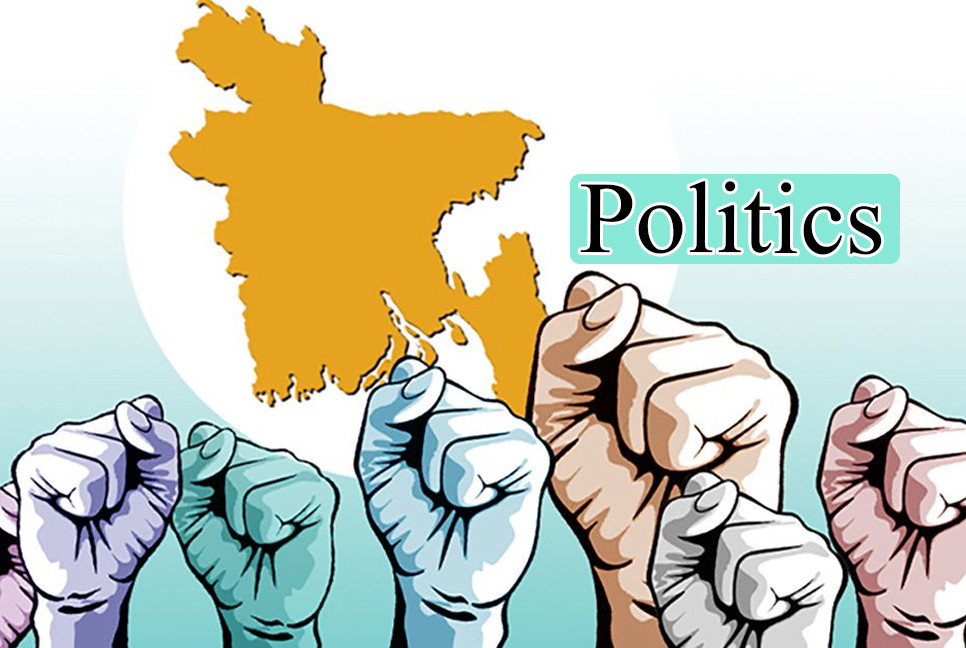
Political parties are engaged in intense last-minute negotiations to finalize candidates for all 300 constituencies ahead of the 13th National Parliament election scheduled for February 12, with opposition alliances facing growing strain over seat-sharing.
The BNP and its long-time allies are struggling to resolve disagreements despite multiple rounds of talks. BNP has so far announced potential candidates for 272 constituencies but has yet to settle nominations for the remaining seats, triggering frustration among allied parties.
Jamaat-e-Islami, meanwhile, has declared candidates for all 300 constituencies under its “one box policy,” aiming to project itself as an alternative political force through an eight-party alliance. However, internal disputes persist, as smaller parties remain unhappy with Jamaat’s dominant share of seats. Despite several meetings, no breakthrough has been achieved.
According to election policy, even if registered parties are part of an alliance, will have to vote on their own symbols. For this, the parties are in last-minute calculations to finalize candidates.
Those concerned said that despite various concerns including security, the election spirit is blowing across the country. The parties have started related work including selling formal nomination forms. Even if they do not receive final nominations, the candidates are busy attracting the attention of voters with various programs.
The entire country is now election-oriented. More than fifty political parties, big and small, are active in the field to participate in the elections.
In addition, those interested in becoming independent candidates have also started mass communication in their respective parliamentary constituencies. With the Awami League out of the elections, the parties are now desperate to get a place in a big alliance. But heat, anger and arrogance are being formed in one alliance after another over seat demand, power equation and leadership, which have complicated the entire opposition arena.
At least five big alliances are active around the elections. The parties that are not yet in an alliance are trying to enter the electoral battle under the shadow of a big alliance in some way.
However, the biggest obstacle is the distribution of seats. The small parties want to get more seats than they do. On the contrary, the big parties are reluctant to give up more constituencies. In such a situation, anger arises, and some parties are leaving the alliance.
BNP is in the most trouble among the alliances before the elections. Disagreements over constituencies with like-minded parties that are united in the anti-Awami League movement have intensified. Although BNP has announced its own candidates for 272 constituencies, it is unable to decide on even half of the remaining 28. Such a situation has caused tension in the alliance.
The recent meeting between BNP and the Revolutionary Workers Party held in Gulshan ended in an uncomfortable atmosphere. The party's top leader Saiful Haque left the meeting venue in anger as the discussions were not satisfactory. The Labor Party has severed all ties with BNP after they fielded candidates for seats of its own interest. Labor Party Chairman Mostafizur Rahman Iran expressed regret that BNP had been dishonest.
According sources, Gono Odhikar Porishod is contacting the opposition alliance as well as BNP. Because, the party has not been able to reach an agreement with BNP. Party chief Nurul Haque Nur has also expressed his anger at BNP for not being assured of getting the constituencies as per demand.
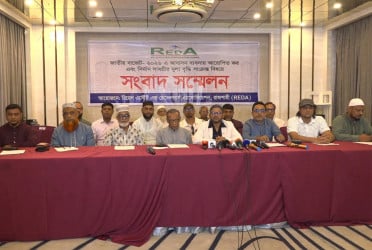
BNP's allies, who are worried about getting seats, held a meeting last week. Where representatives of 29 parties decided to part ways with BNP and form a new electoral alliance if the seats were not resolved. A 48-hour ultimatum was also given from there to resolve the problem.
Taking the decision of the allies seriously, BNP Secretary General Mirza Fakhrul Islam Alamgir and other top leaders held a meeting with the parties on Saturday. Where the overall political situation of the country, the upcoming elections, and mutual relations between the parties participating in the simultaneous movement, seat agreement and the security of leaders, and workers were discussed.
According to the meeting sources, BNP has informed that discussions will be held separately with each political party and misunderstandings will be put to an end. In this case, BNP had given concessions to partners and allies in 25 seats in the past, and the leaders of the parties hope that this time too it will be evaluated in the same way. The top leaders of the alliance parties believe that BNP is moving ahead with the policy of going it alone, ahead of the 13th parliamentary elections.
They said that looking at the situation it seems that BNP has adopted a strategy of cutting off friends, which is a suicidal decision for the party. In addition, at least 50 of the 272 seats declared by BNP have been protested. Local leaders and activists are constantly protesting demanding a change of candidate.
Regarding the alliance-instability, BNP standing committee member Nazrul Islam Khan said, "Discussions are continuing with those with whom we have been protesting. We hope that a solution will be found."
Stating that the new alliances are positive, he said, "Everyone is ready for free elections. Now the responsibility of political parties is important."
On the other hand, an alliance of eight parties including Jamaat-e-Islami, Islami Andolon is trying to emerge as an "alternative force" in politics. They have announced a "one box policy" - one candidate per constituency. But there is a deadlock there too. Small parties are angry if they want to give more seats to Jamaat. Two rounds of meetings to reach a compromise have not been resolved.
A leader of the alliance party said, "If everyone had agreed to make concessions, this deadlock would have been broken long ago."
The young leadership after the July Uprising is also not far behind. The 'Democratic Reform Alliance' has been formed with the NCP, AB Party and the State Reform Movement.
The NCP has already announced the names of candidates for 125 constituencies in the first phase. There is a possibility that more new parties will join it. They have also not reached a seat deal.
A section of the Jatiya Party has launched the 'National Democratic Front (NDF)' - an 18-party alliance. The left parties are also not far behind. The 'Democratic Union' has been formed with nine parties.
(Translated by Tanvir Raihan)