Failing to win a war is deeply painful, but losing a victory after it has been achieved is even more disgraceful and shameful than defeat. The blood-soaked, fire-forged victory of 1971, earned through the sacrifice of millions of martyrs, was not lost in a single day. It slipped away gradually, step by step, after victory was attained—each taking it into their own grasp as they could.
Yet those who fought with their lives in their hands never expected medals, titles or allowances. In those harsh days of war, with weapons in hand or by their side, they sang, “We fight to save a single flower.” In their eyes and faces there was only one choice—either death, or a new, incomparably beautiful country. There was no other option between the two.
They wondered whether, if they died, their bodies would reach their loved ones, or whether they would even find soil for a grave. And if they survived, how they would build and decorate the new country.
The long-awaited 16 December 1971 did arrive; the occupiers were defeated. The spring of victory came. Despite being crushed by the pain of losing countless comrades and relatives, they were overwhelmed with joy and filled their chests with hope.
Over time, however, they lost importance. The uninterrupted struggle of the masses, the sacrifices of millions of martyrs and the immense hardships endured by countless people began to fade. That spring of victory gradually turned into a “spring of tears”. Much of that hard-won triumph sank into quicksand, becoming a history of pain and deprivation. In some cases, even the realisation of losing that victory disappeared into oblivion.
Although the term “Liberation War” is repeatedly uttered, the priceless elements of its victory have grown dim. By turning victory into a political commodity rather than a matter of independence and sovereignty—reducing it to a “game of power”—the nation and its institutions have suffered. As a result, the country’s fate now spins in a vortex of severe complexity, shaken by the demonic screams and turbulence of politics.
The core principle of the Liberation War was to stand on self-reliance and move forward towards independent national development. The political leadership required to realise the promise of that blood-earned freedom was lacking from the very aftermath of victory. Moreover, after 16 December, the sudden emergence of so-called “Sixteen Division freedom fighters” became a recurring phenomenon. Consequently, the practice of history turned into partisan political practice—excessive praise and glorification of some, slander and denigration of others. The war fought jointly by ordinary people and the armed forces was successfully appropriated by a handful for themselves. The stark truth is that many of them—or their children—never set foot on the battlefield.
The crucial role of the middle class, who played a major part in the war, was never properly recorded. The trained armed forces were reduced merely to salaried state employees, effectively erased from history. There was even reluctance to acknowledge them as witnesses to the war. Yet, alongside the general population, Bengali soldiers, police, Ansar, EPR, air force and naval personnel built resistance against long-term exploitation, discrimination and repression. The Mukti Bahini was formed under the leadership of rebellious Bengali soldiers; they were its core military force.
Army, police, EPR and Ansar members stationed in East Pakistan did not wait for instructions to train freedom fighters. They organised local people and themselves fought on the front lines against Pakistani forces. To strengthen operations, East Bengal was divided into 11 sectors, each led by a sector commander—Major Ziaur Rahman, Major Khaled Mosharraf, Major Shafiullah, Major Chittaranjan Dutta, Major Mir Shawkat Ali, Wing Commander Bashar, Major Kazi Nuruzzaman, Major Abu Osman Chowdhury, Major Jalil and Colonel Taher. Later, three brigades—Z Force, K Force and S Force—were formed to intensify direct combat, alongside guerrilla training.
Guerrilla fighters systematically crippled the Pakistani forces by destroying rail lines and bridges and disrupting supply routes. The skilled leadership, tactics and military expertise of the sector commanders quickly turned the tide of war. Soldiers not only led combat but also inspired the masses to join the struggle. Trained fighters mobilised village youths, using resistance tactics to overwhelm Pakistani troops across the countryside. The inevitable outcome was the surrender of 93,000 Pakistani soldiers on 16 December 1971—the largest military surrender since the Second World War.
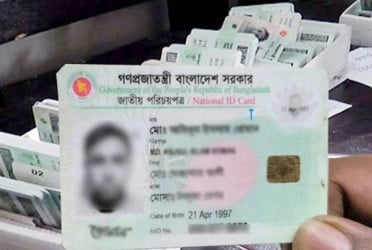
Yet this victory was claimed by a handful of politicians and their favourites, who became the self-appointed custodians of the war. Freedom fighter certificates were distributed, and many born long after the war obtained them fraudulently to gain benefits—ministerial posts, parliamentary seats, bureaucratic positions and allowances—without shame. Despite criticism and ridicule, they were not restrained.
After the interim government took office, some hoped for accountability. The Adviser for Liberation War Affairs, Farooq-e-Azam, Bir Protik, stated that action would be taken against those who obtained certificates without fighting. Reviews were promised into jobs obtained through freedom fighter quotas, including the recovery of illegally gained financial benefits.
This issue gained urgency during the anti-discrimination student movement, where freedom fighter quotas were a key concern. The National Freedom Fighters Council (JAMUKA) determined eligibility, and discussions arose about reviewing lists to restore rightful honour. Official data once listed over 183,000 gazetted freedom fighters, yet irregularities persisted. In 2021, a list named 147,537 individuals. Applications flooded in when opportunities reopened, even from ministers. In 2014, certificates of five secretaries were cancelled, sparking controversy and anti-corruption recommendations.
The Liberation War remains the most glorious chapter in national life. True freedom fighters wish only to see its dignity restored.
To reclaim the stolen glory of victory and uproot corruption, around 8,000 fake certificates have been cancelled. However, no action has been taken against those involved, nor has money received through allowances been recovered. This brings shame and anguish to genuine freedom fighters—while impostors feel none. That is why even senior officials sought fake certificates to extend service.
There was no shame even in the theft of gold from the Liberation War honour crests awarded to foreign friends. In reality, brass and mixed metals were used instead of gold. Investigations followed, cases were filed, and noise was made—but little changed.
In this non-political government’s tenure, many issues have been discussed. On this Great Victory Day, is it too much to hope for some resolution at last?
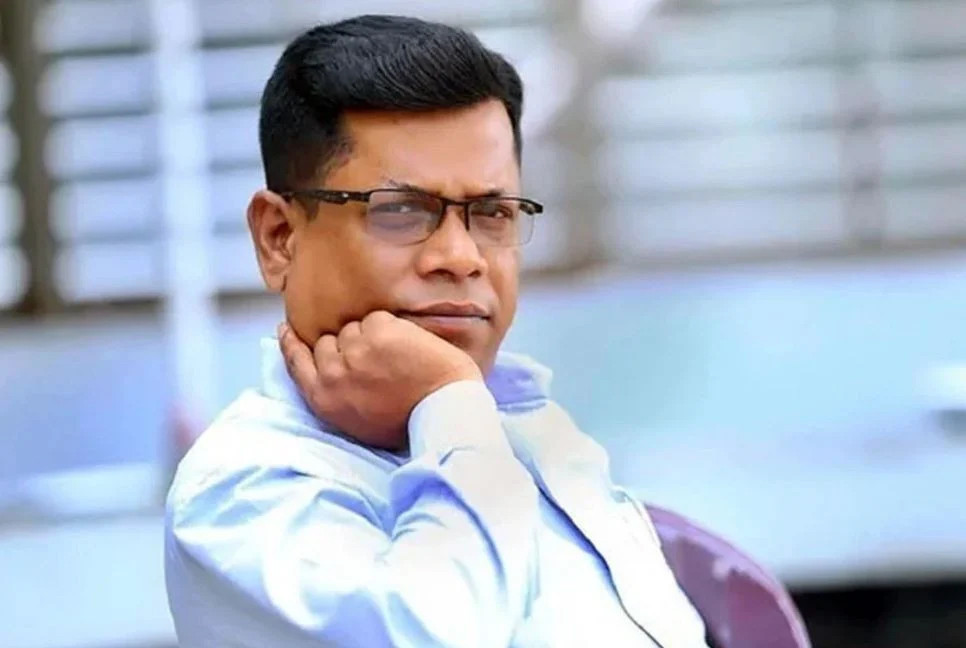
Author: Journalist and columnist; Deputy Head of News, Banglavision.