16 December, Victory Day, is an unforgettable and glorious day of heroism for the Bengali nation—the day we emerged as a brave people and announced to the world the name of an independent homeland called Bangladesh. Final victory was achieved on 16 December 1971 through the surrender of the Pakistani forces. Two days earlier, on 14 December, we liberated Sylhet. On 16 December, Shaheed President Ziaur Rahman and I were in Sylhet with Z Force and the 1st Bengal Regiment. That day, we were stationed at a tea garden in Sylhet when we received the news of victory.
16 December is the most joyous day for the Bengali nation. After nine months of a blood-soaked struggle for independence, we achieved our great victory. The joy and pride of breaking the chains of subjugation were immense. We were overjoyed that day. I consider myself fortunate to have taken part in the struggle for independence. When Ziaur Rahman declared independence, I was sitting beside him. I still possess a handwritten document from 1973, written by Ziaur Rahman himself, in which he stated that Captain Oli Ahmed played a leading role in the rebellion.
In 1971, I was a young officer serving in the Chittagong East Bengal Regiment. Being closely associated with Lieutenant Colonel Mujibur Rahman and Major Ziaur Rahman gave me the experience of performing a historic duty on the side of the people, despite being a member of the armed forces. The experience of uniting the East Bengal Regiment in support of the Liberation War and rebelling at the right moment—joining the war with arms and manpower—was truly thrilling. On the night of 25 March, as soon as news arrived of the Pakistani military crackdown in Dhaka, I was among the first to rebel against Pakistan under the leadership of Major Zia with the 8th Bengal Regiment. At the time, Colonel Abdur Rashid Janjua was the commanding officer of the regiment, with Major Ziaur Rahman as his deputy.
Members of the armed forces played a leading role in the 1971 Liberation War. Alongside them, students, workers, farmers and ordinary citizens fought heroically with their lives at stake, taking up arms to liberate Bangladesh. After the results of the 1970 elections, it became clear to us that the Pakistanis would not hand over power. We warned the elected leader accordingly, explaining that Pakistani generals feared losing control if he became prime minister. We also observed the arrival of new Pakistani regiments in then East Pakistan. By 1971, Bengali officers in the military were certain that a crackdown was imminent once Pakistani preparations were complete. We therefore informed Sheikh Mujibur Rahman of plans for rebellion as early as February, but after hearing us out, he said he did not require our assistance.
The 8th East Bengal Rebellion:
Following news of the crackdown in Dhaka, the soldiers of the 8th East Bengal Regiment rebelled under the leadership of Major Zia. This was not a spontaneous uprising but a planned and organised rebellion. The planning involved Lieutenant Colonel Mujibur Rahman Chowdhury of Golapganj, Sylhet, Major Ziaur Rahman and myself. When Pakistani forces attacked unarmed Bengalis in Dhaka on 25 March, I was in Chittagong with the 8th East Bengal Regiment. Colonel Janjua was killed at the outset of the rebellion. Upon returning to the barracks, Major Zia formally declared the revolt, with me by his side. We first seized the Kalurghat radio station in Chittagong, from where Major Ziaur Rahman proclaimed independence.
Memories of the War:
On the night of 13 April, Major Zia instructed me to go to Mirsarai to establish resistance against enemy forces advancing from Dhaka towards Chittagong. That night, I reached Mirsarai, 35 miles from Ramgarh, with two platoons of former EPR members and one platoon of newly trained freedom fighters. Our weapons included a three-inch mortar, a machine gun and a 75mm anti-tank gun. Using guerrilla tactics and with the support of local residents, we secretly constructed bunkers on both sides of the road and waited to lure the enemy into our trap.
Operation Mirsarai:
At dawn on 19 April, while inspecting preparations, I noticed that Platoon Commander Sirajul Islam and Platoon Havildar were missing from their bunkers and had them quickly returned. As we moved onto the Dhaka–Chittagong highway, we saw a microbus, followed by a three-tonne truck, and then a convoy of 20 military trucks carrying troops. Once the enemy entered our position, I opened fire. Using the borrowed 75mm anti-tank gun, I destroyed the rear truck. Havildar Siddiq fired mortars, blowing up three trucks at the front and centre. Most enemy soldiers were killed inside their vehicles. From 6:00 am to 10:00 pm, my company pinned down the enemy at Mirsarai. Later, another EPR platoon under Subedar Saidul joined us. During the battle, Havildar Siddiq was wounded and Lance Naik Abul Kalam was martyred by a mortar shell. Four other freedom fighters were injured. We killed 150 enemy soldiers and destroyed eight military vehicles—an achievement recognised as a major success of the Liberation War. For my bravery in this battle, the Government of Bangladesh awarded me the Bir Bikrom gallantry award.
On 10 April, under the plan of the provisional government of Bangladesh, Sector No. 1 was formed with Major Ziaur Rahman as its commander, covering Chittagong, the Chittagong Hill Tracts and up to the Feni River. Ziaur Rahman served as sector commander until 25 June, leading numerous battles across Chittagong, Noakhali, Rangamati, Mirsarai, Ramgarh and Feni. On 26 June, Sector No. 11 was formed under his command, covering most of Mymensingh–Tangail and parts of the Jamuna river region. On 7 July, Z Force Brigade was formed with the 1st, 3rd and 8th East Bengal Regiments and the 2nd Field Artillery Battery, commanded by Major Ziaur Rahman.
During the Liberation War, Ziaur Rahman planned and directed many historic battles, including those at Kamalpur, Belonia, Nakshi BOP, Bahadurabad, Dewanganj, Chilmari amphibious operation, Haji Para, Chhotokhal, Gowainghat, Tengratila, Gobindaganj, Salutikar airfield, Dhalai and Dhamai tea gardens, Zakiganj, Ali Maidan, MC College, Bhanugach, Kanaighat, Boyampur and Phultala tea garden, among many others. Safeguarding the liberated northern regions was a key responsibility of Ziaur Rahman and Z Force. Through his leadership, several areas were liberated and training centres established. Ziaur Rahman played a leading role in the Liberation War and was awarded the Bir Uttam for his exceptional bravery and leadership.
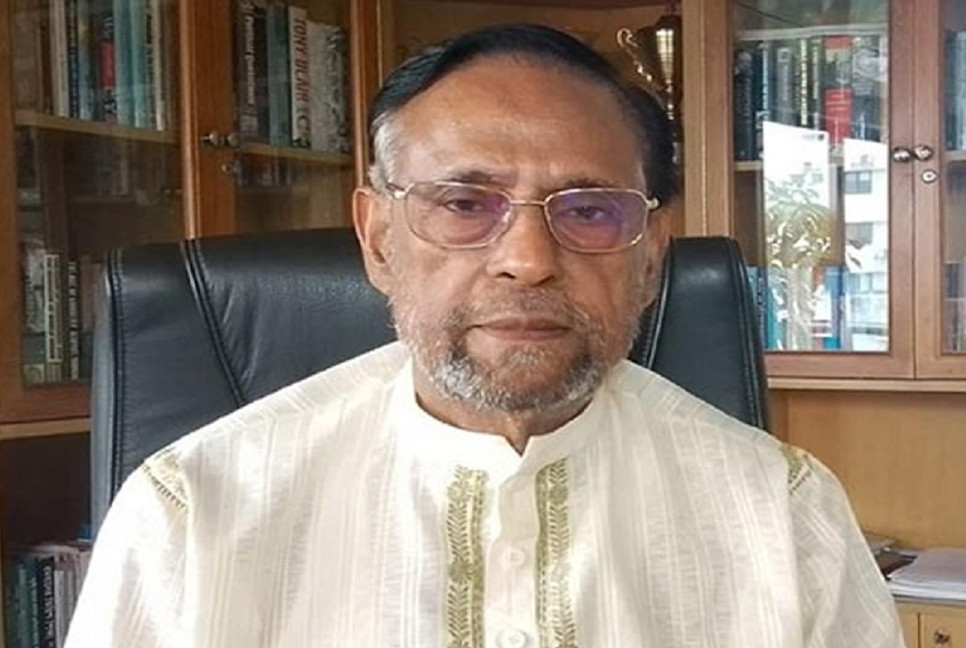
The writer is a former minister and president of the Liberal Democratic Party (LDP).