The 13th National Parliamentary Election is imminent. As with every election, it is preceded by tension, anticipation and political uncertainty, and this time is no different. However, the current situation is more complex and procedurally fragile than in many past elections, as a parliamentary election and a referendum will be held at the same time.
Two different types of voting on the same day is an entirely unprecedented event in Bangladesh’s political history. As a result, all stakeholders are having to recalculate their strategies, while the Election Commission is facing a double burden of responsibility.
The intense activity within the Election Commission over the past few weeks has been clearly reflected in the media. As part of its initial preparations—identifying polling centres, increasing the number of polling booths, printing necessary materials, preparing nomination papers, training personnel, planning and completing other legal tasks—the Commission is operating under considerable pressure.
Because the election and the referendum will be held together, mock voting has shown delays among voters. Based on this, the Commission is planning to increase the number of polling booths. The average time required for a voter to cast a ballot will increase, as will the pressure on each polling centre. As a result, extending voting hours is also being considered. Logistical preparation is never a minor matter in any election, and when two processes are conducted simultaneously, the entire administrative structure must remain especially vigilant under the added strain.
At the same time, political parties have begun to intensify their activities. However, this activity does not fully resemble festive electoral enthusiasm; rather, it is mixed with anxiety, instability, alliance negotiations, seat-sharing and strategic conflicts. The BNP has yet to reach a final decision on seat-sharing with its alliance partners, although it has announced that a resolution will come soon. In alliance politics, seat-sharing is never a simple equation; it depends on each party’s grassroots strength, electoral prospects and political concessions. As a result, discussions among leaders are becoming prolonged, while uncertainty persists among activists on the ground.
Simultaneously, discussions have emerged from the government regarding amendments to the Representation of the People Order (RPO). Signals of changes to the RPO have created new suspicions and fresh concerns among political parties. Regardless of what the Commission may claim, parties are considering how changes to electoral law might affect the political reality—particularly in a context where distrust has long been a persistent feature of national politics.
Meanwhile, leaders of several political parties have alleged that a ‘level playing field’ has not yet been created. They believe that the conditions and opportunities for competition are still unequal. Such claims are not limited to any single party; rather, they reflect the broader lack of trust that characterises politics overall. As the election draws nearer, such allegations may increase unless the Commission and the administration take effective steps to make the electoral process politically acceptable.
Another significant aspect of this election is the referendum itself. The referendum question has, in fact, made the overall political environment even more complex. For voters, it will mean a dual responsibility; for the administration, a dual accountability. From explaining the referendum ballot to voters, to voting in the secrecy of the booth, ballot counting and result processing—every stage will require extra time and additional personnel. Added to this are winter mornings, crowds at polling centres, possible traffic congestion and communication constraints—all of which could make voting more challenging.
Moreover, voter psychology will function differently during this period. While voter behaviour in general elections largely depends on party symbols and campaigning, referendums require voters to think in a different way. However, a large segment of Bangladesh’s electorate is not accustomed to referendums. As a result, misunderstandings, incorrect voting and invalid ballots may increase. The Commission will therefore need to place greater emphasis on public awareness and voter education.
As elections approach, political tension in Bangladesh tends to rise, or conditions emerge that make such tension likely. Misinformation, rumours, speculation and propaganda on social media further inflame the atmosphere. Especially when incorrect information spreads about the schedule, voting methods, laws and rules, confusion at the grassroots level can become acute. The Election Commission has already warned against the circulation of incorrect dates, indicating that information distortion has already begun.
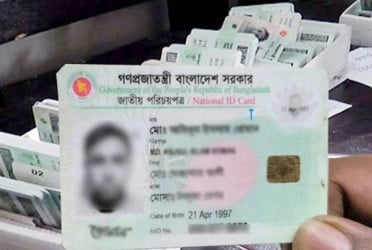
Even so, the scope for positive outcomes remains significant. This election offers a new opportunity for expatriate voters. Through postal ballots, millions of citizens living abroad will, for the first time, have the chance to participate, carrying enormous political and social significance. At the same time, with the path to uncontested elections closed, competition will exist in every constituency, which may help enhance electoral legitimacy. Participation by women, young people and first-time voters is also increasing, potentially giving the election a distinctly different character.
Overall, the upcoming election presents Bangladesh with a major challenge in its democratic journey. Whether this election will generate renewed trust or create yet another chapter of controversy remains uncertain. However, the more suspicion, allegations and counter-allegations grow in the political arena, the greater the responsibility placed on the Election Commission. No election can be effective without public trust. In essence, everything revolves around ‘confidence’. The mutual trust among political parties, voters, the administration and the electoral authorities will determine how acceptable the election ultimately becomes. Therefore, regardless of how much visible preparation is underway, the underlying anxieties cannot be ignored; rather, Bangladesh must move forward by acknowledging them, towards a more transparent, inclusive and peaceful election.
To make the election meaningful, all sides must proceed with the same mindset. Both political parties and the government must be willing to make concessions. Most importantly, an environment must be ensured in which voters can cast their ballots freely, without fear or pressure. Otherwise, the upcoming election may become yet another controversial chapter in the country’s political history.
Author: Professor, Department of Political Science, University of Rajshahi