Country’s health sector is increasingly facing a deep crisis of confidence. Despite increased budget allocations, extensive private investment, and market expansion, quality and affordable healthcare for ordinary people remains elusive. As a result, a large number of patients travel abroad every year in search of better treatment, causing the country to lose nearly $5 billion in foreign currency annually.
According to available information, the Bangladesh government’s annual per capita spending on health is Tk1,070. Yet, according to the World Health Organization (WHO), about 49 percent of the population is deprived of quality healthcare services. Although the health sector market has expanded to nearly $14 billion and is expected to reach $23 billion by 2033, access and quality remain major concerns.
Data from the Ministry of Finance show that for the 2025–26 fiscal year, the Health Services Division has been allocated Tk310.22 billion, a significant increase compared to the revised budget of the previous year. However, health spending still accounts for only 3.93 percent of the total national budget, the lowest proportion in South Asia.
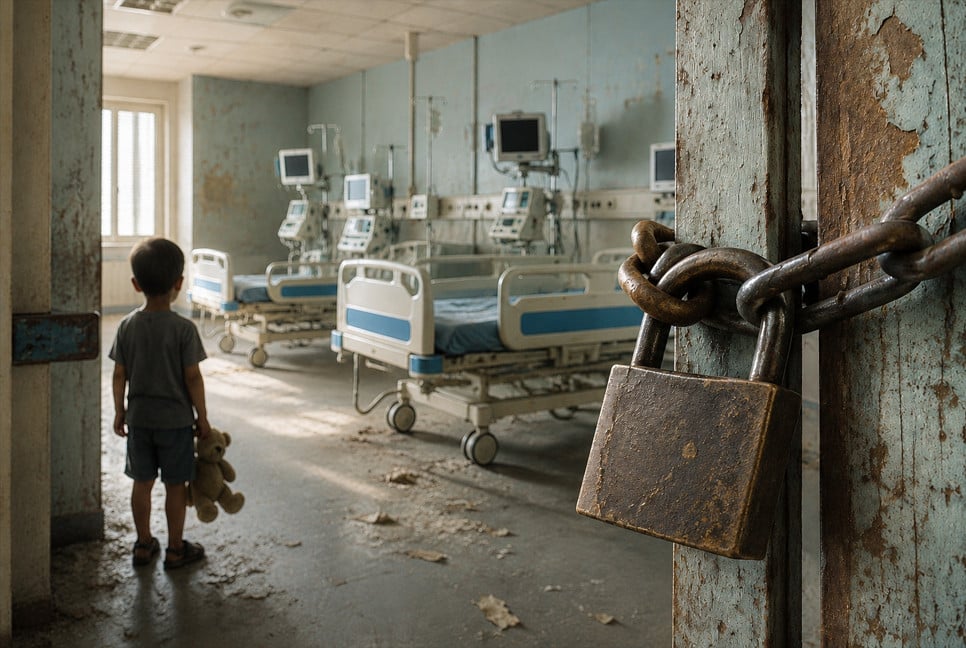
Experts note that because only 0.67 percent of GDP is spent on health, the public healthcare system has failed to achieve the desired capacity. Bangladesh currently has only 0.88 hospital beds per 1,000 people, compared to the WHO standard of three. There is only one doctor per 830 people, one dentist per 11,531 people, and one medical assistant per 56,599 people. The shortage of nurses and technologists is particularly severe. There are fewer than six nurses per 10,000 people, whereas the WHO standard is 70.
Due to the concentration of healthcare services in Dhaka, extreme inequality persists in the health sector. Fifty-three percent of the country’s specialized hospitals are located in the Dhaka division, even though 70 percent of the population lives in rural areas. Outside Dhaka, there is a severe shortage of specialist doctors, advanced diagnostic facilities, and trained nurses.
According to India’s Ministry of Tourism, around 480,000 Bangladeshis travel to India for medical treatment each year, accounting for nearly 52 percent of India’s total medical tourists. Patients say that the primary reason for going abroad is not the lack of treatment facilities, but a lack of confidence in diagnostic accuracy. Other reasons include unexpected bills and hidden costs, concerns about substandard medicines and medical supplies, and poor cleanliness and infection control.
World Bank data indicate that 73–74 percent of healthcare expenses in Bangladesh are paid out of patients’ own pockets. Only 2.5 percent of the population is covered by health insurance. As a result, a serious illness often pushes families into poverty. Compared to regional and developed countries, Bangladesh lags far behind in healthcare financing. In Japan, out-of-pocket spending is only 11 percent; in Singapore, it is 30 percent and strictly regulated. In Bangladesh, it stands at 74 percent and is effectively unregulated. Bangladesh’s score on the Universal Health Coverage index is only 52, compared to scores of 80 for Singapore and Japan.
Health policymakers say that to restore public trust, it is essential to gradually increase the health budget to 5 percent of GDP; ensure quality standards, transparent pricing, and billing in healthcare services; establish independent accreditation and quality control authorities; introduce low-cost health insurance; develop infrastructure outside Dhaka through public–private partnerships; implement digital health systems and unique patient IDs; and provide incentives and safe working environments for doctors in remote areas.
Experts emphasize that healthcare reform must be built not only on market expansion, but also on ethics, accountability, and trust. Otherwise, despite development, the country’s health system will continue to fail in regaining public confidence.
A K Azad Khan, president of the Bangladesh Diabetic Association, said that while there have been notable achievements in healthcare, the desired overall quality has not been ensured. He stressed that the government must take the lead in this regard, adding that Bangladesh’s healthcare standards are not on par with developed countries and are even behind those of neighboring nations.
Bd-pratidin English/ ANI