Thousands of Bangladeshi workers forced to abandon their Malaysia-bound flights last year are still waiting for refunds – yet many are now paying again to secure the same jobs.
Shamim Mia (25), from Kishoreganj, is one of roughly 18,000 workers who were turned back at Hazrat Shahjalal International Airport because their paperwork had not been completed and no flight tickets were issued. He had paid nearly Tk550,000 to brokers but received only Tk200,000 back. Now trying again through the state-owned Bangladesh Overseas Employment and Services Limited (BOESL), he has paid a further Tk162,000.
“I filed a complaint at BMET (Bureau of Manpower, Employment and Training) eight months ago. But they still haven’t called me. I visited after three months for an update. They said I would be called for arbitration, but they never did,” he said.
His case reflects the broader chaos surrounding the halted Malaysia recruitment. Malaysia initially identified 7,883 workers who missed the deadline.
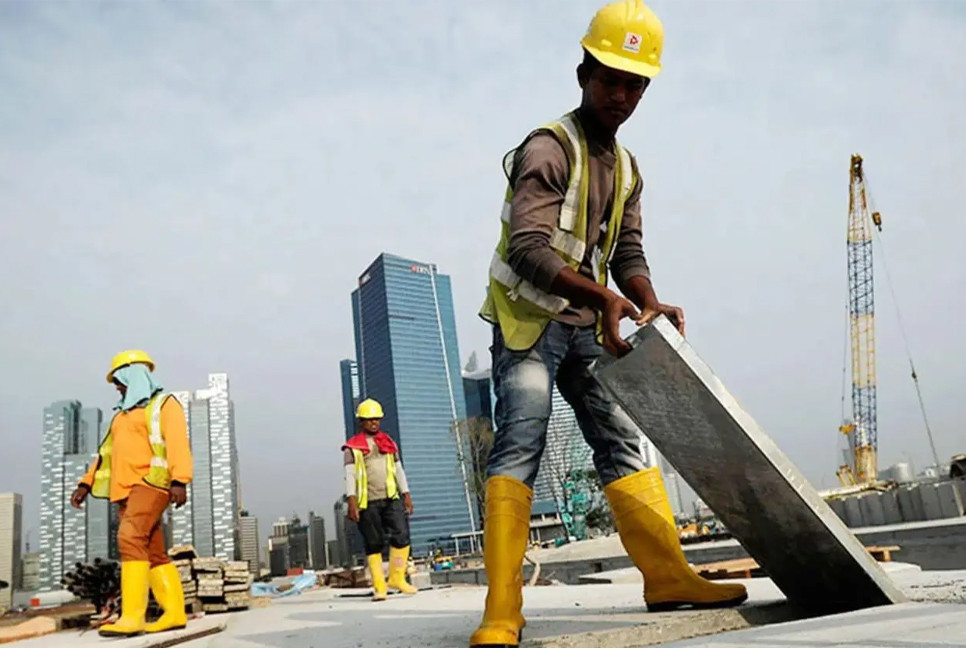
When BOESL reopened applications, about 4,000 applied; 2,900 were selected because their names were on Malaysia’s valid list. They are now receiving construction training under BOESL.
But these workers – many of whom previously paid Tk4-6 lakh to brokers – are again being charged.
The government had originally promised that those unable to travel would either be fully refunded or sent abroad at state expense. In reality, many received nothing; others only a fraction.
All workers whom Malaysia has approved must now pay Tk162,500.
Migrant-rights activist and WARBE Development Foundation Chairman Syed Saiful Haque said, “The government’s first responsibility was to recover 100% of the money from the responsible agencies. But they failed. The government could have paid these workers using various sources.”
He added, “The Wage Earners’ Welfare Board could have funded these workers, even though it’s workers’ money. Additionally, CSR funds from banks and several other sources could have been used to compensate the victims.”
A senior official of the Ministry of Expatriates’ Welfare, requesting anonymity, echoed this saying, “If the responsible agencies had been given a deadline with the threat of licence cancellation, they would have either refunded the full amount or ensured the workers’ migration by any means.”
BOESL General Manager Nur Ahmed said the organisation initially pursued the Employer Pay Model to ensure workers could travel free of cost.
“But after waiting several months, we received no response from Malaysian employers,” he said.
“Since the deadline requires sending all listed workers by this December, we decided not to wait any longer and to proceed with sending them at the minimum possible cost.”
He added, “Because all workers must be sent by December, we had no choice but to proceed with a minimum-cost model.”
The government-fixed migration cost for Malaysia was Tk79,000 in 2022. However, a syndicate of 100 agencies charged Tk400,000-650,000 per worker.
Nur Ahmed said employers typically bear around Tk100,000, in addition to airfare and medical expenses.
“Usually, we take a service charge, but in this case, we aren’t taking a single taka from Malaysia-bound workers; BOESL is actually bearing extra costs,” he said.
The Tk162,500 currently being collected covers: Tk75,000 agent fee in Malaysia, Tk45,000 airfare, Tk22,500 training, Tk10,000 medicals, and Tk10,000 interview-related costs. Abdul Baten from Pabna said, “I earlier paid Tk558,000 to a broker. Even after everything was ready, I couldn’t go. Later, the broker refunded Tk200,000.” Now selected through BOESL, he has paid Tk162,500 and begun construction training.
Another worker, Alamgir, said, “Those who were listed to go through BOESL were initially told they would go for Tk78,000. Later the amount was increased. Many who paid brokers earlier have not received full refunds. Yet they are being asked to pay again.”
Around 2,400 workers have completed BOESL training and have paid the new fees. Another 500 are waiting for training – and they too have already paid.
Alamgir said many were excluded for age or documentation issues. “Previously the age limit was 18-45 years; now it’s 20-40 years. As a result, 1,500-2,000 workers were excluded.” He added, “Most who paid earlier did not get even 10% back. I paid Tk400,000. After filing a complaint, I got Tk200,000 back. Many like me received partial refunds, but most got nothing.”
The Ministry of Expatriates’ Welfare says BMET issued clearance for 493,642 workers before Malaysia’s deadline; about 18,000 could not travel.
Agencies were required to refund these workers in full. When asked how many received full or partial refunds, neither the ministry, BMET, nor BAIRA could provide figures.
A fresh complication now threatens the possibility of Malaysia reopening its labour market. On 27 June, Malaysian Home Minister Saifuddin Nasution Ismail announced the arrest of 36 Bangladeshis suspected of links to the extremist group Islamic State (IS).
They were detained in three phases between 24 April and 24 June in Selangor and Johor.
Five of the detainees have been charged in the Shah Alam and Johor Bahru Session Courts with terrorism-related offences.
Another 15 have been issued deportation orders, while 16 remain under investigation.
Migration analysts warn that the incident is not only a security concern but also deepens mistrust towards Bangladeshi workers.
With the Malaysian labour market already closed for over a year, uncertainty about its reopening has intensified.
Experts also fear the incident could make entry into Middle Eastern labour markets more difficult for Bangladeshi migrants.
Bd-pratidin English/TR