Many failed to realise how fiercely the defeated forces of 1971 still harbour hatred, until the flames of that rage resurfaced in the days immediately after the July–August 2024 uprising.
When Sheikh Hasina’s authoritarian government collapsed and chaos spread, many liberal observers believed the unrest reflected nothing more than a momentary outburst.
They thought it would fade like soap bubbles — simply the anger of a people suppressed for 15 years.
But it now appears that those destructive acts reflected the toxic breath of a defeated force waiting to strike again. From abroad, some online activists on YouTube have begun spreading poisonous commentary about Bangladesh’s Liberation War, Independence Day and Victory Day — words no educated person could ever write or say. One Bangladeshi YouTuber compared Victory Day to “pubic hair”.
I will not reproduce the vulgar word. My editor would not allow it either, because newspapers speak the people’s language but do not print obscenity.
Inside Bangladesh, too, some continue to argue publicly that 16 December is not Victory Day. These speeches clearly amount to sedition. Yet no sedition case has been filed.
The person making such remarks may not be widely known, but he serves as general secretary of a registered political party.
That may be why voters in his own constituency turned against him. The NCP’s top leaders expressed concern over the incident, although many see the party as one of the main promoters of mobocracy during the July unrest.
Another individual even claimed that the generation of 1971 is “the worst in history”, that the Liberation War was a “lie”, and that “no war took place”.
It is shocking that anyone can make such arrogant claims on the soil of sovereign Bangladesh — won with the lives of 3 million people — even after 54 years of independence. Yet the government remains silent.
Those who constantly attack the Liberation War, freedom fighters, independence and Victory Day always point fingers at India.
Some of their arguments may appear logical at a glance — the provisional government’s reliance on India, New Delhi’s assistance during the war, the entry of Indian troops as an allied force, the joint surrender of Pakistani troops on 16 December, and Bangabandhu’s strong pro-India stance afterwards.
These incidents created space for selective interpretations. But proper analysis requires a full understanding of the details.
Strategy — in both foreign relations and domestic politics — depends on time, place and circumstance. The Liberation War of 1971 marked the final chapter of a 23-year struggle.
The goal was independence. And Bangladesh adopted the strategy required to achieve it. After the Pakistan army unleashed its brutal assault on the night of 25 March, Bengalis had no option but to seek help from the neighbouring country.
In the final stage of the war, Pakistan attacked India on 3 December. The two countries went to war, Pakistan lost, and its forces in East Pakistan surrendered to the Bangladesh–India joint command.
Freedom fighters raised the flag of independent Bangladesh in Dhaka. That was victory — the fulfilment of the Liberation War’s ultimate goal.
Whether the strategy was perfect can be debated for a hundred years. But the claim that the victory did not belong to Bangladesh is nothing but a cynical distortion.
Bangladesh was a small, impoverished country in 1971 — with neither weapons nor money, only its people and their unbreakable desire for freedom.
Even the United States and Soviet Union, though bitter ideological rivals, forged a strategic alliance during World War II when Nazi Germany invaded the USSR.
Washington provided massive military support to Moscow. Nations often rely on strategic allies in times of existential threat.
Very few countries have won liberation wars without external support. Vietnam relied heavily on the Soviet Union and China. Even Cuba’s revolution received support from foreign fighters, including Che Guevara.
Returning to Bangladesh today: five and a half decades after independence, anti-liberation forces are trying to strike again. Why, and under what conditions has this become possible? Who is responsible?
For years, anti-liberation elements hid their faces and blended into the mainstream. Behind their masks lay the same poisonous ideology of 1971. Now they want to pierce the nation’s heart with that hidden knife.
Although Bangladesh freed itself from Pakistan’s military in December 1971, collaborators — Razakars, Al-Badr, Al-Shams and Peace Committee members — remained. A small section of the population, but still citizens of this country. After independence, the government declared a general amnesty so they could repent and return to normal life.
Under the Collaborators Act, authorities jailed about 37,000 people in 1972. Around 30,000 were later freed under the amnesty. The remaining six to seven thousand walked free after 1975. The aim was simple: they are Bengalis, citizens, and should re-join society.
One assumed they would realise their mistakes. President Ziaur Rahman continued the policy of general clemency. But looking back, that generosity now seems misplaced.
Many collaborators returned to the mainstream, but others never abandoned their pro-Pakistan mindset. Today, those very people want to undermine independence, the Liberation War and Victory Day.
With a national election approaching, the country stands at a critical crossroads. As the party founded by martyred freedom fighter President Ziaur Rahman, and one of today’s largest political forces, the BNP must play a historic role.
The party must rediscover its true identity, unite all pro-liberation democratic forces, and uphold the flag of independence and democracy.
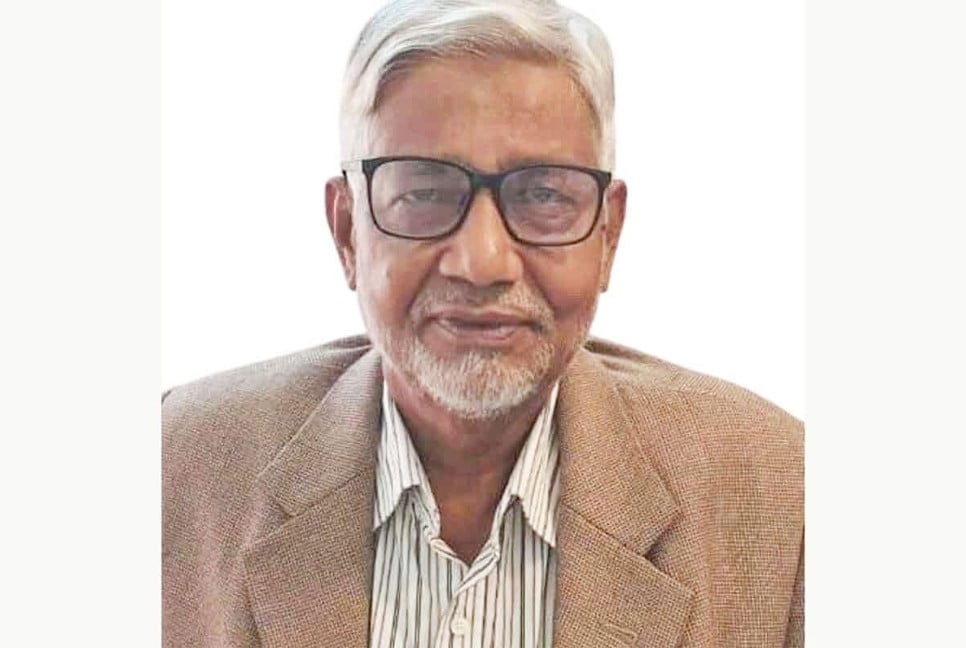
The writer is a senior journalist and novelist.