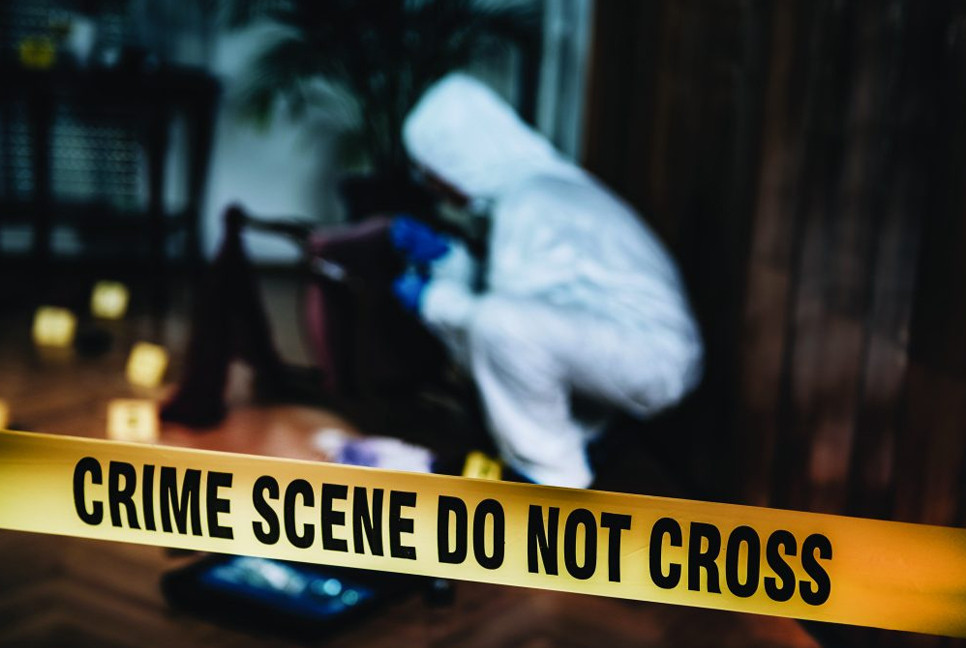
The country’s forensic crime scene capacity is under severe strain, with the Criminal Investigation Department (CID) warning that chronic shortages in staff, equipment and laboratory facilities are undermining investigations into serious offences.
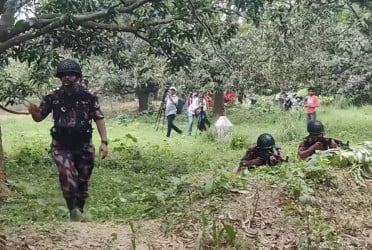
Senior CID officials told the media that the Crime Scene Management unit – the frontline team responsible for securing and analysing physical evidence after murders, rapes, armed robberies and other major crimes – has been struggling for years to meet the demands placed upon it.
According to internal sources, the unit currently operates with just 17 teams, 91 personnel, 10 vehicles, two chemical laboratories (in Dhaka and Chattogram), one DNA lab (in Dhaka), and a single full-fledged forensic laboratory, also in the capital.
The teams are stationed across 17 districts, leaving large parts of the country without adequate coverage.
One senior CID officer, speaking on condition of anonymity, said Bangladesh needs at least 71 crime scene teams across all 64 districts and major cities.
“Each team requires a minimum of seven members. To ensure proper coverage, we need around 500 personnel nationwide,” the officer said, adding, “Every division also needs its own chemical, DNA and forensic laboratory if we want timely and accurate analysis.”
Officers claimed that delays in reaching crime scenes and transporting samples to Dhaka often degrade crucial biological evidence. “If blood, tissue or other delicate samples aren’t collected immediately, we cannot run accurate tests,” an additional superintendent of police said.
“By the time samples reach Dhaka, many are no longer viable. That directly affects our ability to secure convictions.”
Another officer said the unit is overwhelmed by daily requests from police stations. “We receive 10-15 requests a day. But ideally, crime scene teams should attend all major crime sites automatically, not only when asked. If we could collect and preserve evidence promptly every time, many cases would be resolved far more quickly.”
Dr Omar Faruk, professor of Criminology and Police Science at Mawlana Bhashani Science and Technology University, told the media that the CID has developed its laboratories and infrastructure centrally but has failed to extend services properly to district levels.
“But it could not develop its services in the district levels. I think the CID lab services should be reached at the district levels along with the hike of manpower and logistics so that the evidences do not spoil,” he said.
Another CID officer, wishing to remain unnamed, added that Bangladesh currently has no forensic institute, whereas neighbouring India has one. As a result, CID officers must rely on the lone Detective Training School for specialised training, limiting opportunities for advanced forensic expertise.
The officer also noted that for advanced training, staffers must go abroad, which causes the country to lose valuable foreign currency. Mohammad Tariqul Islam, a sub-inspector in the Police Department, said DNA testing is critical for solving most murder cases, yet the delays are severe.
“About six months is needed for getting a test report from the CID lab,” he told the media.
“We have to go to the CID headquarters in person for submitting the samples of a number of tests, which kills our time and money. If every division has full-fledged labs, we can submit samples easily and get reports quickly.”
CID chief Md Sibgat Ullah, an additional inspector general of police, acknowledged the shortfalls.
“Crime scene teams are crucial after murders and other serious crimes. When fingerprints, DNA profiles and other physical evidence are properly collected, convictions can be ensured,” he told the media.
He said the CID has submitted a proposal to the relevant ministry seeking expanded manpower, laboratories and logistical support.
Courtesy: Daily Sun.
Bd-pratidin English/TR