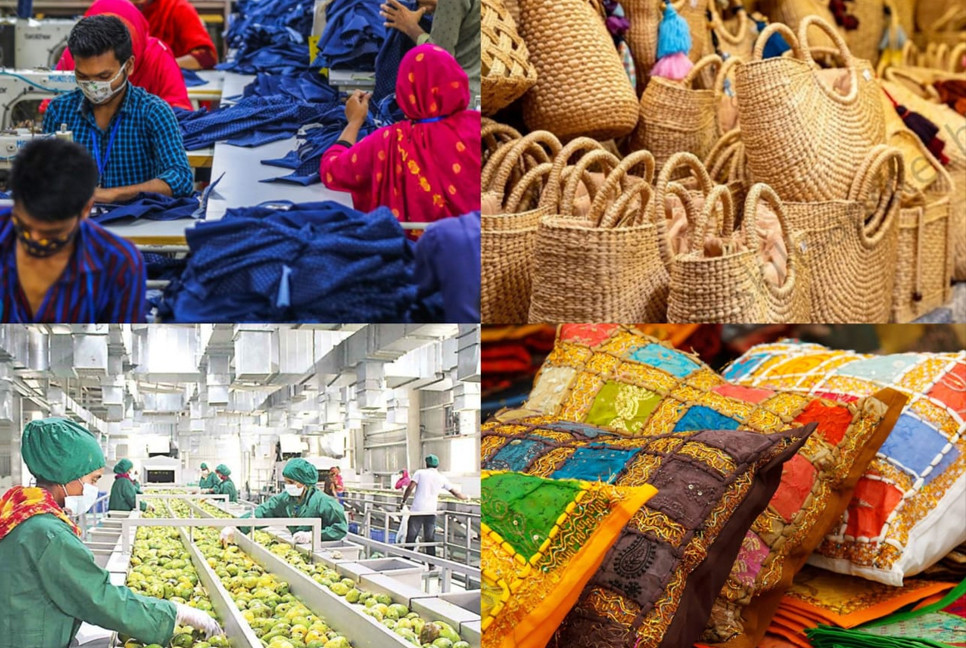
The decline in merchandise exports continues. In November, export earnings dropped again by around 6%. Compared to the same period last year, exports were 230 million dollars lower. In November of last year, exports amounted to 4.12 billion dollars. This marks the fourth consecutive month of decline.
Updated export statistics from the Export Promotion Bureau (EPB) show that, among the top five export sectors, all except leather and leather goods experienced a decline in November. The affected sectors are ready-made garments (RMG), jute and jute goods, agro-processed products, and home textiles. Exports of non-leather footwear, frozen foods and plastic products also fell.
EPB data shows that ready-made garment exports in November amounted to 3.14 billion dollars—5 percent lower than the same month last year. However, overall garment exports in the first five months of the fiscal year remain positive. From July to November of the current fiscal year, garment exports totaled 16.13 billion dollars, which is 0.9 percent higher than the same period last year.
After garments, leather and leather goods remain the second-largest export sector. In November, exports in this sector amounted to 98.9 million dollars—5.14 percent higher than the same month last year. So far in the fiscal year (July–November), leather and leather goods exports have reached 510 million dollars, reflecting a growth of 9.88 percent.
The country’s third-largest export sector—agro-processed food—saw a significant decline. Last month, exports stood at 82.8 million dollars, nearly 25 percent lower than the same period last year. Exports for the first five months of the fiscal year also dropped. During this period, exports totaled 460 million dollars, a decline of 6.81 percent compared to last year.
The fourth-largest export sector, jute and jute goods, saw a 10.5 percent drop last month. Exports amounted to 68.9 million dollars, compared to 76.8 million dollars in November last year. So far in the fiscal year, jute and jute goods exports stand at 350 million dollars, showing a growth of 1.36 percent.
Exports in the fifth-largest sector, home textiles, also decreased. Last November, home textile exports totaled 66.3 million dollars—7.75 percent lower than November last year. However, overall, the sector’s performance remains positive. In the first five months of the fiscal year, home textile exports totaled 345.4 million dollars—a growth of 5.68 percent.
Former director of the Bangladesh Garment Manufacturers and Exporters Association (BGMEA), Mohiuddin Rubel, said that although Bangladesh’s import growth in the U.S. market is encouraging, the recent slowdown in exports may create pressure in the coming months. Market diversification, technology-driven production, environmentally friendly LEED-certified factories, and competitive pricing strategies will help strengthen Bangladesh’s position in the long run.