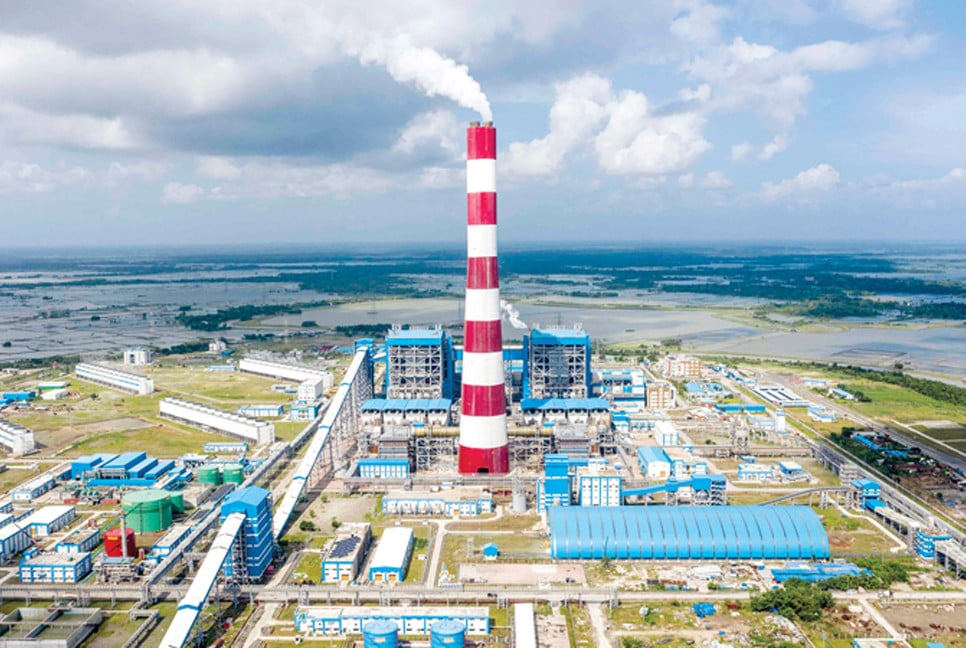
The Maitree Super Thermal Power Plant in Rampal of Bagerhat has set a new national benchmark, generating the highest-ever monthly electricity output by any power plant in Bangladesh.
Officials attribute the record-breaking performance in November – 700 million units of electricity – to an uninterrupted flow of coal.
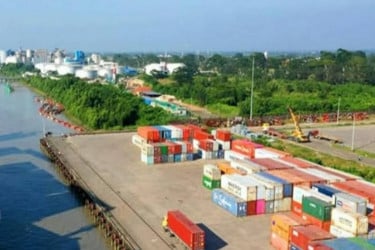
Bashundhara Multi Trading Limited (BMTL) – one of the plant’s coal suppliers – delivered 500,000 tonnes of coal to Rampal last month, a national record for the largest volume ever discharged at a single jetty in the country.
The plant had previously faced operational disruptions due to foreign currency shortages, which prevented it from opening Letters of Credit (LCs) for coal imports. However, in addition to ensuring a steady coal supply, Bashundhara Multi Trading Limited has now begun providing financial support to the plant. This assistance has enabled it to open LCs on time and maintain adequate coal stocks, which has been crucial for uninterrupted electricity generation.
Dr Ijaz Hossain, former professor of Bangladesh University of Engineering and Technology and energy expert, said earlier perceptions of technical or engineering flaws at Rampal have now been disproven.
“There were assumptions that Rampal had technical issues preventing it from achieving the expected output. But the recent record generation shows there are no major technical problems. With proper coal supply, the plant can operate at full capacity, which is very positive for the country,” he said.
Senior officials at the power plant said the supplier has been delivering coal consistently, enabling the facility to achieve its record output in November. The plant’s stockpile capacity has also exceeded 200,000 tonnes.
By the evening of 2 December, coal reserves at Rampal stood at 215,000 tonnes –the highest ever. Previously, limited coal arrivals meant supplies were exhausted almost daily.
A consortium of Bashundhara Multi Trading Limited, ATRO and ENR signed a three-year contract with power plant in July 2023 to supply 8 million tonnes of coal. The company has already delivered more than 6 million tonnes. Due to the dollar crisis, the plant could not open LCs regularly, causing delays in paying outstanding dues to the Bashundhara Multi Trading Limited. Although payments have improved slightly, the supplier had earlier been unable to import adequate coal because of LC-related bottlenecks.
To address this, the Bashundhara Multi Trading Limited has extended interest-free financing to the Maitree Super Thermal Power Plant for the past three months, enabling timely LC openings. As a result, the plant has been able to import sufficient coal and significantly increase production. Previously, coal shortages and financial constraints limited output to 60%-70% of capacity.
The Bashundhara Multi Trading Limited supplied 457,000 tonnes of coal in October and 500,000 tonnes in November, the highest amount ever handled at a Bangladeshi jetty.
In response, the power plant generated 700 million units of electricity in November – the highest-ever monthly generation by any power plant in Bangladesh.
The plant alone met 11.5% of the country’s total electricity demand that month. Officials said Rampal generally supplies over 600 million units, or around 8% of the national demand.
Sources said around Tk500 crore is required to open an LC for importing 400,000 tonnes of coal. The Bashundhara Multi Trading Limited has been providing this amount as interest-free loans for three consecutive months, making record coal imports – and record power output – possible.
Ijaz Hossain added, “Ensuring uninterrupted coal supply is commendable, and I support this approach. But it must also be verified that coal prices strictly follow contractual terms. If the price is higher than agreed, it could eventually impact electricity tariffs. As long as there is no extra cost beyond the contract, and power prices remain unaffected, this supply system is undoubtedly positive.”
SM Afjal Ibna Jahan, manager (Shipping and Logistics) at Safwan Bashundhara Global, said: “Bangladesh is facing a fuel crisis, and Rampal is one of the country’s largest power plants. That is why we decided to invest capital here. For two years, our outstanding dues remained between USD$100 million and $150 million. Yet we supplied coal continuously without charging interest.”
He added that over $70 million in coal discharge payments is still pending, and six more vessels with coal worth $42 million are currently en route to Bangladesh.
In contrast, other coal-fired power plants have faced severe disruptions. India’s Adani power plant temporarily halted supply to Bangladesh due to unpaid bills, and several plants have issued warnings of shutdowns over arrears. Payra power plant has also halted operations multiple times because of coal shortages.
The 1,320 MW Rampal plant, jointly operated by Bangladesh Power Development Board (BPDB) and India’s state-owned NTPC Ltd, began commercial operation of its first unit in December 2022 and its second unit in March 2024. Both units are now generating at full capacity and supplying power to the national grid.
Economists say the plant is playing a vital role in powering industries and contributing to national economic activity. Rampal is also boosting the local economy, providing employment for youth and running community development programmes for women and disadvantaged groups.
Bd-pratidin English/TR