Many national and international days are observed in Bangladesh. Almost every day marks some form of commemoration. In that calendar, 21 November is the 325th day of the Gregorian year (326th in a leap year), with 40 days remaining.
The date features many significant events in world history—some considered blessings, others tragedies. These include the Mongolfier brothers’ first hot-air balloon flight in 1783, the historic Berlin Decree in 1806, and Thomas Edison’s 1877 announcement of the phonograph. Extremists seized the Grand Mosque in Makkah on this day in 1979.
The French writer and philosopher Voltaire was born on this day in 1694, while Nobel-winning Pakistani theoretical physicist Abdus Salam died on this day in 1996. In Bangladesh, the date stands out for Armed Forces Day—an occasion rooted in history, heritage and heroism.
Bangladesh’s Liberation War began as a resistance movement after the Pakistan Army launched a brutal crackdown in Dhaka on 25 March 1971, which soon spread across the country.
In response to this onslaught, members of the East Bengal Regiment, East Pakistan Rifles, police, Ansar and others took up arms.
Bengali sailors, naval officers, army and air force officers later joined them, along with thousands of young freedom-seeking volunteers.
The struggle evolved into a full-fledged armed movement, first known as the Bangladesh Forces and later the Mukti Bahini.
Eventually, members of Pakistan’s army, navy and air force of Bengali origin abandoned their units and joined the Bangladesh Forces.
On the Indian side of the border, they regrouped under regular formations—primarily as land forces. A small group of naval commandos formed a naval wing, while several pilots and airmen formed an air wing.
Reorganisation followed. On 7 July 1971, the 1st, 3rd and 8th battalions of the East Bengal Regiment formed a brigade.
The combined journey of the army, navy and air force reached a dramatic peak on 21 November 1971, when the three branches launched a coordinated joint operation on land, sea and air—turning the tide of the war.
This paved the way for the liberation of vast border regions each day. Within a month, the path opened to the surrender of nearly 93,000 Pakistani troops and the victory of 16 December.
Thus, 21 November earned a special place in Bangladesh’s national narrative and global military history. The country was divided into 11 sectors, each led by a trained professional army officer.
On this day, the final combined assault plan was executed—opening the road to victory. The joint campaign proved decisive: strategic military installations were destroyed, supply chains disrupted and communication networks crippled, severely weakening the occupying forces’ capability and morale. Throughout the war, members of the armed forces played a direct role with courage and sacrifice.
The spirit that energised armed forces members and freedom fighters in 1971 has guided Bangladesh’s military for the last 54 years.
Their steadfast contribution to national defence, development and stability stands recorded in history. Initially, the army, navy and air force observed their service days separately—on 25 March, 10 December and 28 September respectively—before 21 November was formally declared Armed Forces Day in 1980, a date chosen to honour the collective role of the three services during the war.
After independence, the Defence Services Headquarters was dissolved in April 1972, and separate headquarters were established for the three branches under the Ministry of Defence.
The day recognises the sacrifices of all military and civilian freedom fighters. The armed forces’ responsibilities did not end with victory; they expanded. The military has continued to contribute to human resource development, national emergencies and internal security. Their role has been vital in natural disasters, safeguarding sovereignty and supporting civil administration.
Bangladesh’s armed forces, grounded in patriotism, professionalism and ethics, have earned global respect as ambassadors of peace.
Their modernisation has kept pace with global changes, and their contributions to UN peacekeeping missions have enhanced the country’s international standing.
The army first joined a UN mission in 1988 under UNIIMOG in Iran-Iraq. The navy and air force joined peacekeeping in 1993, while the Bangladesh Police joined in 1989 in Namibia. Peacekeeping has brought prestige as well as significant remittance earnings.
Bangladeshi peacekeepers have served with distinction in 54 of the UN’s 68 missions, playing critical roles in war-torn countries such as Cambodia, Somalia, Namibia, Congo, Uganda, Haiti, Kosovo, Georgia, East Timor and Tajikistan.
Bangladesh also gained global praise for developing photo-based voter lists, national ID cards and machine-readable passports.
Most recently, the armed forces played a pivotal role during the 2024 student-led mass uprising; without military support, the outcome could have been very different.
After the political transition, unrest spread across industrial zones, highways, educational institutions and government offices.
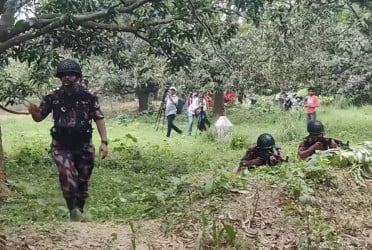
Soldiers resolved many of those crises, including a major disturbance at Tongi’s Ijtema ground. Many remain unaware of how volatile conditions were in the hill tracts before and after the uprising.
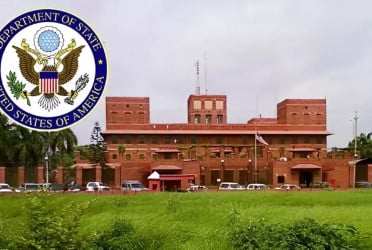
International reactions, including from the United States and the United Nations, praised the army’s role in preventing repression of the public. The US State Department described the military’s role as historically significant.
In all these periods of uncertainty, the armed forces have stood with the people—as protectors during disasters, defenders of key national installations and partners in maintaining law and order.
Their responsibilities range from ensuring security at industrial hubs to safeguarding diplomatic missions, clearing highways, recovering illegal weapons and supporting police operations to apprehend drug traffickers and organised criminals.
After the fall of the previous government, the military’s constructive role in the formation of the interim government drew acknowledgement from global powers. Their interventions prevented greater turmoil in factories, roads and public institutions—crises many people remain unaware of.
Throughout, the armed forces have carried out every mission with a doctrine of success—never of failure. Their discipline, training and ethos compel them to move forward, not backward, whether in the plains, in the hills, at home or abroad.
Because of these qualities, the international community refers to Bangladesh’s peace diplomacy with great admiration. Female peacekeepers from Bangladesh have also earned acclaim.
From maintaining public order to preventing communal tension, keeping factories operational, protecting critical infrastructure, securing highways, tackling arms trafficking and supporting diplomatic missions, the army’s contributions remain deeply valued.
Bangladesh’s armed forces stand as a symbol of national confidence—professional, modern and committed. In a rapidly changing world, they continue moving with purpose, not pause.
The writer is a journalist-columnist