In 2012, former home minister Mohiuddin Khan Alamgir was issued the licence for Farmers Bank on political consideration. Within four years, due to corruption and mismanagement, the bank was on the verge of collapse. In November 2017, he resigned as chairman. At that point, Nafeez Sarafat became the new chairman. On the assurance of bringing foreign investment, Bangladesh Bank under the then governor Fazle Kabir granted the bank several policy relaxations. State-owned banks – Sonali, Rupali, Agrani, Janata, and ICB – purchased 65% of the bank’s shares for Tk715 crore.
In January 2019, Farmers Bank was renamed Padma Bank. However, under Nafeez’s leadership over the next six years, the bank’s condition worsened even further. The default loan rate rose to 62%. In January 2024, he left the bank.
There are allegations that, under the name of “strategic equity management,” Nafeez Sarafat siphoned several hundred crores from Padma Bank. More than Tk200 crore was transferred from Padma Bank to a fund named “Alternative Investment Fund of Bangladesh.” A recent forensic audit of Padma Bank by Bangladesh Bank revealed shocking details of loan fraud. Two foreign audit firms found evidence of fake loans.
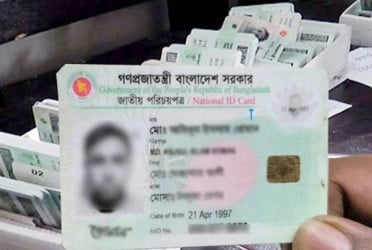
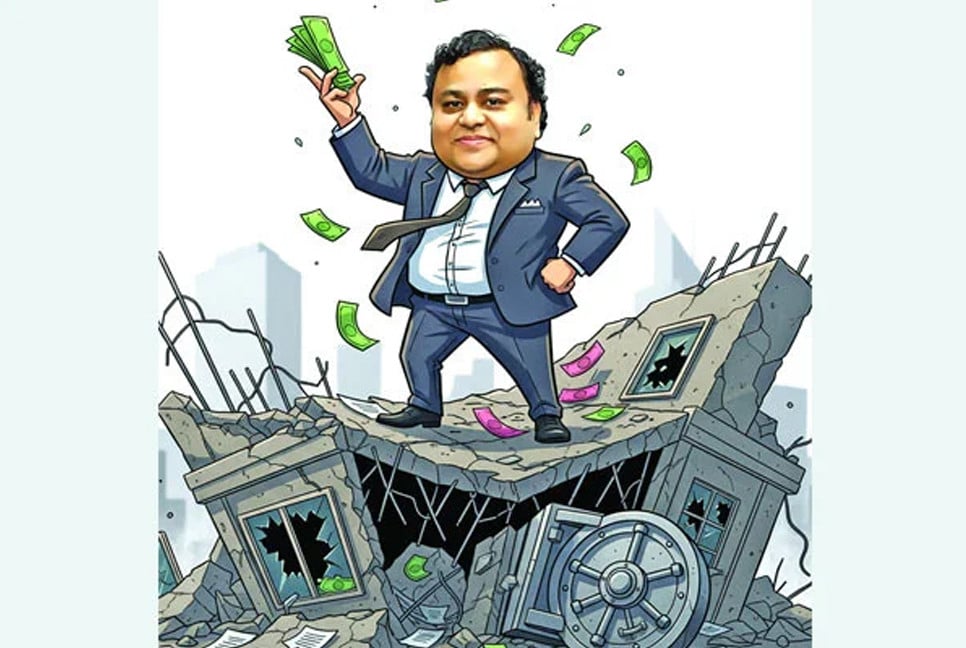
According to the audit report, after Nafeez took charge of the bank, 84 individuals were appointed as officials. These individuals did not attend work and had no responsibilities. Nafeez only collected their national ID cards. Using these identity documents, Tk348 crore in loans was taken from Padma Bank. The entire amount was embezzled. The loans were withdrawn through various fake companies under the names of these so-called officials. Many of the individuals used as loan recipients did not even know loans had been taken in their names or who took the money. Thus, Padma Bank was looted for a second time. As Padma Bank’s former chairman, Nafeez transferred Tk245 crore from the bank to Strategic Equity Management Limited (SEML), an asset management company owned by his wife, Anjuman Ara Shahid.
But he did not stop there. The money was then invested from SEML into a newly formed non-bank financial institution in which both his wife and his son, Chowdhury Rahib Safwan Sarafat, were shareholders.
This new non-bank financial institution, Strategic Finance Investments Limited (SFIL), was established by Nafeez in 2020. At the time, he falsely claimed that two foreign companies based in the United States and Canada were shareholders.
In the shareholder list, it was stated that Canadian Maple Strategic Wealth Management LP and US-based Statistica Inc. had invested Tk50 crore and held 50% ownership. However, investigations revealed that both companies were fictitious.
The 2021 annual report of SFIL claimed that the foreign companies were registered with the US and Canadian securities commissions. However, no such companies were found in the registries of either country. It was also discovered that individuals presented as representatives of these companies were actually associates of Nafeez.
Nafeez created a network of interconnected companies with overlapping shareholders. Several directors of SFIL were representatives of companies linked to the Canadian university established by Nafeez.
Having previously served as Head of Priority Banking at Standard Chartered Bank in 2001, Nafeez became a shareholder-director of Padma Bank (then Farmers Bank). After the bank began operations in 2013, he became a sponsor shareholder, representing the First Bangladesh Fixed Income Fund managed by his firm, Race Asset Management.
In his profile submitted to Padma Bank, Nafeez stated that he owned 24.25% of Race Asset Management.
According to a letter sent to Bangladesh Bank, Nafeez joined Padma Bank’s board in 2015 and was appointed chairman of the audit committee.
Thereafter, he began diverting funds from Padma Bank into Race and other related companies under the guise of investment. These investments brought no significant return to the bank, leading to severe liquidity shortages and ultimately contributing to the bank’s collapse.
By 2017, due to bad loans and reckless investment, Padma Bank could no longer return depositors’ funds. The bank did not recover its investments nor earn returns on them.
In January 2018, Bangladesh Bank removed 19 founding directors and restructured the board—except Nafeez. Despite allegations of loan fraud and fund misappropriation, Bangladesh Bank under Governor Fazle Kabir appointed Nafeez as chairman of Padma Bank.
Thus, without investing any of his own money, Nafeez gained full control of the bank. When the bank was on the verge of bankruptcy, Nafeez arranged through then Governor Abdur Rouf Talukder to merge Padma Bank with EXIM Bank.
After Padma Bank, Nafeez turned his attention to Southeast Bank. He maneuvered to remove the bank’s former chairmen, MA Kashem and Azimuddin Ahmed, from the board. Almgir Kabir became the new chairman, Nafeez’s wife Anjuman Ara Shahid became a director, and Nafeez attempted to make his son Rahib Sarafat a director as well, but failed due to his lack of qualifications.
Following the fall of the Awami League government after the student uprising, the Anti-Corruption Commission (ACC) began investigating Nafeez along with other business beneficiaries of the regime. The Bangladesh Financial Intelligence Unit (BFIU), the Criminal Investigation Department (CID), and the Bangladesh Securities and Exchange Commission (BSEC) are also investigating him.
In August last year, the bank accounts of Nafeez and his wife were frozen. Once considered untouchable, with journalists intimidated by security agencies if they reported on him, Nafeez fled the country to avoid legal action.
Initially, ACC began investigating allegations of embezzling Tk887 crore through bank takeovers and capital market manipulation. Investigators found evidence of investments under his and his family’s names in 52 companies.
An ACC senior official involved in the inquiry said: “Wherever he found an opportunity—whether by payment or intimidation—Nafeez Sarafat secured ownership stakes under his own or others’ names.”