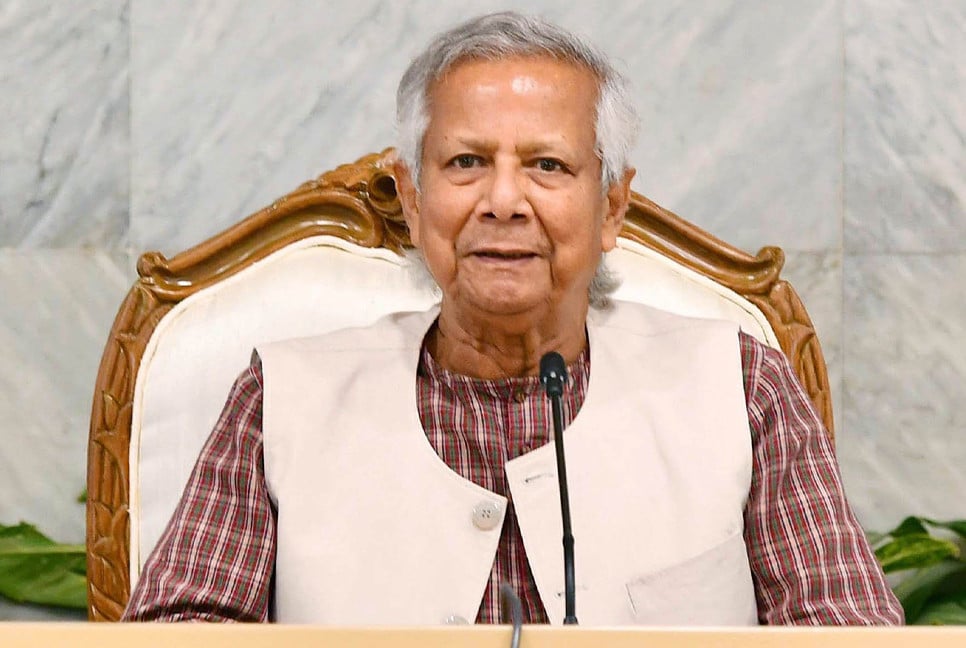
For years, concerns over mismanagement at Chattogram Port have been widely discussed. Yet, despite the repeated debates, the interim administration led by Professor Dr. Muhammad Yunus has failed to introduce a single practical step toward reform or modernisation. Instead, the dominant narrative—both in official circles and behind closed doors—revolves around transferring port operations to foreign entities. Can such a sensitive decision be taken lightly? And more importantly, is this within the mandate of a temporary government at all?
Dr. Yunus has always shown special interest in seaports. When it comes to the strategic importance of ports, he is often described as a man of high vision. That is why many believed that under his leadership, Chattogram—along with Bangladesh’s other seaports—would be modernised, strengthened, and presented to the world in a new way. But the opposite is happening.
Far from improvement, the core ownership and operational control of the port is being shifted away from Bangladesh. How did things take such a turn? Even the common citizen is left puzzled.
One of the primary obligations of this government is to conduct elections. Alongside that, as an extra duty, it could have taken steps to address mismanagement, corruption, and inefficiency at Chattogram Port. That would have been possible and expected. Instead, the chosen path appears to be: “hand it over to foreigners.”
If irregularities exist in our ministries, Parliament, or even the judiciary, should we hand over those institutions to foreign management as well? The real issue lies elsewhere.
Chattogram Port is highly profitable. Foreign entities are eyeing that profit. The common justification is, “other countries lease ports to foreign operators.” But how many ports do those countries have? Out of how many ports have they outsourced a few? And how many ports does Bangladesh have? With elections ahead, should the port suddenly become a political subject? People want to see visible electoral initiatives, but the government seems to be busy elsewhere.
Among 19 countries in the Asia-Pacific region, Pakistan takes the longest time to complete import unloading at seaports. Bangladesh’s Chattogram Port stands second. As a result, importers face financial loss and ultimately raise prices. Consumers suffer. Most of Bangladesh’s imports and exports pass through this port. The government, as part of its current tasks, could have fixed these inefficiencies, increased port capacity, or improved road infrastructure connected to the port. But instead, there seems to be a fascination with shortcuts and questionable moves.
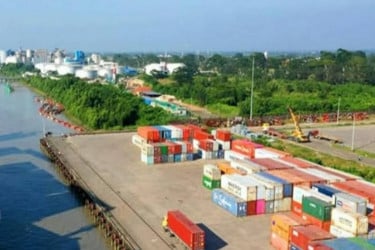
Chattogram Port is Bangladesh’s main and largest seaport. About 99% of the country’s containers and 93% of import-export volume pass through it. This port is not only a maritime gateway; it is also a test case for Bangladesh’s economic potential. The New Mooring Container Terminal (NCT) has become a focal point of debate. Discussions on handing over its management to a foreign company have crossed the line from debate to distortion and controversy. Why bring up this move now?
Bangladesh is surrounded by India on three sides and the sea on the fourth. Countries without seaports are called “unfortunate.” By that logic, Bangladesh is fortunate—but being unable to control its own sea facilities turns fortune into misfortune. The NCT is the most important terminal—handling 55% of container shipment traffic with modern equipment and technology.
This is the fifth-largest container terminal in the world, generating thousands of crores in revenue. During the previous Awami League government, there were strong protests against handing it over to a foreign firm. So why is this government walking the same path? That question remains unanswered. The issue is also highly sensitive. Workers and employees of the port have already protested. Yet the more aggressively the government pushes to hand over port facilities to foreign hands, the more questions emerge about its motive.
If the State feels such a decision is needed, then a democratically elected government should take it—not an interim setup whose mandate is limited to holding elections. The current administration has tasks like: elections, reforms, human rights, accountability. At best, it has four months left. Why rush into restructuring port ownership now?
A few days ago, the government announced that foreign investment would transform Bangladesh into a “manufacturing hub,” with Chattogram Port at the centre. New investments would increase capacity, create massive employment, and serve not just Bangladesh’s 180 million consumers, but 300–400 million people across the region. Laldia, Bay Terminal, Patenga Terminal, Matarbari—everything would turn into a huge industrial-shipping zone. But is this what the public wanted to hear right now?
There is a saying in rural Bangladesh: “The basic duty unfinished, but busy with extras.” We now see a modern version of this in port politics. Ports are tied to sovereignty. Any decision regarding their control requires deep thought.
Some argue that foreign management is a global trend. True—many countries bring in foreign operators for two reasons: lack of domestic financing, or a need to acquire modern skills and technology. But NCT has no scope for new investment or expansion—because of the adjacent naval base. So why is there suddenly such enthusiasm? Those citing global examples should also mention the scale: Vietnam has 296 ports—three of them in the world’s top 50. Sri Lanka has eight, Pakistan 37, India 230 (including 12 major ones handling 95% of its international trade). Can Bangladesh, with only one major operational seaport, afford such a risk?
Given our dependence on imported raw materials, imported fuel, imported food and cooking oil—and an export basket dominated 80% by garments—can the nation risk losing control over its only core port?
There’s also a military and geopolitical dimension. Usually, foreign investment comes when a port is not yet operational, so investors build it and recover the cost through operations before handing it back. But NCT is already functioning at full capacity. So why foreign investment here? What new efficiency will suddenly appear?
These questions should be debated—by an elected government, not an interim authority.
Over the past year, the promise of a fair, humane, inclusive state has been repeatedly damaged because essential duties were ignored, and unnecessary agendas were pursued. Now, after great turmoil and sacrifice, the country finally senses an opportunity for democratic transition. No one should risk it through rash decisions. Those who ignore the meaning of the mass uprising, who chase other agendas, will not escape history—or the curse of the martyrs and the wounded who paid the price.
The writer is a journalist and columnist; Deputy Head of News, BanglaVision