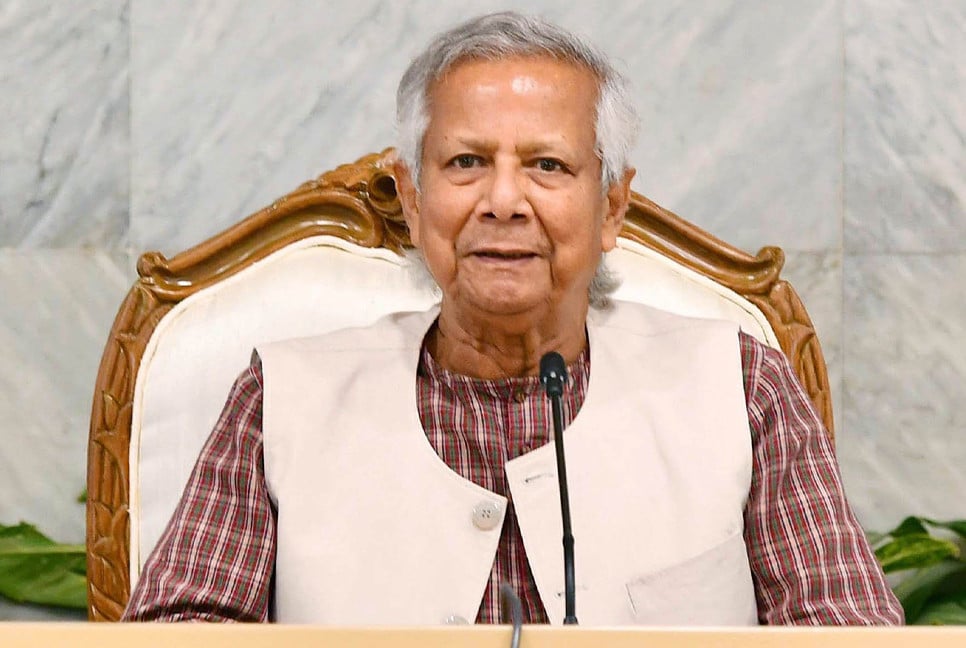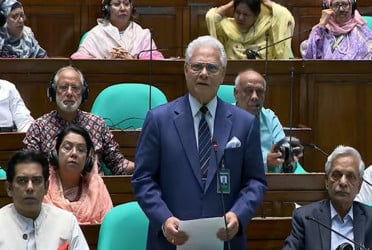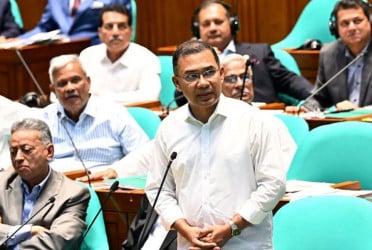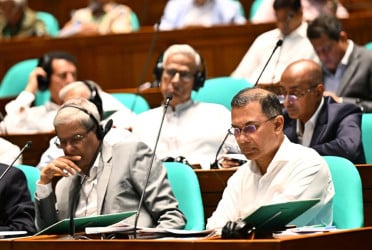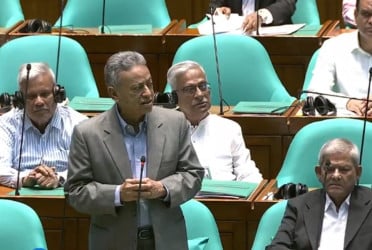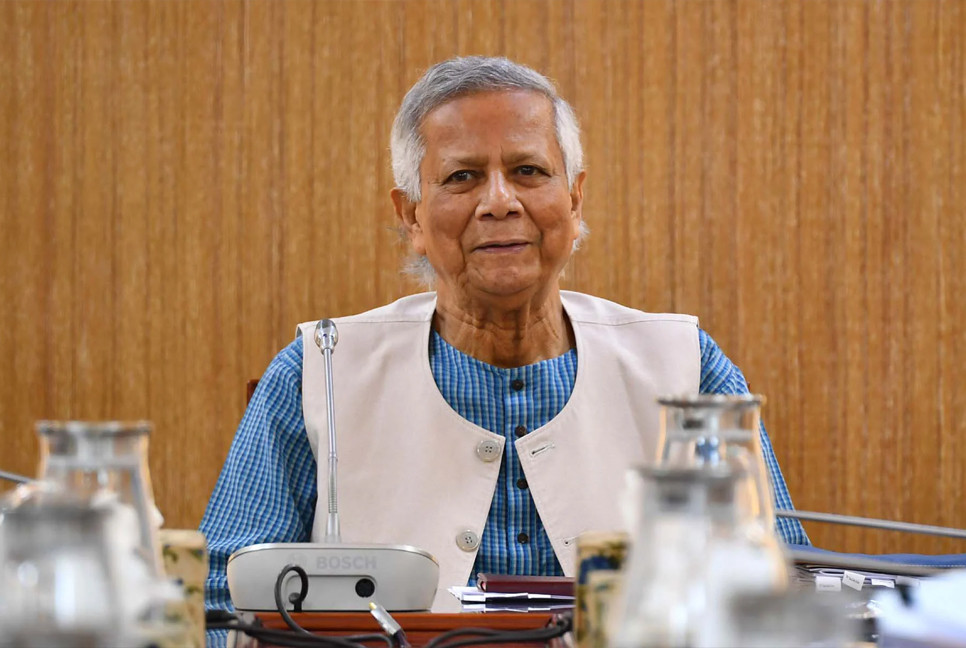
The Chief Adviser has once again proved that he is a visionary and a true guardian of the nation. At a time when political parties are divided over the referendum, the July Charter, the PR system, and the amendment of the RPO – when they are vocally opposing one another, throwing mud and accusations – Bangladesh’s politics has been clouded by renewed tension and uncertainty.
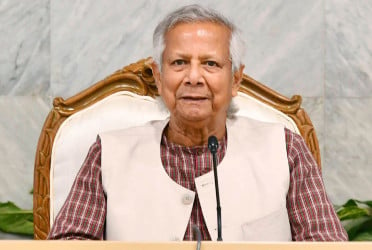
People have started doubting whether the election will take place at all. Public frustration about the country’s future has been growing. No one seemed to find a way out of the crisis. In such a moment, all eyes turned toward the nation’s guardian, Prof Yunus.
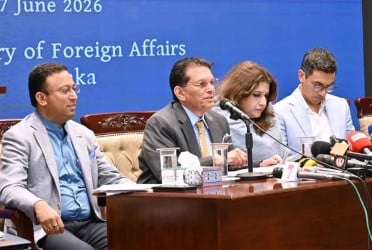
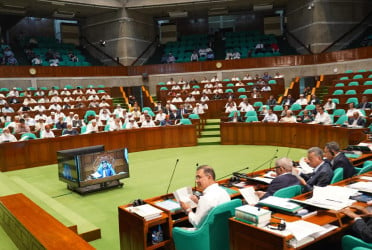
On Monday morning, 3 November, the Chief Adviser convened a meeting of the Advisory Council to resolve the political crisis centering on the implementation of the July Charter and the proposed referendum.
The decision that came out of that meeting under his leadership was truly significant – one that will remain a milestone for the future of democratic transition.
According to the official statement issued after the meeting, “An emergency meeting of the Advisory Council was held on the July Charter formulated by the National Consensus Commission and its implementation. The meeting expressed its gratitude to the Consensus Commission and the political parties for their efforts to establish agreement on reforms and for reaching consensus on several issues.
The meeting discussed the finalisation of the proposed July National Charter (Constitutional Reform) Order and the issues related to the holding and content of the referendum. It was observed that, despite prolonged discussions at the Consensus Commission, differences of opinion remain regarding some reform recommendations.
Moreover, the meeting expressed concern over the divisions among political parties about when the referendum will be held and what its content should be.
In this context, the meeting noted that an urgent final decision is required – on the timing and content of the referendum and on the course of action regarding differing opinions in the July Charter – in light of the Commission’s recommendations.”
The meeting also called upon the long-time allied political parties of the anti-fascist movement to hold discussions among themselves and to provide the government with a unified guideline as soon as possible – preferably within a week. Receiving such a directive from them would make it much easier for the government to make its own decision. The meeting further emphasised that there is no room for delay in the current situation.
It also reaffirmed the government’s commitment to holding the next parliamentary election in the first half of February 2026.
The significance of this decision is multidimensional.
First, through this decision, the Chief Adviser has reminded political parties of their responsibility in establishing democracy.
The July Charter and the referendum are, after all, matters of the political parties. Therefore, it is up to them to decide which path they will take. The government does not wish to impose anything by force.
By taking this decision, the Chief Adviser has allowed the National Consensus Commission to correct its earlier mistake.
If the Commission had not opened its basket of reforms right away but instead asked the political parties to discuss and identify the areas in which they wanted reform, this division and discord would not have emerged.
But the overzealous attitude of some members of the Commission and their tendency to impose everything on others have led to today’s crisis. Prof Yunus has chosen the right path to resolve it.
Second, through this decision, the Chief Adviser has expressed trust in the political parties. In the past, the political parties have come together to make groundbreaking decisions on many issues. Therefore, they are best positioned to resolve their own problems.
Third, this decision will mark a milestone in putting an end to the dominance of the so-called civil society over political parties.
It is not through decisions imposed by civil society but through discussions within political parties themselves that real solutions must emerge. Prof Yunus has practically demonstrated this truth.
Fourth, Prof Yunus is well aware that if political division continues to grow, not only will the election become uncertain, but fascism could return.
The achievements of the July Revolution would be wiped away. For this reason, through this decision, he has created an opportunity for the forces of the July movement to unite once again.
If successful, this could restore a healthy and harmonious political environment in the country.
Finally, the Chief Adviser has opened the path to empower the people. Through this process of dialogue, the public will be able to understand the attitudes and intentions of the political parties.
As a result, the Chief Adviser’s decision has made it easier for the people to make their own choices in the upcoming election.
It is hoped that political parties will understand the people’s anxiety and sentiment. Placing the interests of the nation and the people above their own partisan interests, they will narrow their differences and play a responsible role in the transition to democracy.
That is what the people of the country expect.
The writer is a playwright and columnist. Email: [email protected]