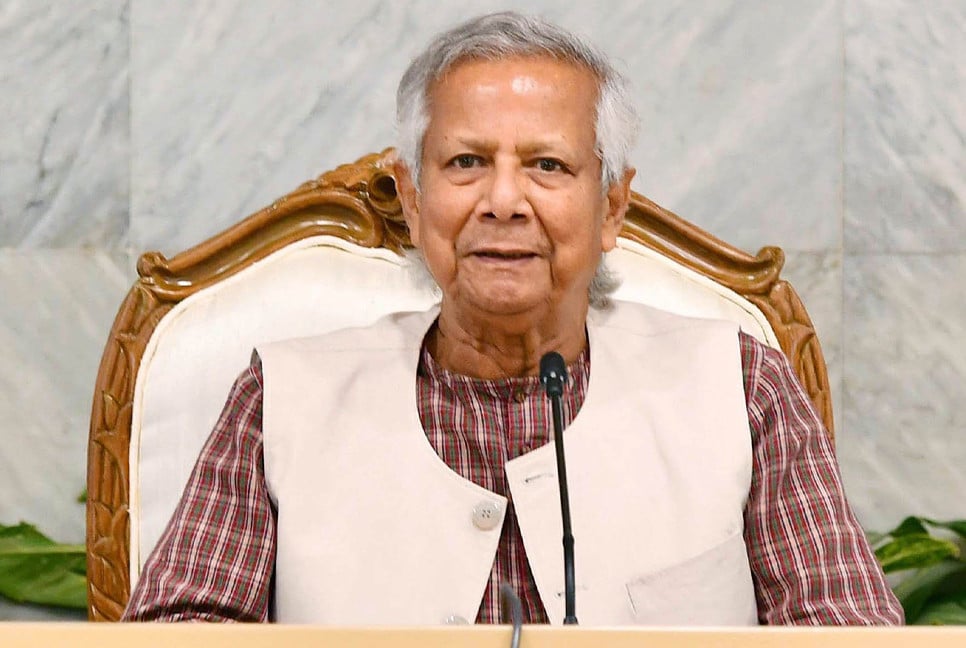
One of Chief Adviser Prof Muhammad Yunus’s greatest strengths is that he does not deny reality. He can read situations clearly and does not hesitate to share the truth with the people. He wants to overcome crises together with the nation.
On Wednesday, October 29, he presided over the first coordination meeting on the upcoming national election. At the meeting, Prof Yunus said, “Many forces – both inside and outside the country – will try to sabotage the election. These will not be small efforts; powerful actors will attempt to derail the process. Sudden attacks may occur, and this election will be challenging. But no matter how fierce the storm, we must overcome it.”
Prof Yunus did not sugarcoat the obstacles lying ahead on the road to the election. Instead, he warned and prepared the nation. His goal is not to lead people in darkness, but to unite all citizens to restore democracy.
On Tuesday, the National Consensus Commission formally presented its recommendations for implementing the July Charter to the Chief Adviser. On Monday, the final meeting of the commission was held under his leadership. Bangladesh’s political future now largely depends on how the government implements the commission’s proposed action plan for the July Charter. In particular, the commission left it to the government to decide when the referendum on the July Charter will be held. But the recommendations that failed to gain unanimous political support have already created new complexities. The BNP and several other parties have described the omission of their “notes of dissent” as a conspiracy. BNP Secretary General Mirza Fakhrul Islam Alamgir called it “a deception with the nation.” The commission’s report, instead of creating harmony, has deepened political divisions. Many believe the commission tactfully shifted all responsibility to the chief adviser, keeping itself safe from blame. Now, everything depends on Prof Yunus – and not only Bangladesh but the entire world is watching this Nobel Peace Prize laureate with keen attention.
The commission submitted its report at a time when a tense and suffocating atmosphere grips the country – like the uneasy calm before a storm. Some advisers are becoming entangled in controversies. Even before completing their most critical task – holding the election – many appear more focused on finding safe exits. Political parties are increasingly divided, the bureaucracy is unstable, the police force has yet to regain public trust, and the economy – aside from remittances – shows little progress. Industrialists are disheartened, businesses have slowed almost to a halt, and unemployment is rising.
Social unrest is also rampant. Mob violence has become common. In educational institutions, violence now overshadows learning. Incidents of clashes are being reported almost daily. The recent violent confrontation between students of two private universities in Ashulia, Savar, shocked the entire nation – buses were set on fire and over 150 students were injured. Such incidents show how reckless young people have become.
Amid this climate of uncertainty, Bangladesh has begun its journey toward an election – a journey as difficult as crossing a dangerous jungle. Everyone understands that only a credible election can end this uncertainty, restore peace, and bring the nation back to normalcy. A legitimately elected government alone can end this anxious waiting.
Yet, powerful groups, both domestic and foreign, are actively working to obstruct this election and destabilize the country by undermining its democratic process. Against this conspiracy, incompetence, and chaos, one man continues his quiet, determined fight – Prof Muhammad Yunus.
He knows that the only way out of Bangladesh’s crisis is through an election. Calmly and steadfastly, he is navigating the turbulence, committed to holding the election in the first half of February. His presence alone keeps the nation hopeful. The majority of Bangladeshis believe that as long as Prof Yunus is at the helm, the country will overcome all obstacles and anchor safely at the harbor of democracy.
Not just Bangladesh – the entire world is watching Prof Yunus. Using all his intellect and experience, he is guiding the nation toward democratic restoration.
He was scheduled to attend the Future Investment Initiative Conference in Riyadh from 27 October at the invitation of Saudi Crown Prince and Prime Minister Mohammed bin Salman, but he cancelled the trip due to the pressing demands of the July Charter’s implementation and election preparations. This decision alone demonstrates his unwavering commitment to the national cause.
It is now clear that the country is going through a silent crisis. Controversies surrounding several advisers have drawn criticism from all major political parties – BNP, NCP, and Jamaat-e-Islami – each questioning the roles of specific advisers. If all those names were listed, it would expose a serious credibility crisis.
Some advisers seem more interested in personal safety than in fulfilling their duties. Others are creating unnecessary controversy – like Information Adviser Mahfuz Alam, whose recent comment that “the cabinet will close in November” alarmed the entire nation. The public was left wondering – if the cabinet closes, who will run the country? Would that not lead to chaos or even civil unrest?
Prof Yunus had to intervene quickly. His office issued a statement rejecting the adviser’s claim, assuring the public that the Advisers’ Council would continue its duties until a new government takes office. The statement clarified that cabinet meetings and reform initiatives will proceed beyond November to avoid confusion.
Thus, amid both internal and external hostility, Prof Yunus must constantly steady the ship of state – correcting mistakes, calming tensions, and moving forward.
The chief adviser now faces three major challenges: bringing all political parties to a common ground for implementing the July Charter, maintaining law and order so that citizens can vote freely and fearlessly, and ensuring that the administration remains neutral and controversy-free before and during the election.
It must be remembered that if the election is not free and fair, the July Revolution will fail – and the country may descend into chaos.
Prof Yunus knows that he must accomplish this enormous task with limited means. Yet, he has always made the impossible possible. Now, he faces the toughest test of his life – and Bangladesh’s future depends on his success.
The whole world is watching this Nobel laureate of peace, as he strives to lead his nation toward democracy once again.
Audite Karim is a writer and playwright. Email:[email protected]