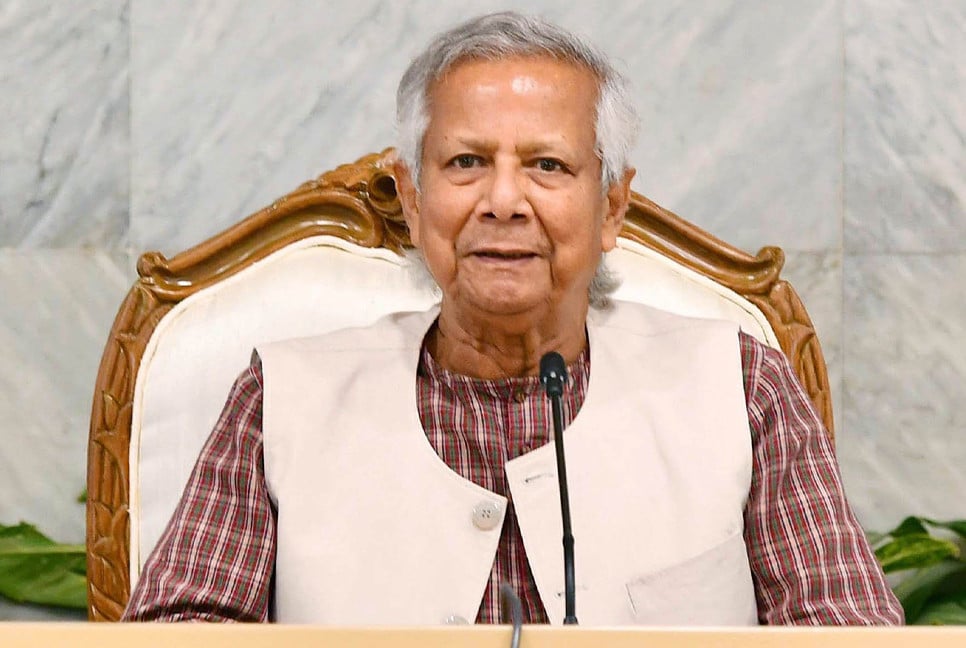
After the July uprising, the people of this country wanted a united Bangladesh. They hoped that the divisions and hostilities among political parties would end, that there would be rational debate among them, and that politics would be guided by a spirit of harmony. They dreamed of a future free from autocracy – where no one would sit in power forever and oppress the people to stay in office. For that very reason, under the leadership of Prof Yunus, the interim government took initiatives for state reform. Several committees were formed with the goal of making fundamental changes to the constitution and state structure. These committees, formed last year, were mostly entrusted to representatives of civil society.
Politicians are responsible for governing the country; therefore, these reform committees should have included representatives from political parties. At that time, political parties did not think about the long-term consequences and placed their trust in civil society. When the various reform commissions began to submit their reports, concerns arose that the reform proposals were not reflecting the people’s aspirations. Rather, the civil society members were trying to impose their own thoughts on the people. From the very beginning, objections were raised against the recommendations of the Media, Women, and Public Administration Reform Commissions. These were rejected by the public as biased and one-sided – particularly, the recommendations from the Women’s Reform Commission sparked protests on the streets. Consequently, the controversial commission recommendations were trimmed out.
At that point, political parties should have realised that they must play a role in formulating reforms that they themselves would later implement. Nevertheless, after removing the controversial recommendations, the chief adviser formed the National Consensus Commission to finalise a comprehensive set of recommendations based on the remaining reform commissions’ proposals. These commissions included: the Constitutional Reform Commission, Electoral Reform Commission, Police Reform Commission, Anti-Corruption Commission Reform Commission, Judicial Reform Commission, and Public Administration Reform Commission. After the six commissions submitted their recommendations by February, the National Consensus Commission was established under the leadership of the chief adviser and began its work on 15 February.
Based on the six commissions’ reports, the National Consensus Commission sent 166 recommendations to political parties to gather opinions. Then, from March onward, over a two-month period, it held separate discussions with different political parties to finalise their views. Before that, political parties had already submitted their written opinions on the 166 recommendations. Starting in June, the commission held joint meetings with 30 political parties and discussed at least 20 core reform issues. Initially, consensus was reached on 64 points. Then, over two months, they continued discussions on the remaining 20 issues.
This process culminated in the drafting of the July National Charter 2025, incorporating the opinions of all political parties. Although Prof Yunus was the president of the National Consensus Commission, its key operations were carried out by its vice-chairman, Professor Ali Riaz. It should be noted that Ali Riaz was also the chairman of the Constitutional Reform Commission. Initially, prominent lawyer Prof Shahdeen Malik had been announced as the chairman of that commission, but he later mysteriously withdrew. Subsequently, Ali Riaz was brought in from the United States. Riaz studied Mass Communication and Journalism at Dhaka University, where he was involved with leftist (BSD) politics and was elected Literary Secretary in the DUCSU election from the BSD panel. After teaching briefly at Dhaka University, he worked for the BBC before joining Illinois State University in the U.S., where he currently teaches political science. It is important to note that Prof Riaz is not a constitutional or legal expert.
After extensive discussions with 30 political parties, the National Consensus Commission prepared its final recommendations. But once published, controversy erupted. It was said that only the points on which all parties agreed would be included in the final recommendations. However, the draft revealed that several issues lacking consensus were also included in the charter. The July Charter signed on October 17 mentioned “notes of dissent.” But in the implementation proposal submitted by the commission on October 28, those notes of dissent were omitted. Out of 48 constitutional reform proposals, at least 36 contain differing opinions from one or more parties. In the version signed on October 17, each proposal noted that any political party or coalition, upon winning a public mandate, could act accordingly.
However, in the implementation draft, only the reform proposals were listed – without any mention of dissent. The order stated that the Constitutional Reform Council would complete its reforms according to the “July National Charter” mentioned in Schedule 1 of the order – meaning dissenting views would not be considered.
When asked how dissenting opinions were addressed, Professor Ali Riaz said that while some issues had notes of dissent, the commission emphasised public consent, suggesting that people’s approval or disapproval should determine the outcome. He claimed that among the 48 issues identified, the commission prioritised public consensus over political disagreement.
Clearly, this is a form of betrayal toward the political parties. It raises the question of whether the commission has the authority to impose unresolved issues by force – especially those included secretly and without consent. The 28 October proposal for implementing the July Charter has heated up and divided the political arena.
Just as the country was heading toward an election, the National Consensus Commission’s recommendation shocked the conscious public. This event is likely to disrupt the pre-election atmosphere and create new uncertainty. The BNP has already reacted strongly. Party policymakers have stated that instead of promoting unity, the commission has fueled division. BNP Standing Committee member Salahuddin Ahmed said that the commission’s recommendations aim to create “national disunity,” while another member, Amir Khosru Mahmud Chowdhury, called the proposal for a pre-election referendum “irrelevant.”
The country is already in turmoil, and conspiracies to derail the election are ongoing. So why did the National Consensus Commission take such a step? Do some within the commission not want the election to happen?
There seems to be a faction within the government eager to remain in power without holding elections. A section of our so-called civil society has always been anti-democratic. They want to create instability and retain influence at the center of power. This same elite group engineered divisions and chaos in 2007, paving the way for the 1/11 government. Are certain quarters now trying to recreate a similar situation? Is that why they are using the July Charter as a weapon?
Audite Karim is a writer and playwright.Email:[email protected]