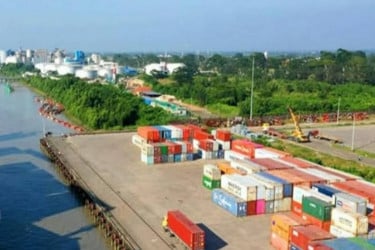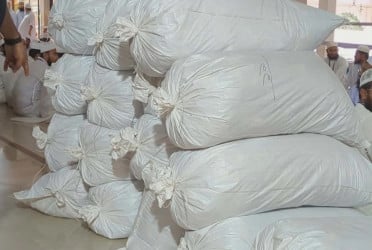
Bangladesh’s dependence on imports for consumer goods is increasing. To meet domestic demand, the country now imports more than 10 types of consumable products — including lentils, wheat, maize, chickpeas, peas, dairy products, and honey.
Despite having production capacity, sugar has become almost entirely import-dependent. Due to low local production of other goods, import expenses for consumer products are rising sharply every year. Among total imports, 68% now come from just three countries — India, China, and New Zealand.
According to data from Bangladeshi banks, the country imported consumer-related products worth $2.11 billion in 2024, up from $2.01 billion in 2023. Of these imports, 68% came from India, China, and New Zealand — with 35% from India, 22% from China, and 11% from New Zealand.
During the 2022–23 and 2024–25 fiscal years, Bangladesh imported large quantities of rice, wheat, lentils, sugar, ginger, baby food, and dried chili. In the 2022–23 fiscal year alone, Bangladesh imported $327 million worth of rice, $224 million of wheat, $75 million of chickpeas, and $121 million of dried chili from India. Two years later, in the 2024–25 fiscal year (FY25), imports rose further — with $456 million of rice, $120 million of sugar, $200 million of onions, and $113 million of dried chili coming in.
From China, imports during the 2023–24 fiscal year included $145 million worth of garlic, $27 million of ginger, $7 million of cumin, and $12 million of cinnamon. In FY25, garlic imports rose by $34 million, while imports of ginger and cinnamon increased to $30 million and $9 million, respectively.
Analysts believe that the country’s agricultural production is declining each year due to a combination of factors — including the loss of farmland, lack of proper research, climate change, and reduced productivity. Consequently, import dependency continues to grow.
According to the Bangladesh Bureau of Statistics (BBS), the country currently has 36.46 million acres of land, of which 20.81 million acres are under cultivation. An additional 671,000 acres of arable land remain uncultivated. Moreover, between 2020 and 2023, total cultivable land decreased from 20.08 million acres to 19.83 million acres — a drop of 1%, marking the sharpest decline in the past decade.
A study by the Soil Resource Development Institute (SRDI) titled “Trend of Agricultural Land Disappearance in Bangladesh” reports that between 2000 and 2012, an average of 68,760 hectares of farmland was lost annually to non-agricultural use.
Former World Bank Chief Economist Dr. Zahid Hussain told Bangladesh Pratidin that Bangladesh lacks the capacity to produce enough consumer goods to meet domestic demand. “Not just Bangladesh — no country in the world has full production capacity for every product,” he said. “Even if a country has capacity, it’s not rational to produce all goods locally. When production costs are high, importing at a lower cost to meet food demand is a practical decision.”
He added, “Domestically produced goods are not enough to meet our needs, and since production costs are rising, importing at lower prices is more efficient. However, we must maintain a balance between imports and exports so that our import expenses — especially for food — don’t push us into a debt burden.”
Bd-pratidin English/FNC