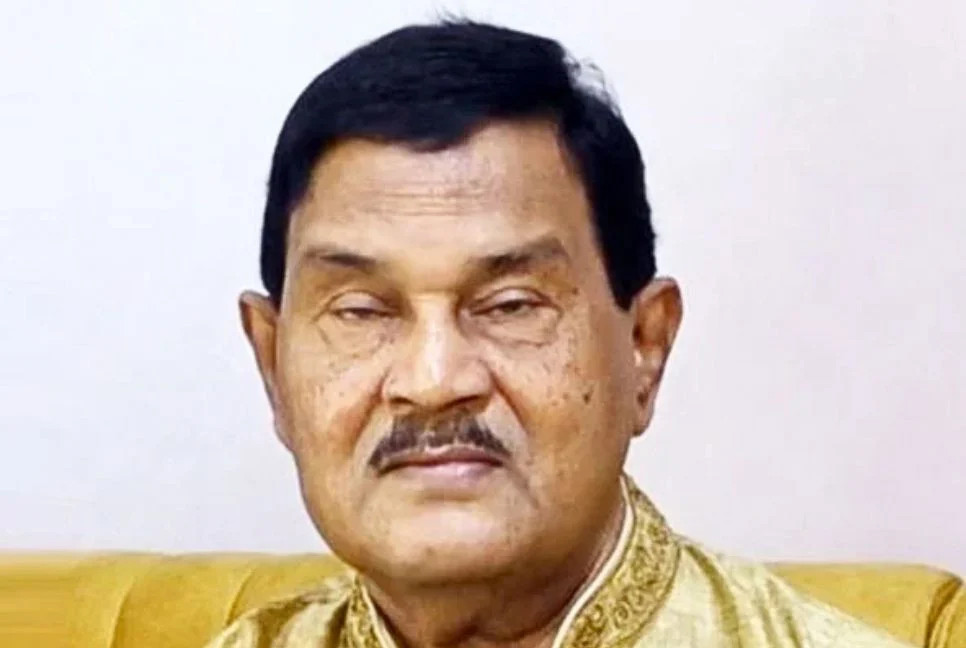
Tarique Rahman, acting chairman of the Bangladesh Nationalist Party (BNP), draws inspiration from the political vision and patriotism of his parents. Combining intelligence with strategic acumen, he is steering the BNP, Bangladesh’s largest political party, toward a stronger future. On 6 October, he gave two significant interviews—one with the London-based Financial Times and another with BBC Bangla. These discussions have sparked renewed hope and political enthusiasm among patriots both within the country and abroad.
After years of authoritarian governance, the nation’s peace-loving and development-focused citizens are now eagerly anticipating the rise of a truly democratic, representative, and patriotic government, along with the restoration of good governance.
Tarique Rahman told Financial Times that he is “firmly confident” that the upcoming election will provide an opportunity for participation in a free and fair environment. He further stated that in such an election, the BNP will come to power based on the people’s mandate. He emphasized that the mass uprising of July–August 2024 will not be truly complete until a credible election is held in the country.
With confidence, Tarique Rahman stated that if the next election is free and fair, there is no doubt about the BNP’s victory, and the party will secure a parliamentary majority on its own.
According to Financial Times, public opinion surveys show the BNP ahead, and it is anticipated that after the February vote, Tarique Rahman will assume the role of Prime Minister. The report also noted that the interim government’s head, Professor Dr. Muhammad Yunus, has barred Sheikh Hasina’s party from political activities.
Regarding ongoing cases against the Awami League, Tarique Rahman said that trials are underway against its leaders, and if they are convicted, questions will arise about how the party can participate in elections. He emphasized in the interview that the July–August 2024 uprising was not orchestrated by any single party or individual; it was a people’s movement. The true architects behind this movement were ordinary citizens who believe in democracy and participated irrespective of party affiliation.
Martyr President Ziaur Rahman, the great proclaimer of independence and architect of modern Bangladesh, inspired the political agenda of Bangladeshi nationalism and multi-party democracy. Under his legacy, National Leader Begum Khaleda Zia was elected Prime Minister three times, leading both the party and the country. Tarique Rahman has been in exile in the United Kingdom since 2008. He faced multiple politically motivated cases, and during the one-party government, he endured severe persecution, necessitating medical treatment abroad.
During his 17 years in exile, he sorrowfully recalled the tragic death of his younger brother Arafat Rahman, the inhumane political persecution of his mother Begum Khaleda Zia, and the unlawful eviction from his father’s memory-laden home, which was destroyed by the previous Awami League government. These accounts have deeply touched the hearts of the people. Despite limited communication and court-imposed restrictions on his statements during exile, since taking responsibility for the party, he has maintained contact with leaders and grassroots activists across the country, providing guidance to this day.
He has pledged that if the BNP assumes state power, the “cycle of revenge” will be broken. As part of this, disciplinary action has been taken against 7,000 leaders and activists since last August for violations of party discipline. Regarding diplomatic relations with India, he emphasized that Bangladesh’s interests will always come first. He reiterated his commitment to securing a fair share of common river water with India and stated that tragic incidents like the Feni killings will never be tolerated. On Sheikh Hasina’s potential refuge in India, he noted that if such shelter is provided and it angers the people of Bangladesh, the relationship will cool—reflecting the position of the Bangladeshi populace. On international relations, the BNP’s fundamental principle is: “Bangladesh first.”
The people, the country, and its sovereignty will be preserved, and national interest will be prioritized above all. Today, it is clear to everyone that Tarique Rahman is steadfastly advancing the politics of Bangladeshi nationalism and the unfinished work of Ziaur Rahman. I personally began my political journey in the mid-1970s as a founding member of the Jago Student Association (JASAS) and the Nationalist Student Party, inspired by Ziaur Rahman’s politics. I served as joint convener and later president of JASAS for a long period.
After the martyrdom of Ziaur Rahman, I held various organizational positions in the BNP led by Begum Khaleda Zia, including Information and Research Secretary, working closely with the Zia family. During 16 years of rule by Sheikh Hasina’s government, successive cases were filed against Begum Khaleda Zia and Tarique Rahman, and countless BNP activists and supporters faced persecution, disappearances, and killings. At least 1,500 activists were killed in anti-dictatorship movements, and thousands more were injured or disabled. Yet, the BNP could not be silenced. The party founded by Martyr Ziaur Rahman has grown into a major political force, beloved across all levels of society.
Martyr Ziaur Rahman’s vision was to unify the people of the hills and plains under Bangladeshi nationalism and strengthen independence and sovereignty. His goal was to build a “rainbow state” ensuring security for all communities. The BNP’s political mission is clear: to complete the unfinished work of Martyr Ziaur Rahman and build a self-reliant Bangladesh. Our expectation is that Tarique Rahman will be the true political successor of Ziaur Rahman and Begum Khaleda Zia. Moving past nearly 18 years of political failure, the only alternative to advance the country is a new political awakening under Tarique Rahman’s leadership. The people want democratic and good-governance-based politics, which reflect the political philosophy of Ziaur Rahman and Begum Khaleda Zia and will be considered guiding principles for modern Bangladesh.
Author: Former Information and Research Secretary of BNP