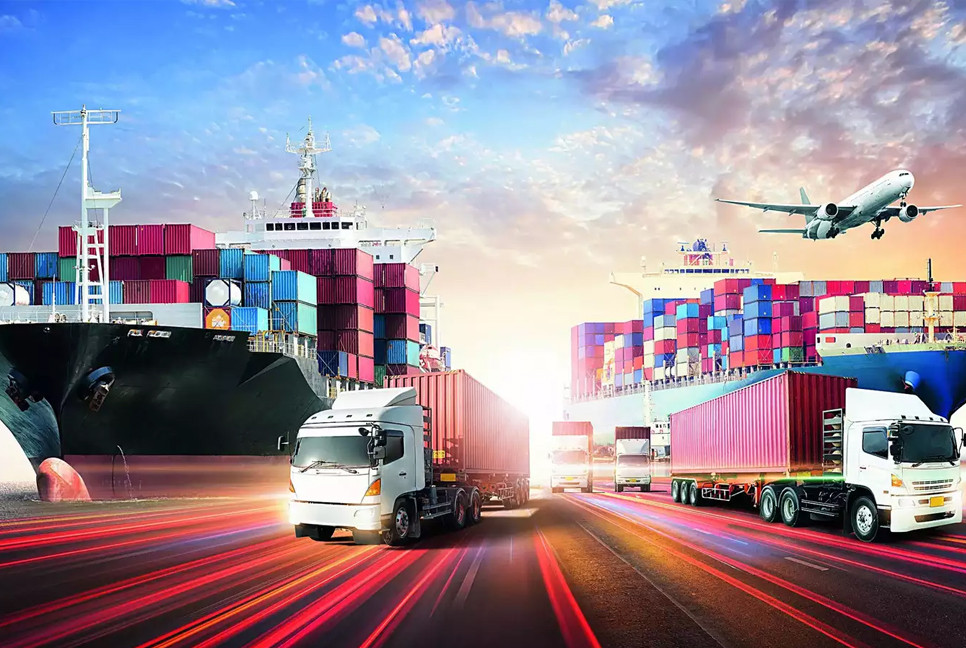
Bangladesh’s export sector faces mounting challenges due to its dependence on a single product and a limited number of markets. Currently, nearly 83 percent of the country’s export earnings come from ready-made garments (RMG).
A sudden drop in global demand for garments could cause major disruption, while any trade or diplomatic tension in key export regions could lead to a sharp decline in earnings.
Recently, Bangladesh’s apparel exports have fallen for two consecutive months following the imposition of counter-tariffs by the United States.
The fall in garment exports has also dragged down the country’s overall export earnings. In September, apparel exports dropped by 5.66 percent, while total exports declined by 4.61 percent.
Experts say this heavy reliance on a single product and market poses serious risks, and diversifying export products is essential as Bangladesh moves towards graduation from the Least Developed Countries (LDC) category.
According to data from the Export Promotion Bureau (EPB), the garment sector remains the top earner for Bangladesh, though it suffered a downturn last month. In September 2025, apparel exports stood at USD 2.839 billion, compared to USD 3.011 billion in the same month last year.
Agriculture, the second-largest export sector, also showed a negative trend — earning USD 101.9 million in September compared to USD 104.3 million a year earlier, marking a 2.37 percent decline.
Leather and leather goods ranked third, earning USD 90.98 million in September, up 3.55 percent from USD 87.86 million in the previous year. Jute and jute goods, in fourth place, brought in USD 74.33 million — down 1.04 percent from USD 75.11 million in 2024.
Household goods ranked fifth, earning USD 67.6 million, slightly lower than USD 67.97 million a year ago, reflecting a 0.54 percent drop.
A recent Asian Development Bank (ADB) report titled “Promoting Export Diversification in Bangladesh” noted that Bangladesh’s exports are four times more concentrated than those of other developing countries.
The report highlighted the country’s over-reliance on a few markets, with more than 80 percent of exports going to North America and the European Union.
Ten countries account for 72 percent of Bangladesh’s total exports, compared with 52 percent for India and 64 percent for Sri Lanka.
Speaking about the need for diversification, Syed Nasir, Managing Director of Exclusive Can, said, “To expand export diversity, Bangladeshi firms need to participate more in international trade fairs.
We must refine our policies, reduce corporate tax rates, and adopt the strategies other countries have used to boost exports.”
Bangladesh Knitwear Manufacturers and Exporters Association (BKMEA) President Mohammad Hatem added, “Due to the tariff shock from the United States, Bangladesh’s apparel exports fell by 5.66 percent in September, which has directly affected the country’s overall export earnings.”
Bd-pratidin English/ ANI