The blue economy remains largely untapped in Bangladesh. Apart from fishing and salt production, the country has yet to fully utilize the vast resources of the Bay of Bengal. Limited research capacity at university oceanography departments and the Oceanographic Research Institute has hindered progress. Consequently, oil, gas, and other valuable seabed minerals remain beyond reach. Bangladesh also lacks the technological and institutional capacity to carry out such explorations, according to the Bangladesh Oceanographic Research Institute and the Ministry of Power, Energy and Mineral Resources.
Sources further reveal that even after 54 years of independence, Bangladesh has not conducted any survey of marine resources beyond 100 meters of depth.
Following the maritime boundary victory, Bangladesh gained access to two categories of blue economy resources—living and non-living. The living resources include fisheries, marine animals, seaweed, and aquatic plants. Seaweed, once processed, can be used to make medicines, and among them, spirulina is highly valuable. The sea hosts nearly 500 fish species, along with 36 shrimp, 20 crab, and 336 mollusk species. Shellfish, octopus, sharks, and many other creatures are also abundant. The non-living resources include minerals such as oil, gas, and limestone. Additionally, 17 types of valuable mineral sands are found, including zircon, rutile, sillimanite, ilmenite, magnetite, garnet, kyanite, monazite, and leucoxene. Monazite is especially significant. Large deposits of clay suitable for cement production are also present on the seabed. Yet Bangladesh has not been able to utilize any of these resources.
To verify preliminary potential in the Bay of Bengal, Germany’s Schlumberger conducted a multi-dimensional survey. Petrobangla also holds data from a two-dimensional survey carried out by ConocoPhillips, which indicated gas prospects. However, recoverable gas reserves can only be confirmed by drilling exploration wells—and none have yet been drilled in Bangladesh’s deep sea. In contrast, neighboring India and Myanmar have already discovered gas in the same waters.
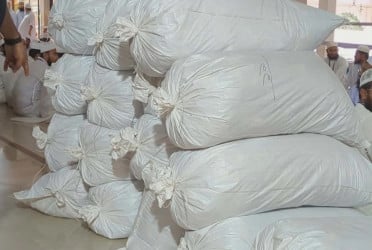
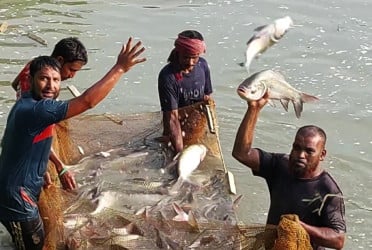
According to a report from the Bangladesh Oceanographic Research Institute, the Bay of Bengal yields 8 million tons of fish annually. Of this, Bangladesh harvests only 0.7 million tons—around 10 to 12 percent. Valuable heavy minerals such as ilmenite, titanium oxide, rutile, zircon, garnet, magnetite, monazite, and cobalt have been traced on the seabed, but Bangladesh lacks the technology to extract them. On the other hand, the 1.5 million tons of salt collected annually from the Bay is sufficient to meet domestic demand.
At a recent seminar, Dr. Md. Muslim Uddin, former chairman of the Oceanography Department at the University of Chattogram, remarked that Bangladesh has been able to harness only about 10 percent of its potential. He stressed that limitations in capacity and advanced research are holding the country back.
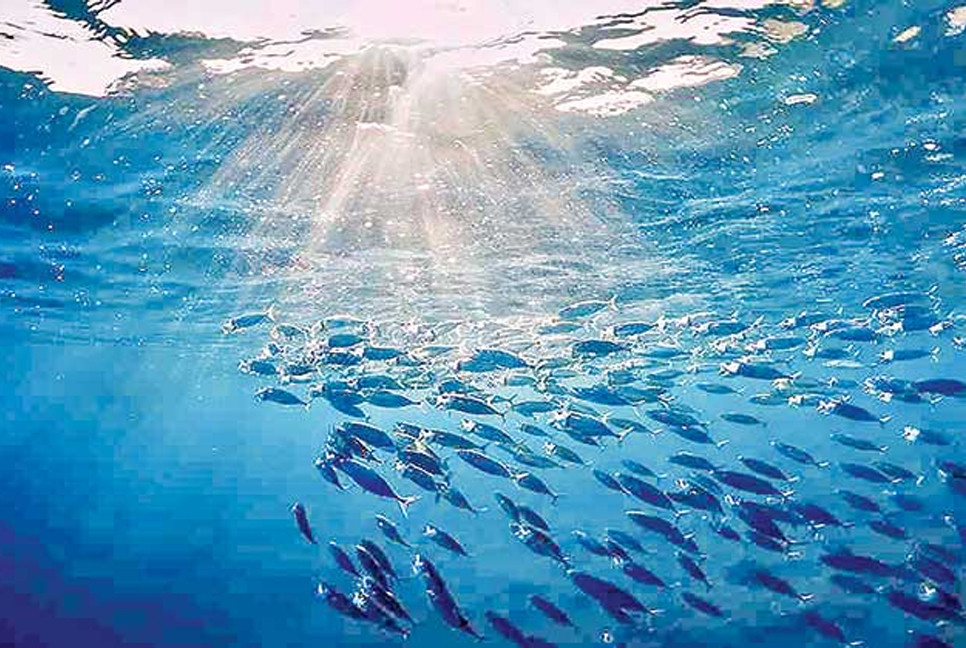
Bangladesh settled maritime boundary disputes with India and Myanmar at the International Tribunal in 2012 and 2014, securing sovereign rights over more than 118,813 square kilometers of territorial waters, 200 nautical miles of the exclusive economic zone, and the continental shelf extending 354 nautical miles from the Chattogram coast. Reportedly, in 2020, the Ministry of Fisheries and Livestock initiated a pilot project for harvesting tuna and other pelagic fish. Plans were made to procure three longliner fishing vessels, but the project has yet to materialize. In the meantime, fishermen from neighboring India and Sri Lanka have been intruding into Bangladesh’s deep waters to catch vast quantities of fish.
Bd-pratidin English/ ANI