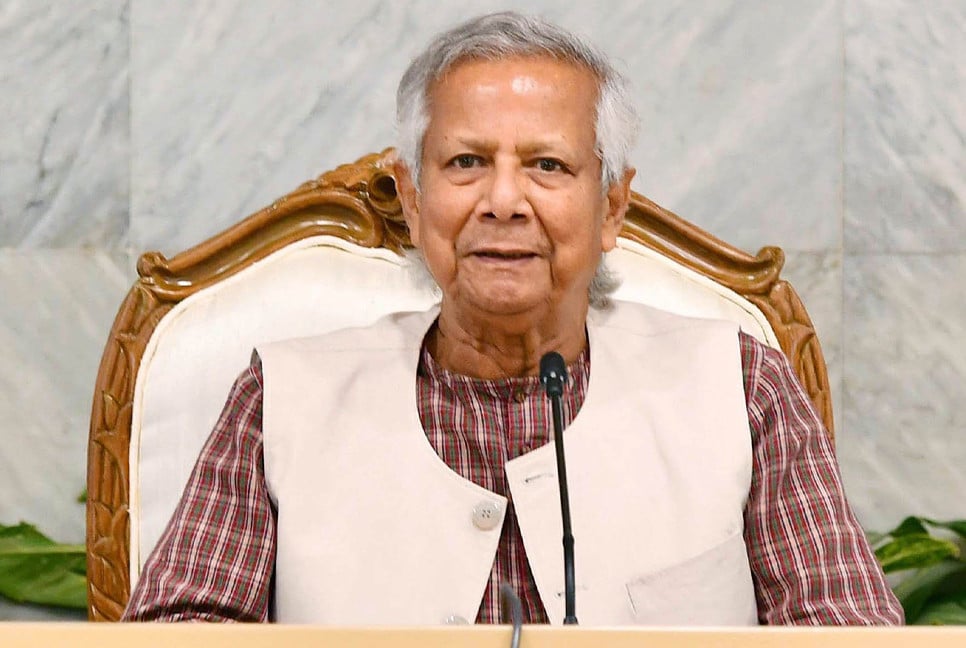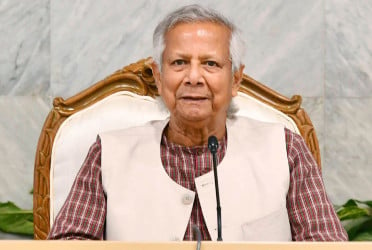

Chief Adviser (CA) Prof Muhammad Yunus is in New York to attend the United Nations General Assembly (UNGA), and the nation’s eyes are fixed on him.
The pressing question is not about what speech he delivers on 26 September, but whether or not the ongoing uncertainty and crisis centring the election will find a solution there.
Will Bangladesh hold the election in February, or will it sink into the quicksand of divisive politics? The answer may emerge in the next two weeks in New York.
In June, the meeting in London between the CA and BNP’s acting chairman Tarique Rahman gave birth to a bud of hope for an election.
For the first time, the Prof Yunus-led government officially declared its positive stance on holding elections in the first half of February. Will that declaration reach full bloom in New York?
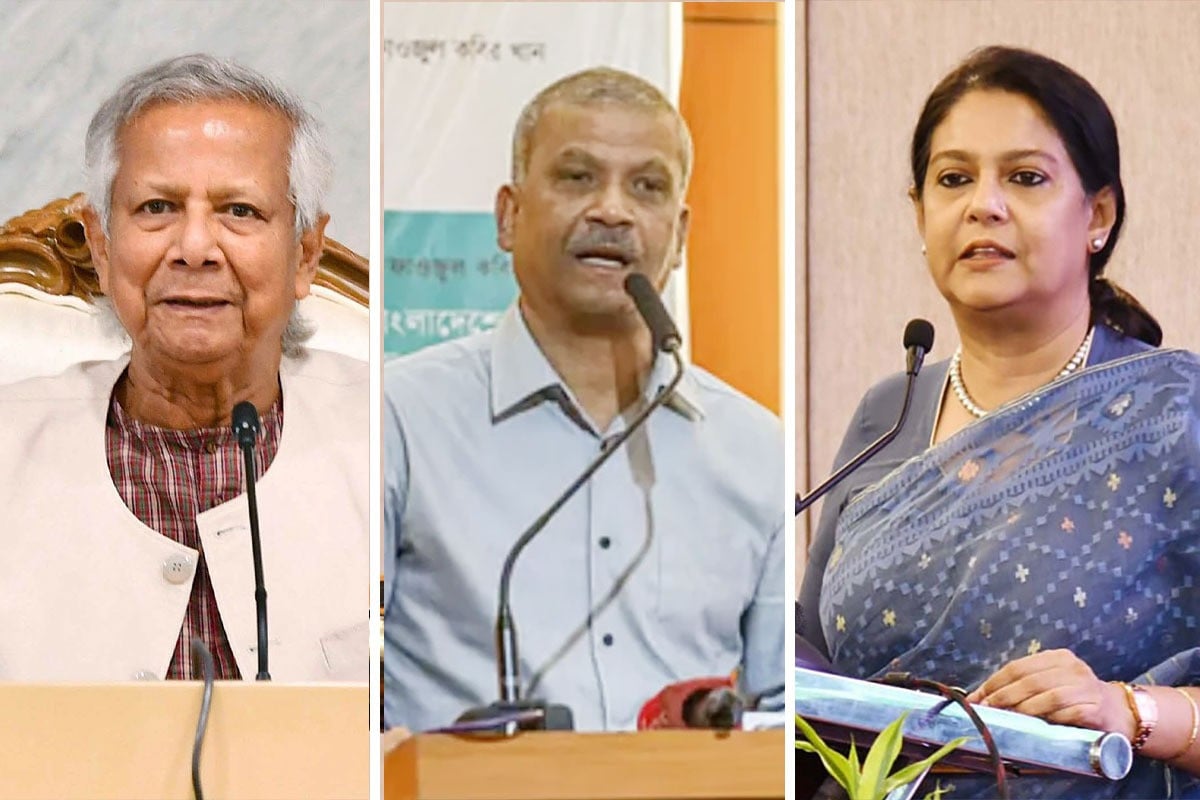
In the UNGA, Prof Yunus is accompanied by six leaders from three political parties. On this two-week trip, his companions are BNP Secretary General Mirza Fakhrul Islam Alamgir, Jamaat-e-Islami Nayeb-e-Ameer Prof Syed Abdullah Mohammad Taher, NCP Member Secretary Akhtar Hossain, and NCP Senior Joint Member Secretary Prof Tasnim Jara.
Tarique Rahman’s Foreign Affairs Adviser Humayun Kabir and US Jamaat spokesperson Prof Nakibur Rahman have joined the delegation from the USA.
While there is interest in how Prof Yunus presents Bangladesh’s position internationally, with six leaders from three parties, the greater focus is on the possibilities for resolving the nation’s political crisis and deadlock.
Over the past 13 months, we have seen that whenever the country has faced a political crisis, Prof Yunus has devised innovative ways to resolve it, easing public anxiety. Many are comparing it to the CA’s London trip in June.
Did we forget June? Amid election-related uncertainty and tense circumstances, Eid-ul-Azha was observed. BNP had begun preparing movements demanding elections. In such unrest, the chief adviser travelled to the UK.
On 13 June, he held a historic meeting in London with Tarique Rahman. Their joint statement declared that national elections would be held in the first half of February.
Instantly, distrust and uncertainty vanished, and a sense of relief spread among the people.
Now, three months later, Bangladesh is again in a similar situation. On 5 August, in his address to the nation marking the first anniversary of the July revolution, the CA formally announced, based on the London understanding, that national elections would be held in February next year.
Though not welcomed by some political parties, the general public received it positively. Thus, whatever parties may feel privately, they have all accepted the February election announcement.
The challenge lies not in whether the election takes place in February, but in the method of implementing the July charter.
The National Consensus Commission, after lengthy discussions with political parties, drafted a July Charter – a document of state reform.
It outlines how Bangladesh should be governed in the future, aiming to establish a transparent, accountable democracy where fascism cannot rise again.
On the charter content, there is no disagreement among political parties. Finalised after more than eight months of dialogue, it reflects compromises by all parties, setting out a shared vision for the future of Bangladesh. The dispute lies in how to implement it.
In addition, Jamaat has demanded that the Proportional Representation (PR) system be introduced in the upcoming election.
At first glance, the crisis may seem extremely difficult, even impossible to resolve. However, closer analysis shows the differences are psychological, rooted in a lack of mutual trust and confidence.
The July charter includes some fundamental constitutional changes. Only elected representatives have the authority to amend the constitution. If the charter is adopted now through constitutional order or referendum outside Parliament, it may later face legal challenges.
Laws cannot be changed without legitimate authority, and the constitution is the supreme law. If we truly want to build a new Bangladesh, we must uphold the constitution as the highest authority.
No law can stand above it. We must not create a precedent that allows future regimes to discard it.
Those who want PR must build public opinion for it. If the people support PR, they will vote for Jamaat, who can then introduce it in Parliament.
One must remember that, at this moment, there is no scope for amending the constitution. The interim government led by Prof Yunus was formed on 8 August last year under the current constitution.
Acting on a Supreme Court reference, the President formed the interim government, administered the oath to the CA and other advisers, and dissolved Parliament.
Therefore, the upcoming election must be held under the existing constitution. There is no alternative.
Some fear that petitions in the Supreme Court seeking restoration of the non-partisan caretaker government may trigger a new political and constitutional crisis.
They argue that if the Court rules in favour, the current government cannot stay in power and a new caretaker must be formed to hold elections. But such interpretations lack a legal basis.
Even if the court issues such a ruling, only Parliament can implement it. For example, when the Eighth Amendment was struck down, Parliament implemented the ruling by amending the constitution. The same process would apply here.
Thus, this interim government, formed through a Supreme Court reference, has no alternative but to hand over power to an elected government.
It cannot enact constitutional orders or hold referendums. Only elections provide the legitimate path to transfer power. Both the interim government and political parties know this truth.
That is why Prof Yunus repeatedly says, “There is no alternative to elections.”
Those raising alternative demands do so out of mistrust and to pressure the BNP. But such political tactics could be suicidal for the country. Meanwhile, the Election Commission has already begun preparations for the national polls.
Once the schedule is announced, this government will only carry out routine duties and cannot approve or sign the July charter. Time is running out, so parties must reach a consensus by 15 October.
At this critical time, the CA has shown political prudence by travelling to New York with leaders from three political parties.
Just as he dispelled election-related uncertainty in London, the public now expects, through discussions in New York, that he will guide the nation back onto the electoral path.
Aditi Karim: Writer and playwright. Email: [email protected]