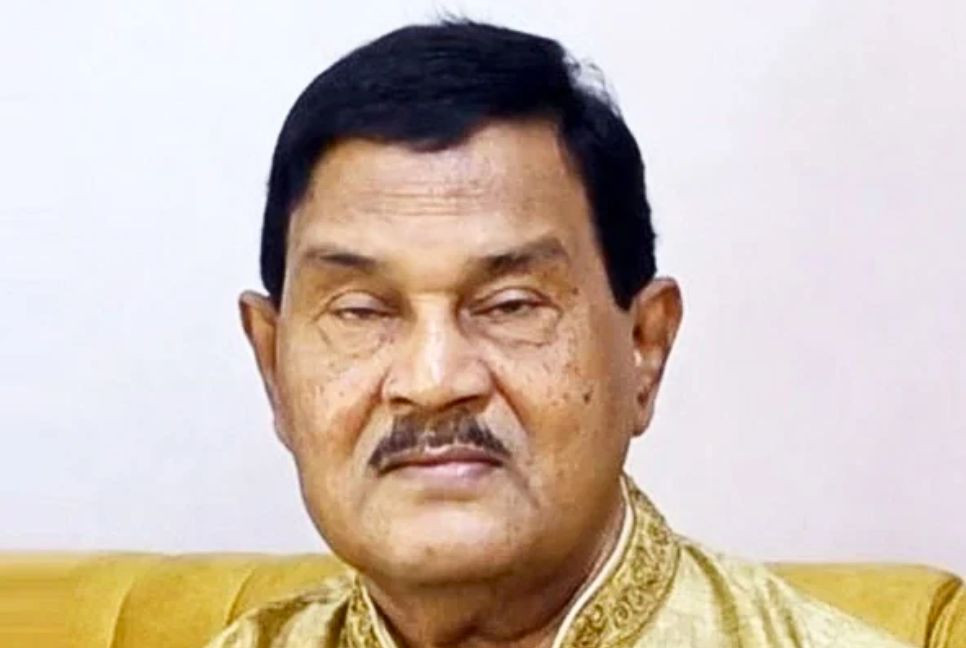
On 28 August, the brutal attack on Gono Adhikar Parishad leader Nurul Haque Nur—was it a sign of conspiracy? The incident has undoubtedly stirred questions in the public mind, especially since it occurred shortly after a Jatiya Party leader returned from a visit to India.
Soon after, at Chittagong University, banned Chhatra League leaders allegedly provoked nearby villagers to launch a violent assault on peaceful students.
Among politically aware circles, speculation is rife that, with the Awami League now banned, its leaders are conspiring from neighboring India to sabotage the upcoming national election in Bangladesh, or to seize a number of parliamentary seats under the guise of Jatiya Party candidates. It is quite predictable that this fallen political party will try to obstruct the holding of a fair, neutral, and truly participatory national election. The party has repeatedly proven itself vindictive in the past.
We can recall the state of Awami League’s arrogant politics between 1972 and August 14, 1975. The most honest and talented leader of that party was Tajuddin Ahmad. During the Liberation War, as the head of the provisional government in exile, he played a decisive role in leading the nation.
Yet, he was practically forced out of the cabinet. That decision by the party’s supreme leader was the first clear manifestation of Awami League’s authoritarian and fascist nature. No allegations of corruption, anti-party, or anti-state conspiracy were ever proven against him. On the contrary, as the first Prime Minister of independent Bangladesh in 1971, he had played the most vital role, especially in organizing the Mukti Bahini into a disciplined fighting force. Still, he was treated with ungratefulness. In 1974, he was compelled to resign as a successful finance minister. The Awami League has repeatedly shown itself to be envious, vindictive, and ungrateful.
Its founding president, Maulana Abdul Hamid Khan Bhashani, when he opposed joining imperialist war alliances and founded a new party (NAP), faced violent attacks from Awami League thugs, who would hurl bricks and stones at his rallies, trying to disrupt them. How then can one expect fair, peaceful political competition from such a party?
After more than 15 years of extreme fascist and authoritarian rule—marked by the killing of over a thousand protesters on the streets, some 13,000 activists shot, maimed, or crippled—the Awami League leadership finally fled the country during the July–August student and mass uprising. Despite abductions, murders, massacres, jailings, and brutal repression, they could not sustain themselves in power. On August 5, the party’s chief and almost all of its top leaders barely escaped lynching by enraged protesters.
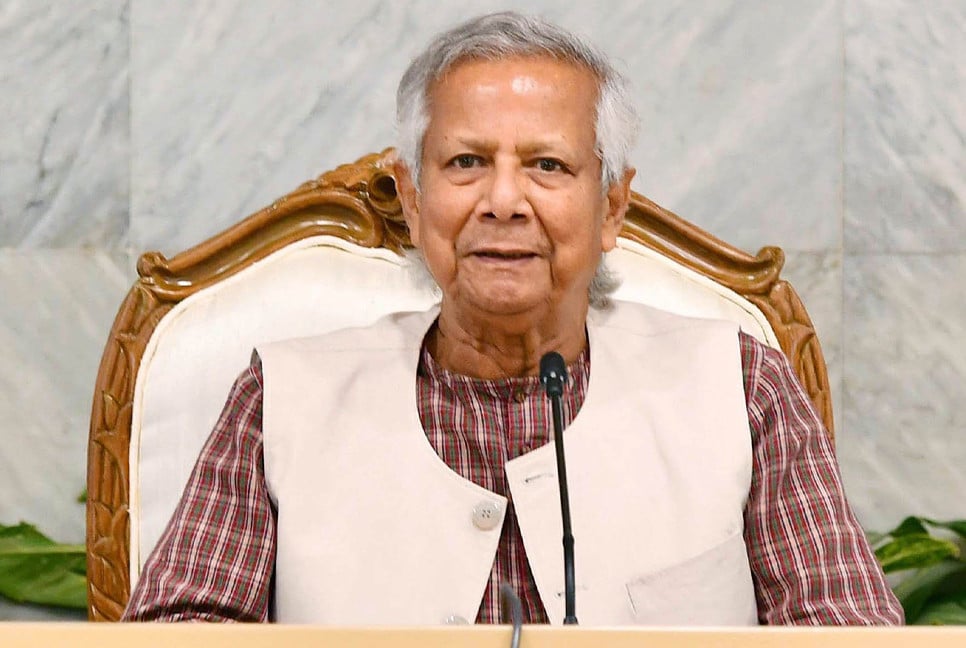
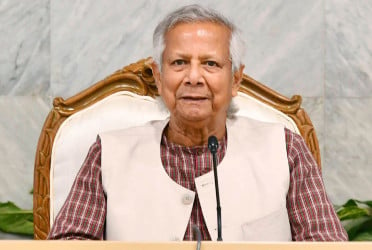
Meanwhile, the interim government led by Nobel laureate Professor Dr. Muhammad Yunus has already begun reforms and initiated fair trials of those responsible for the July–August killings. It is working to ensure a free and fair national election, firmly determined to hold it in the first half of February. BNP leaders are actively preparing for the polls across the country. People widely believe that a fair election will bring BNP a clear majority, enabling it to form the next government.
The people are the true owners of this country. But in the process of transferring power to them, a so-called Islamist party that opposed the Liberation War, together with its allies, has now united. They are desperately pushing for a bizarre system of proportional representation (PR). Everyone knows that under PR, these opportunists could easily secure 100–110 seats. But under the Westminster-style parliamentary system, these Islamist and leftist parties would hardly win more than 35 seats combined.
These groups have already begun plotting against the February elections, trying to delay them further. They know that if the polls are held on time and fairly, they will lose all political significance. The longer the election is delayed, the more opportunities they gain. If they can intensify the PR campaign, they stand to benefit both ways—by delay and by system change.
We must now think calmly: the longer the election is postponed, the greater the chance that the fallen fascist Awami League’s mafia politicians will find a way to re-establish themselves. When it comes to conspiracy, there is no match for the Awami fascists in this country. Another point: Islamist and leftist groups must admit that half of the credit for toppling Sheikh Hasina’s fascist regime goes to BNP’s 15-year-long struggle, and the other half to the anti-discrimination student movement. The Islamist and leftist groups played only a very minor role.
Without BNP’s tireless fight against 16 years of Awami fascism, the student leaders could not have risen to power so quickly. Some who now arrogantly claim sole credit for the downfall are being completely unethical. A proper study of BNP’s 16-year-long struggle would shame them.
Had BNP not carried the movement to its peak, the anti-discrimination student leaders would not have gained the strength to advance. What would have been the outcome then? Without Sheikh Hasina’s ouster, Sheikh Rehana, Sajeeb Wazed Joy, Saima Wazed Putul, Sheikh Selim, Sheikh Taposh, Sheikh Parash, Sheikh Helal, Hasanat Abdullah and his son—all members of the Sheikh clan—would have clung to power for another 25 years.
They would have taken fascism to its extreme, dragging the country back into a one-party BAKSAL system, conducting mass killings of opposition activists, imprisoning thousands more, all with India’s support. China, Japan, the U.S., and European nations would also have tolerated it for the sake of arms sales and trade—just as they did with Ershad. During his nine years of dictatorship, at least 6 trillion taka worth of state assets (in today’s value) were looted, while countless abductions, killings, and political murders took place. Yet, our so-called friendly states supported him. Without their backing, Ershad could not have lasted two years in illegal power. Similarly, had the Sheikh family ruled for 25 years, those powers would have accepted everything.
The nation has been spared from such a catastrophe thanks to the July–August uprising and the preceding 16 years of struggle. For this, we must all remain grateful to the leaders and activists who carried the fight.
Now, what we need is ironclad unity. All political parties must fight with full resolve to ensure a fair, Westminster-style democratic election as soon as possible. Afterwards, if necessary, we can consider other reforms. That is precisely what the new parliament will be tasked with, and all anti-fascist forces are committed to it.
So let us make some sacrifices for that goal—placing the nation and its people above party interests.
The author is the former information and research editor of BNP