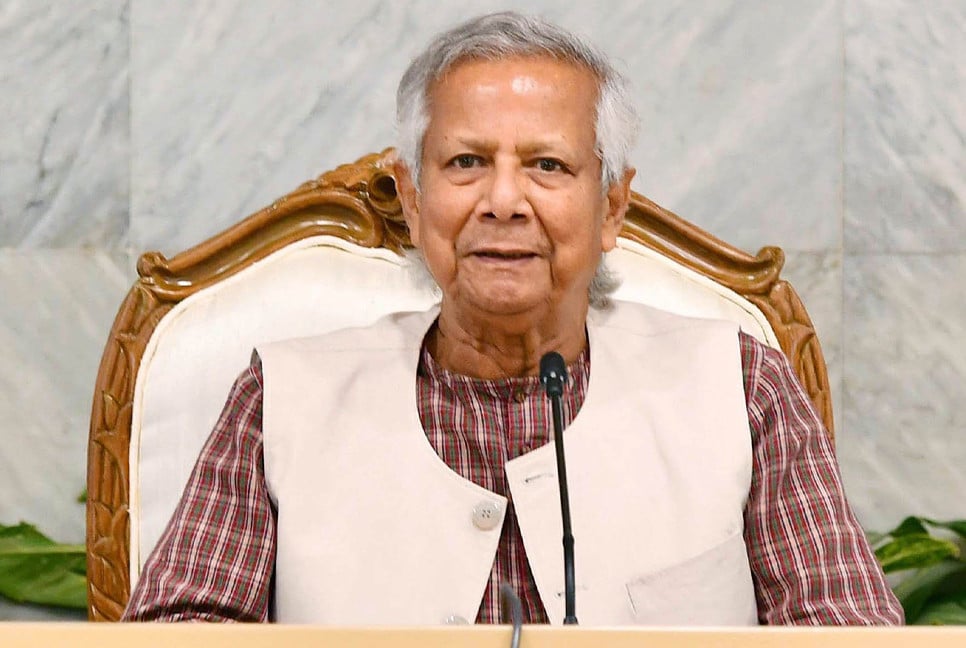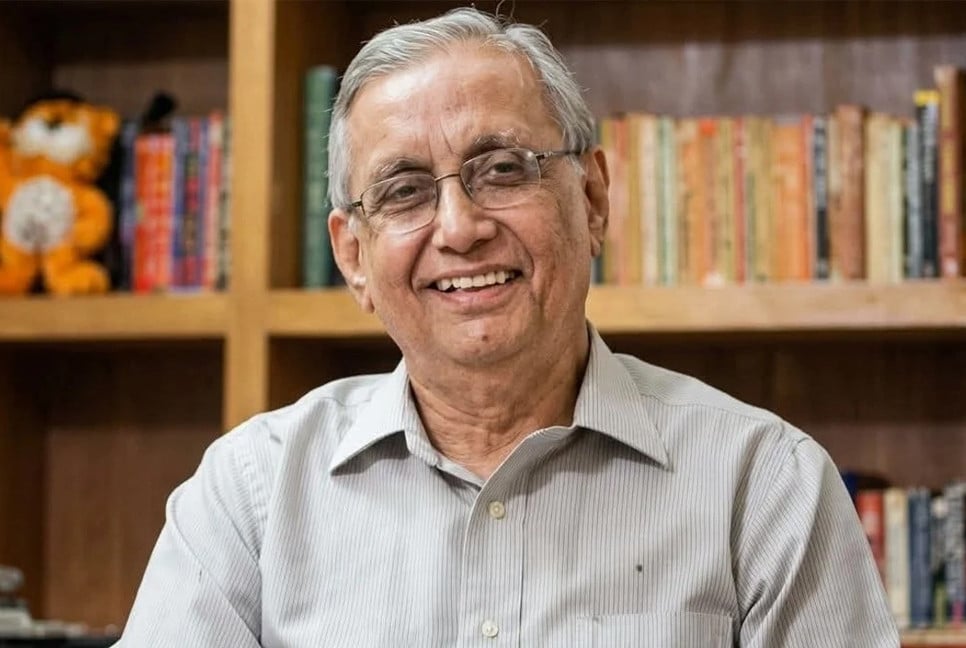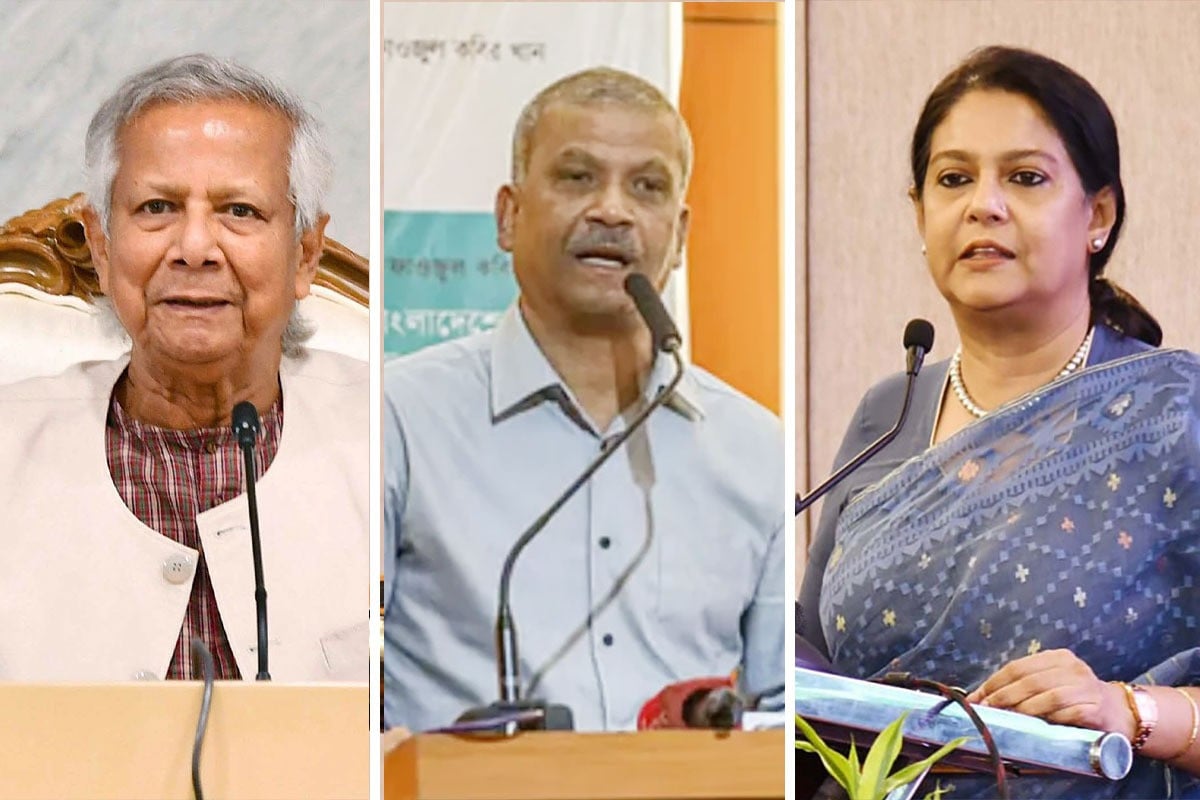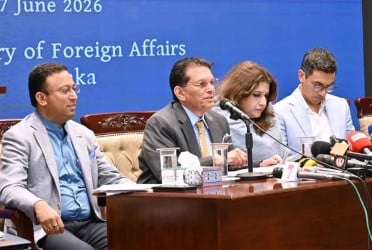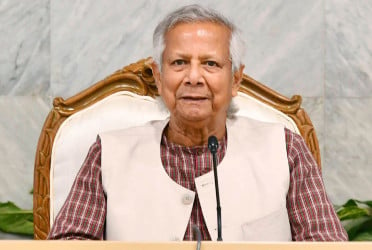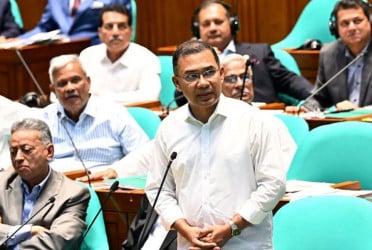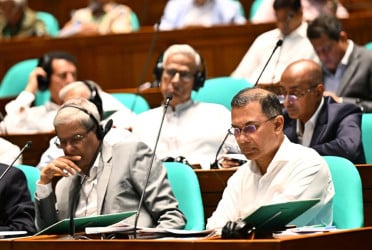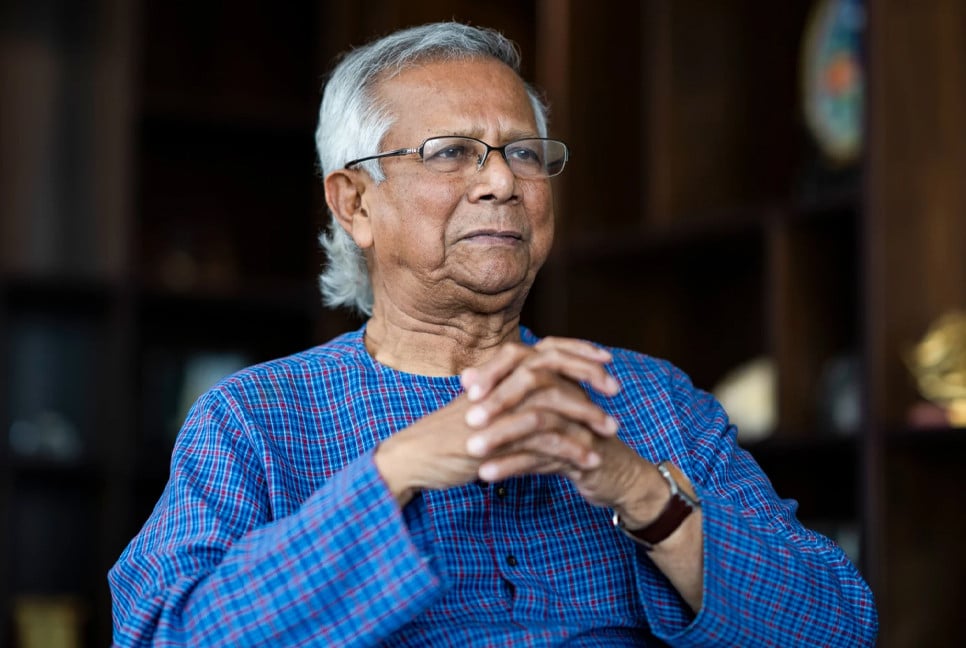
On Sunday night, 21 September, Chief Adviser Dr Muhammad Yunus will depart for New York to attend the 80th session of the United Nations General Assembly (UNGA). Accompanying him are four top political party representatives: Mirza Fakhrul Islam Alamgir, secretary general of BNP; Humayun Kabir, foreign affairs adviser to BNP acting chairman Tarique Rahman; Dr Abdullah Muhammad Taher, naib-e-ameer of Bangladesh Jamaat-e-Islami; and Akhtar Hossain, member secretary of NCP. This is a rare event in the political history of Bangladesh.
The July Revolution represented the invincibility of a collective movement including all democratic and anti-autocratic political parties in Bangladesh. With The Chief Adviser heading to New York symbolising unity in a time of tension, a message depicts the strength of the Bangladeshi people and their demand for a fair, inclusive political process.
Dr Yunus has made this decision at a time when divisions and distrust prevail among the political parties that participated in the uprising. Uncertainty surrounding the election is growing as political mudslinging resurfaces, with Jamaat and several other parties once again taking to the streets with a range of demands. Amid this instability, the Chief Adviser is steering the country toward a free, fair, and neutral election with remarkable calm. He is emphasising not only consensus among political parties but also presenting the situation to the people with objectivity. Recently, he has expressed concerns that some groups are attempting to delay the February election.
At this juncture, in a further attempt to resolve political differences, the Chief Adviser has extended the tenure of the National Consensus Commission until 15 October, providing an opportunity to resolve disputes over the implementation of the July Charter.
The question is: when an issue is already on the discussion table, how logical is it to launch a movement over it?
Based on the July National Charter, seven Islamist political parties including Jamaat-e-Islami organised a protest rally and march in Dhaka last Thursday, demanding the national election be held in February. The next day, they held separate events. Some announced 5-point demands, others 6, others 7, but the core demands are nearly identical: the February election based on the July Charter, introduction of proportional representation (PR) in both houses of parliament, ensuring a level playing field for all, visible justice for fascist crimes and corruption, and banning the activities of the 14-party alliance including the Jatiya Party, whom they term accomplices of autocracy.
During them, top leaders warned of tougher movements if the interim government fails to accept their demands.
Following the sweeping victories of Jamaat’s student wing, Islami Chhatra Shibir, in the Dhaka University Central Students’ Union (DUCSU) and Jahangirnagar University Central Students’ Union (JUCSU) elections, a new sense of revitalisation has emerged within Jamaat and other Islamist parties.
Conversely, the defeat of the Bangladesh Nationalist Party’s (BNP) student wing has delivered a critical message to the BNP leadership.
In the wake of these student union elections, major political parties are actively recalibrating their approaches for the upcoming national election. The recent protest programs led by Jamaat and its allies appear to be a vital component of this new approach. On one hand, Jamaat is trying to build an electoral alliance; on the other, they are mobilising public opinion in support of their demands at the negotiating table.
Despite their public rhetoric, Jamaat is already in the process of finalising its candidates and has begun groundwork in various constituencies. According to political observers, Jamaat and its allies are seeking to secure specific concessions to gain an advantage in the election. While their public demand is for proportional representation in both chambers of parliament, analysts suggest they would be content if it were introduced solely in the proposed upper house.
A central element of Jamaat’s tactic is its determined effort to exclude the Jatiya Party and the Awami League-led 14-party alliance from the electoral process. Their calculation is straightforward: if the Jatiya Party is disqualified, Jamaat would automatically become the principal opposition force. Many optimistic Jamaat leaders even believe that by forming a strong Islamist coalition, they could achieve surprising results in the national election, mirroring their recent successes in the DUCSU and JUCSU polls. Thus, this movement is not against the government, nor is it to derail the election. It is an electoral campaign plan.
As the interim government’s popularity has waned for various reasons, Jamaat is strategically using this opportunity to portray the BNP as being complicit with the current administration by leading its own street movements. This organised and calculated propaganda has placed the BNP under considerable pressure. Over the past year, Jamaat has successfully disseminated a narrative across numerous platforms, claiming that a BNP government would replicate the Awami League’s behavior, engaging in extortion and land-grabbing. Isolated incidents of misconduct by a few BNP members during this period have provided Jamaat with further ammunition for its campaign.
Furthermore, since 2011, Jamaat has systematically built a dominant presence on social media, a domain where the BNP has consistently lagged. This long-term effort has allowed Jamaat to emerge as a formidable rival to the BNP ahead of the national election by leveraging online influence to mold public opinion.
In response to growing public criticism and rival propaganda, Tarique Rahman, BNP’s Acting Chairman, has been trying to reform the party since 5 August. Under his direction, the BNP has adopted a zero-tolerance policy toward extortion, land-grabbing, and other illegal activities. However, the public has not yet fully recognised this change.
To resolve this perception gap, Rahman has publicly provided details of the party’s new anti-corruption stance. He has stated that over 7,000 members have faced disciplinary action for misconduct. In a verified Facebook post last Thursday, he wrote: “As we prepare for elections in February 2026, we need to guarantee the trust of the voters across the entirety of the country.…members have faced disciplinary actions, ranging from demotions to expulsions, for corruption, extortion, and misconduct.”
He further emphasised: “Discipline is not a weakness - it is our strength. By holding our own members accountable, we demonstrate to the nation that we are serious about integrity, and that we will hold ourselves to the same standards we demand from those in power.
Tarique Rahman’s recent statement is a highly significant display of leadership, establishing a firm precedent against internal misconduct within the BNP. By publicly warning members about illegal activities and confirming that thousands have faced disciplinary action, he is trying to restore public trust. This move marks a departure from a long-standing political culture of denial in Bangladesh, where ruling parties, especially over the past 15 years, have often ignored wrongdoing within their own ranks. Rahman’s decision to confront this issue head-on could set a new standard for a more positive and healthy political environment, potentially discouraging criminals and extortionists from seeking shelter within political parties in the future.
In response to the movements by Jamaat and its allies, the BNP has adopted a new plan of action. Instead of engaging in direct conflict or counter-protests against any political party, the BNP high command has decided to concentrate on its final preparations for the February election. This focus includes candidate selection, promoting its 31-point agenda, and conducting positive publicity and door-to-door campaigns. The party will also draft a timely election manifesto and make promises to the electorate. For the four months leading up to the election, the party will dedicate itself entirely to these election-centric activities.
Political analysts view this development as the emergence of a pre-election atmosphere, which is a positive sign for both democracy and the electoral process. However, there is a lingering fear that peaceful programs could be disrupted and plunged into unrest by overzealous or extremist elements. The national interest must not be sacrificed for narrow party gains. Both the BNP and Jamaat, recognised as responsible and pro-democracy parties, should refrain from creating instability for their own advantage.
These two parties share a long-standing relationship. It was President Ziaur Rahman who, after 1975, facilitated the return of all political parties to Bangladesh’s political landscape. Thanks to his democratic policies, Jamaat, which had been banned since 1972, re-entered politics. The two parties even formed a coalition government in 2001, and their contributions to freeing the country from autocracy are undeniable. It is hoped that the BNP, Jamaat, NCP, and all other political parties will act with a sense of responsibility for the advancement of democracy. Movements driven by short-sighted political strategies must not become self-destructive or allow regressive forces to regain influence. Unyielding partisan positions could create undesirable situations, jeopardising the nation’s progress.
The path forward for democracy is clear: it lies in compromise, not confrontation. The Chief Adviser is to be commended for his efforts, particularly for including leaders from the three major parties in his delegation to the United States. It’s hoped that on the sidelines of the UNGA, Dr Yunus will facilitate talks with these political leaders to encourage a spirit of compromise. There is an expectation that before 15 October, political parties will reach a consensus on implementing the July Charter for the national interest. It’s believed that all parties who participated in the July Revolution will prioritise the country’s welfare above their own.
Audite Karim, Writer and Playwright.
Email: [email protected]