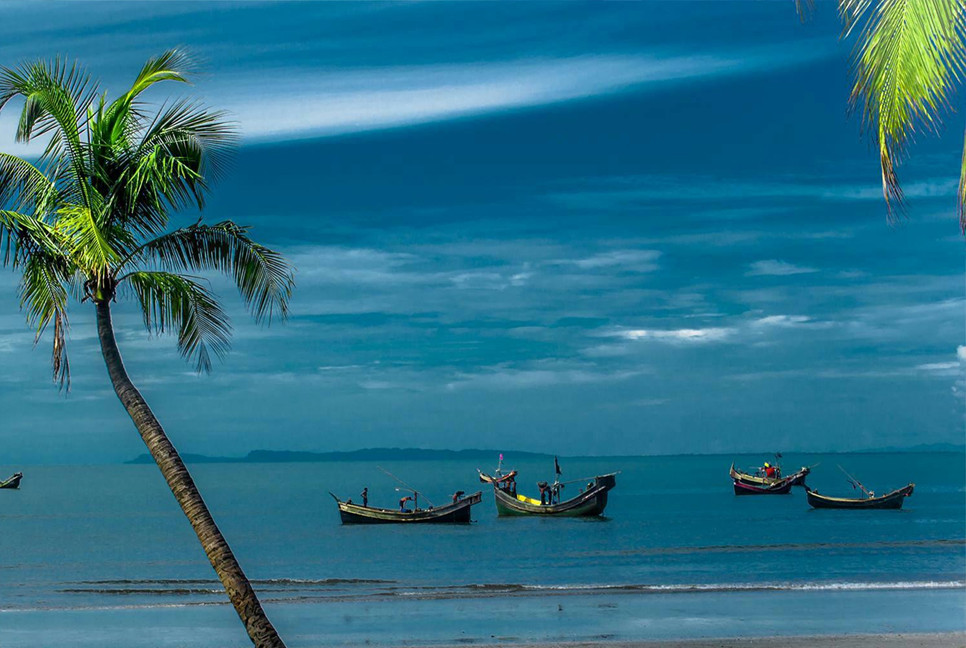
More than a decade has passed since Bangladesh resolved its maritime boundary disputes with neighboring countries, but the nation is still far from achieving its desired goals in harvesting marine resources. Notable progress has yet to be made in areas such as tourism, natural resource exploitation, trade, and energy in the Bay of Bengal. This is largely due to inadequate strategic planning and a shortage of skilled manpower in the field of marine resource extraction.
Due to the absence of a research vessel which is a crucial component for conducting ocean-based research for collecting data and samples from deep-sea areas remains impossible. Despite this constraint, researchers have successfully identified eight types of heavy mineral deposits in the ocean by utilizing fishing trawlers.Additionally, cancer-fighting compounds in sea urchins and vaccine-producing horseshoe crabs have been discovered. An initiative has been taken to procure a specialized research vessel.
Officials from the Bangladesh Oceanographic Research Institute (BORI) informed Bangladesh Pratidin that they have successfully conducted approximately 84 research projects to date, spanning fields like physical, geological, chemical, biological, and environmental oceanography, as well as climate science.
The Institute's Director General, Commodore Md Minarul Hoque, stated that BORI is currently implementing 55 activities under 28 plans aimed at developing the blue economy. Successful implementation of these projects will allow for the financial valuation of ocean resources. Already, through research, heavy minerals, rare earth elements, and other valuable materials present in seabed sand have been identified.
He further revealed that the institute has identified eight types of heavy minerals over an 18,000 square kilometer area along the coastal and shallow sea zones. These include rare minerals like silicon and mica. Additionally, 143 varieties of marine algae (seaweed) have been discovered near Saint Martin’s Island. Among them, 10 types are commercially valuable. From three of these, commercially important substances such as agar, carrageenan, and alginates have been extracted. Strategies and suitable zones for commercial seaweed farming in coastal and open sea areas have also been developed.
Director General of BORI further mentioned that the feasibility of producing renewable energy has been evaluated by studying currents, waves, and other physical parameters in the eastern coastal maritime zone (from Chattogram to Saint Martin). A taxonomic listing of corals found around Saint Martin’s Island has been prepared, and a book has been published featuring 60 coral species. Additionally, crabs have been identified in the marine zone. Research has also been conducted on extracting cancer-fighting compounds from sea urchins, omega-3 fatty acids and biopolythene from marine fish, and fertilizers and cosmetics from jellyfish.
Commodore Minarul Haque also acknowledged that Bangladesh does not yet have enough skilled professionals or adequate capacity for efficient extraction of marine resources. The lack of a dedicated research vessel continues to be a significant barrier to collecting deep-sea data. However, a project is in progress to address this issue by procuring a research vessel. As part of this effort, 398 types of specialized oceanographic research instruments will also be purchased. It is expected that both the vessel and the equipment will be acquired within the next two years.
Currently, a survey and research effort covering about 18,000 square kilometers of the coastal maritime zone has been completed using fishing trawlers. This survey has supported collect baseline data related to the ocean, identify existing mineral resources, and conduct detailed studies on marine sediments.
Bd-pratidin English/ ANI