New equations are brewing in the political landscape surrounding the upcoming national parliamentary elections. The country's politics are heading towards a new polarization. With its activities banned and registration suspended, the long-time archrival, the Awami League, is no longer in the scene.
While the BNP still holds an unrivaled position in the country's electoral and street politics, its biggest challenge in the upcoming national election is emerging from its former partner in the four-party alliance government, Jamaat-e-Islami. Jamaat views its plans for forming electoral alliances and election engineering as a strategic game. In response, the BNP is gladly accepting this challenge and formulating its own electoral strategies.
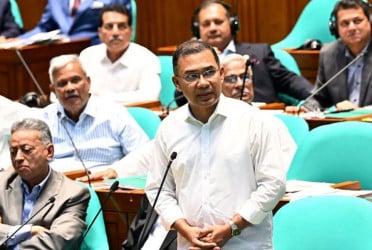
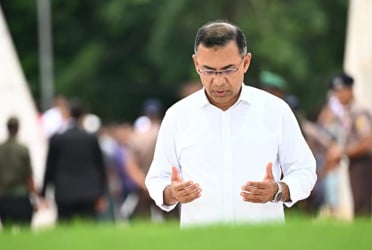
Initially planning a three-month campaign ahead of the national election, the BNP is now preparing for a longer-term, nationwide program. The party's acting chairman, Tarique Rahman, is repeatedly cautioning leaders and supporters at all levels, stating that the next election will be the most difficult. He emphasizes the need to engage with, be present among, and keep the public on their side to win. Sources have confirmed these details.
In the absence of the Awami League, Jamaat-e-Islami is strategically moving forward. To challenge the BNP, it has initiated a process to form an alliance with Islami Andolan, Nezame Islam Party (a faction), Bangladesh Khelafat Majlish and Khelafat Majlish, National Citizen Party (NCP), AB Party, and Gono Odhikar Parishad.
This Jamaat-led alliance is set to take to the streets before the elections to demonstrate its political strength. Their demands include a proportional representation (PR) system for the national parliament, creating a level playing field for the elections, and banning the activities of the Jatiya Party (Japa) and the 14-Party Alliance, whom they label as allies of fascism.
While the NCP and AB Party have somewhat backed off from the PR demand for the lower house, Jamaat's morale is sky-high following the unprecedented victories of its student wing, the Islami Chhatra Shibir, in the DUCSU and JUCSU elections. They consider the university student council elections an "acid test" and believe their success there will translate into a "miraculous" result in the national elections.
On the other hand, the BNP has not announced any new electoral alliances but remains active with its partners from the simultaneous anti-Hasina government movement. The party has decided to negotiate seat-sharing with these groups and is open to welcoming any other like-minded party, alliance, or individual with a "clean image," excluding the Awami League and its allies. Tarique Rahman has long called for forming a government of national unity based on consensus after the election. The BNP and its like-minded parties are confident in their ability to win the upcoming election by gaining the people's vote, a belief bolstered by Tarique's declaration and his 31-point reform proposal.
Jamaat, once a party with only 5% of the vote, is now trying to become a direct competitor to the larger BNP. Its goal is to establish a strong presence in parliament through the next national election. Multiple sources have indicated that the Islami Chhatra Shibir's incredible victories in DUCSU, JUCSU, and other public university student council elections have emboldened Jamaat to now dream of winning the national election and forming the government. Specifically, the party plans to do whatever is necessary to capture all the votes that once belonged to the "fallen Hasina government." In short, riding on the momentum of the Chhatra Shibir's victory, Jamaat aims for a similar landslide victory to form the next government.
In its quest for power, Jamaat is not only strengthening its main party but also its student wing, Islami Chhatra Shibir, and other affiliate organizations. Despite various allegations, the Shibir achieved astonishing results in the student council elections at Dhaka University and Jahangirnagar University. Upcoming are the Rajshahi University and Chittagong University student council elections. Jamaat is jubilant over Chhatra Shibir's victories, which have defeated the Jatiyatabadi Chhatra Dal in recent university student elections.
Salahuddin Ahmed, a member of the BNP's National Standing Committee, told Bangladesh Pratidin that they do not believe the DUCSU results will influence national politics or the parliamentary elections. Leaders from the BNP's allies, including the Ganatantra Mancha and the 12-Party Alliance, echo this sentiment, stating that DUCSU's impact on the vast stage of national politics is negligible. However, some within the BNP are skeptical, wondering if the ruling government might adopt a different strategy following the DUCSU and JUCSU elections and whether this might create new uncertainty about the national election.
Political analyst Professor Dr. Mahbub Ullah commented, "What else could the political polarization be? In the absence of the Awami League, the BNP, Jamaat-e-Islami, and NCP could be the competitors. Or two of them could form a front together. And Tarique Rahman has already said that if they come to power through the people's vote, they will form a government with all the parties involved in the movement to establish democracy."
Kazi Mohammad Mahbubur Rahman, an associate professor of political science at Dhaka University, believes that the Islamists might eventually align themselves, possibly to become the main opposition force before the election. Similarly, he suggests that a unity could form among the parties emerging from the anti-discrimination movement. A separate unity might also form among the left-leaning or secular groups. However, it will take more time for a viable alternative force to emerge against the BNP.
Ariful Islam Adib, the senior joint convener of the NCP, stated that his party seeks to implement the "July Charter" through a constituent assembly election. He confirmed they are in informal discussions with several parties on common issues and a simultaneous movement, but nothing has been finalized yet.
Bd-pratidin English/ ANI