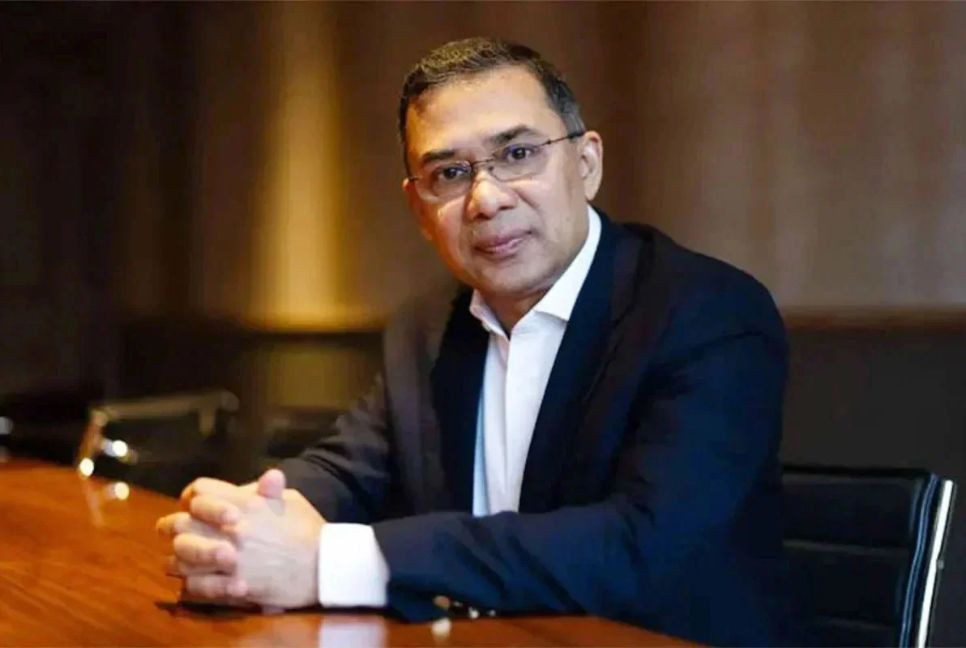
The 1/11 interim government, and later the autocratic government of Sheikh Hasina, were engaged in an immaculate conspiracy for a long time to remove Tarique Rahman from politics.
The main tools of this conspiracy were numerous false cases and convictions. Seventy-five cases were filed against Tarique Rahman, of which he was convicted in some, while the rest have been under trial for years.
If he were to return to the country, his certain destination would be jail, and his life would be in peril.
Among these cases, the much-talked about is the August 21 grenade attack case. On August 21, 2004, a horrific grenade attack at an Awami League rally killed 24 people and injured hundreds.
The next day, a case was filed at the Motijheel Police Station. Later, on October 10, 2018, the verdict in this case sentenced Tarique Rahman to life imprisonment and 19 others to death. However, on December 1, 2024, a High Court bench acquitted him and other defendants, citing serious irregularities in the investigation and testimony. Although the state appealed, yesterday, Thursday (September 4, 2025), the Appellate Division, led by Chief Justice Syed Refat Ahmed, upheld the previous acquittal.
The most significant aspect of this verdict is that the autocratic conspiracy of Sheikh Hasina and her party has failed. In a cruel twist of history, they are now on the run. For years, Sheikh Hasina's party and government have engaged in torture, murder, and the disappearance of bodies of opponents simply for political differences or power struggles, which is unacceptable to the people of any civilized country. Sheikh Hasina, her police, RAB, and other security forces were directly involved in these incidents.
Amid this long period of darkness, Tarique Rahman has emerged as a beacon of light.
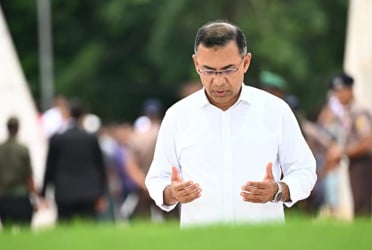
He is not just a leader in Bangladeshi politics; he is the visionary of "Sobar Bangladesh" (A Bangladesh for Everyone). By working tirelessly for democracy, human rights, and justice, he has established himself as a true public leader. His vision is to ensure equitable development, a non-discriminatory society, and the participation of people from all walks of life. He has repeatedly said, "Democracy is not just about voting; democracy means protecting people's fundamental rights and ensuring everyone's participation."
"Bangladesh First"—the Bangladesh of the Liberation War. There is no compromise on the country's independence and sovereignty. There is also no room for compromise when it comes to Bangladesh following an independent and sovereign foreign policy, holding its head high. "Bangladesh First" is a political commitment that is a profound expression of Tarique Rahman's statecraft and patriotism. Through this phrase, he has sought to convey an important message: in governing the state, formulating policies, and in politics, the interests of the country's overall welfare, the rights of the people, and the priority of an independent and sovereign Bangladesh should take precedence over the interests of any individual, party, or group.
Tarique Rahman says, "If we look at Bangladesh's most important achievement in 54 years, 1971 was for gaining independence, and 2024 was for protecting the independence of the country and its people."
In Tarique Rahman's words, "The country is not just about our party or our party's workers; the country is about the people of the country—nearly 200 million people." He has repeatedly warned political workers, "In your movement, words, and expressions, the trust of the people must remain unwavering. If we lose the people's trust, there is no point in discussing all day. Holding on to the people's trust is the most difficult task." He has rejected political complacency. It would be a mistake to think that Tarique Rahman can handle everything alone. We all must take responsibility.
Under his leadership, the people are at the center. This is because he believes that the first responsibility of politicians in building a truly democratic state is to go to the people. To listen to the farmers, workers, women, teachers, people with disabilities, youth, children, and the elderly, and to adopt effective plans for them. He has said, "We must let the people know what we want to do for the farmers, teachers, and women. We cannot be confined within four walls; we must take our plans to the homes of the people."
Tarique Rahman's dream is of a democratic, well-governed, and inclusive state where fundamental rights are protected, equality is established, and discrimination is reduced. However, political instability, mutual distrust, lack of transparency, violence, oppression, and the crisis of free speech are all challenges. The gap between the rich and poor and religious and cultural divisions are major obstacles to national unity. The corruption of party workers weakens good governance and gives a political advantage to opponents.
To overcome these obstacles, Tarique Rahman has emphasized strict penalties for corruption prevention, a strong code of ethics, effective laws, and transparent party policies. It is crucial to make party workers effective by ensuring training, accountability, and a focus on public welfare. Maintaining transparency in internal party elections and focusing on solving the people's problems will increase the popularity of the leaders.
This is why Tarique Rahman is now most needed. Bangladesh is waiting for Tarique Rahman. Following the mass uprising, the country is facing a deep political void, where a lack of leadership is the root cause of national instability. This is still ongoing. In this situation, his leadership is absolutely essential. Not only the BNP, but the people of the country are also waiting for him—he is their only refuge for restoring their hopes, dreams, and rights. Although the cases are still ongoing, his presence is now more necessary than ever. We hope he will return to the country very soon. Out of his commitment to the country, he will bring a smile to the faces of the people. He will realize the dream of establishing a democratic, well-governed, and inclusive state, which is not just a goal, but a reflection of all our hopes, dreams, and aspirations.
The writer is the joint editor of Kaler Kantho