Powerful ringleaders are implicated in trafficking the deadly drug cocaine, yet their identities remain largely concealed. Although international mafias are believed to be using Bangladesh as a transit hub, the ultimate destinations of seized consignments are still unknown.
Officials say that while almost 50 kilogrammes of cocaine—valued at roughly Tk 750 crore—has been recovered over the past 11 years, at least ten times that quantity likely moved through this route. Due to legal weaknesses, the outcome of many cocaine cases remains uncertain.
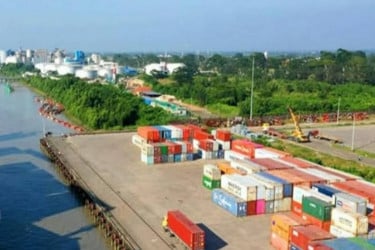
Investigations show that on 6 June 2015 cocaine was seized at Chattogram port in a consignment of sunflower oil. Police and customs intelligence detected cocaine in samples from two drums (numbers 96 and 59) out of 107.
Multiple agency reports indicated that a domestic business entity had brought the shipment to the port from behind the scenes.
In November 2015, Chattogram Metropolitan Police (DB) Assistant Commissioner Md Kamruzzaman filed a charge sheet against eight accused. The court refused it and ordered the Rapid Action Battalion (RAB) to investigate further; apart from adding two names (Nur Mohammad and his brother Mostaq Ahmed), RAB was still unable to determine the consignment’s destination. RAB submitted its report on 3 April 2017, but the High Court stayed the trial proceedings on 8 October that year.
Earlier, in June 2013, Peruvian national John Pavlo Rafael was arrested with 3 kg of cocaine at the La Vinci Hotel. The inquiry found he had come to Bangladesh at the invitation of Baridhara-based firm Cross Ocean (Pvt) Ltd. Its owners Mostafa Ashraf and Mostafa Kamal, along with Sadia Ahmed and employees Ashraf Nasim and Tania, were named as accused. Although Mostafa Ashraf was arrested, he later secured bail, shut the firm and left the country.
International networks and Bangladesh
According to the Department of Narcotics Control (DNC), Bangladesh’s geography makes it an easy transit route for international cocaine syndicates. Cocaine moves from South America to Africa and the Middle East, then into Bangladesh, and onward to India, Europe and North America.
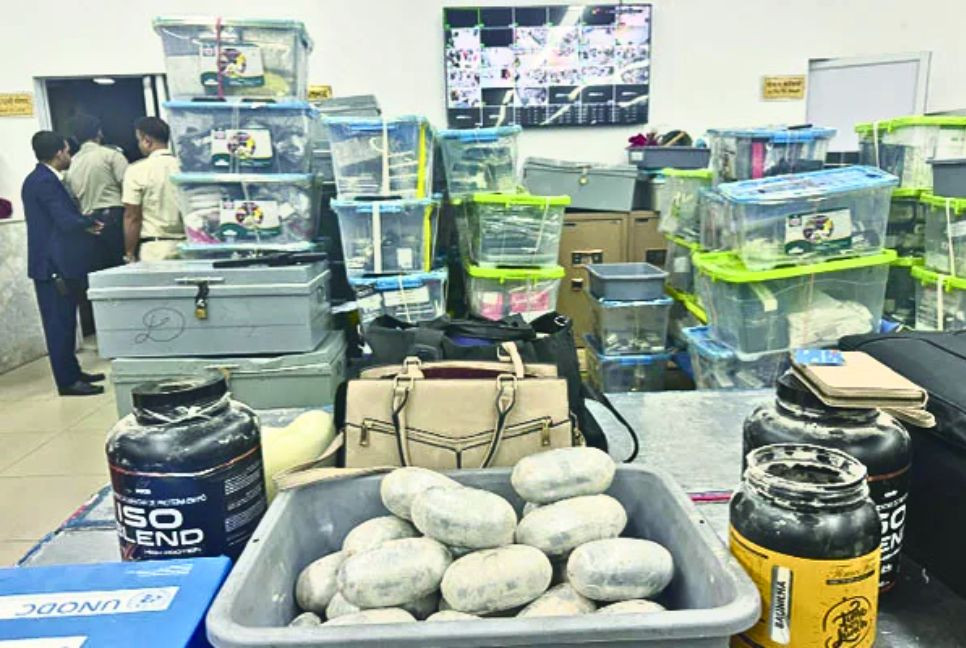
Analysing seizures totalling nearly 50 kg over 11 years, the DNC identified this pattern. Most recently, just after midnight last Monday, a woman arrested at Hazrat Shahjalal International Airport with over 8.5 kg of cocaine—Karen Petula Stafen—had allegedly sourced the drug in Brazil, travelled to New York, then via Qatar and Doha to Dhaka.
The DNC’s inquiries suggest that a figure known as Don Franky heads a key international ring moving cocaine into Bangladesh, allegedly operating under the cover of garment businesses. He reportedly used Bangladesh as a transit point for around seven years before leaving the country with help from local drug godfathers; he is now said to be coordinating operations from Nigeria.
The DNC further notes that Bangladesh sits amid three major narcotics-smuggling regions: the Golden Triangle (Myanmar, Laos, Thailand), the Golden Crescent (Iran, Afghanistan, Pakistan), and the Golden Wedge (parts of India’s Himachal Pradesh, Uttar Pradesh, Arunachal Pradesh, and sections of Nepal and Bhutan). Arrested couriers typically cannot identify the masterminds, leaving the big players hidden and preventing prosecutors from filing charges against the top-tier operatives.
Law-enforcement agencies add that, even as each seizure makes headlines, the core networks continue using Bangladesh as a lucrative transit corridor for high-value cocaine.
No local market—yet transit thrives
DNC Additional Director General Golam Azam said, “There is no domestic market for cocaine in Bangladesh. Even so, international syndicates are using the country.” With traditional routes from South America facing tighter checks, traffickers are seeking new pathways; smuggling by air and overland continues.
He also warned that six newer drugs are entering the country—khat, ‘ice’ (crystal meth), pills, crystal, MDMA and amphetamine—often under false declarations, posing a serious threat to young people.
Weaknesses in case paperwork
In the 26 August seizure at Hazrat Shahjalal International Airport (8.66 kg), the accused—Guyanese citizen M S Karen Petula Stafen—was placed on five days’ remand, yet investigators have reportedly extracted little vital information so far.
The complainant in the Airport Police Station case is Assistant Revenue Officer Md Anisul Haque. Analysts say the FIR (first information report) and seizure list show multiple deficiencies: failure to follow the prescribed rules on seizing, managing and disposing of confiscable items; significant timing discrepancies; and missing mandatory details such as the seizing officer’s name, rank and signature.
The suspect’s photograph and video, invitation letter and on-arrival visa were not seized; her mobile phone and digital data have not been fully analysed to identify local and foreign accomplices.
Supreme Court lawyer Altaf Hossain told media that weaknesses in an FIR can jeopardise a case, allowing real offenders to walk free—“a serious aberration of justice”.
He said numerous errors had been spotted in Monday’s 8.66 kg case and urged an immediate, in-depth review to determine whether they were deliberate. He also called for the trial court to be formally notified of the defects to ensure proper judicial oversight.
Bd-pratidin English/FNC