Student union elections are being held at three universities – Dhaka University, Jahangirnagar University and Rajshahi University. But the nation’s attention is entirely focused on Dhaka University Central Students’ Union (DUCSU).
It is often called the “second parliament” of Bangladesh. Before the national election, the DUCSU election carries immense significance. The way this election is conducted will inevitably influence the national polls to some extent.
If the DUCSU election is ultimately held in a fair and peaceful manner, it will undoubtedly set the tone for the national election and bring relief to the people. A successful DUCSU election will also encourage Jahangirnagar University and Rajshahi University to conduct their student union elections properly.
On the other hand, if the DUCSU election descends into chaos, the entire nation will have to pay the price, and the democratic transition could be at risk.
This election is taking place at a time when campuses and streets are heated with students’ demands. In many institutions, protests have taken precedence over education.
After the July uprising, educational institutions have failed to run their academic programs properly, and students could not focus on their studies. Here, the failure of the interim government is evident.
Although it reshuffled advisers to restore order in the education sector, nothing changed.
DUCSU’s election is scheduled for September 9. Just when the campaigns began, Bangladesh University of Engineering and Technology (BUET) and other engineering universities launched movements with three demands. On Wednesday (27 August), this movement turned violent. Now it is time to see how this unrest will affect the election.
At Jagannath University and Begum Rokeya University, instability continues. DUCSU itself is surrounded by unease and concerns. The campaign has been marked by underlying tension and fierce competition, with candidates attacking and counter-attacking each other.
At times, the atmosphere on Dhaka University’s campus turns heated, and certain groups are deliberately trying to create fear. However, many believe that such tension is normal during elections. In the end, the public expects all parties to act responsibly. Who wins or loses the DUCSU election is not the main issue. What matters is whether the election is held freely, fairly, and neutrally. If that happens, it will send a message of relief across the nation.
Since DUCSU was established, elections have been held 37 times, with the last one in 2019. That election was marred by controversy, with accusations that the administration manipulated the process to secure a victory for the Chhatra League. The results did not reflect the aspirations of students. As a result, the 2019 DUCSU failed to play any effective role or address student issues.
In 54 years of independence, DUCSU elections have been held only seven times. Only the martyred president Ziaur Rahman ensured regular DUCSU elections. During his time, leftist student organisations won all three DUCSU polls – two by Jasad Chhatra League and one by Basad Chhatra League under Mahmudur Rahman Manna’s leadership.
This democratic practice was halted by Hussain Muhammad Ershad. Under student pressure, he allowed two DUCSU elections at the end of his regime. In one, Chhatra League leader Sultan Mahmud Mansur, from the Combined Student Struggle Council, won. In the next, Chhatra Dal won by a landslide.
Soon after the 1990 DUCSU election, the anti-autocracy movement intensified, and under Amanullah Aman and Khairul Kabir Khokon’s leadership, DUCSU played a crucial role in toppling the dictatorship.
The Awami League government has held only one DUCSU election in its 15 years in power. That election was orchestrated in such a way that the Chhatra League would win. This time, however, there is hope that the university authorities, the government, and other stakeholders have no vested interests. Students will be free to elect their preferred candidates. Looking at the campaigns since 26 August, it is clear that issues like accommodation shortages, education quality, library facilities, and research have taken precedence over national politics. This is positive. Still, the election must be conducted fairly at any cost. Responsibility does not lie only with campus-based student organisations but also with political parties and the government.
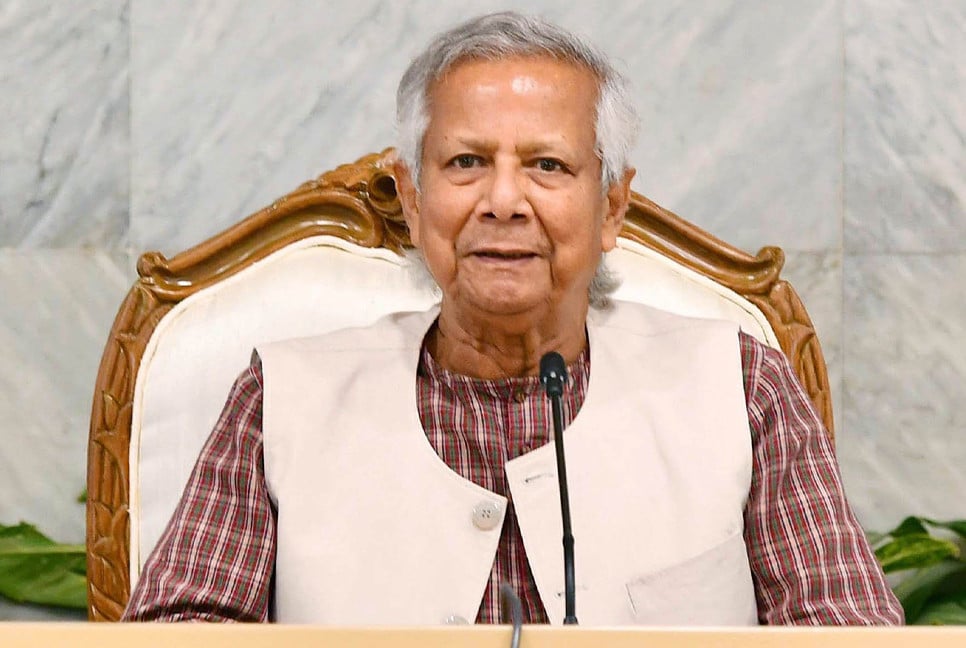
Chief Adviser Prof Muhammad Yunus has already announced that the national parliamentary election will be held in February. The Election Commission has begun preparations accordingly. Meanwhile, some groups are conspiring to derail the process. BNP Secretary General Mirza Fakhrul Islam Alamgir has alleged that “a faction within the government is trying to sabotage the election.” He must have made the statement knowingly. Indeed, some advisers and government quarters appear to have a negative stance toward the election, which is concerning.
Nevertheless, the national polls must take place in February under any circumstance. The country must advance along the path of democracy, as there is no alternative to an elected government for resolving the current crisis. Although Prof Yunus remains steadfast in his commitment, there has so far been a lack of focus on curbing illegal arms, improving law and order, and ending extortion and mob violence.
However, people expect that once the Election Commission’s activities formally begin, the government will take action. Political parties, too, must cooperate with the commission to ensure a free, fair, and neutral election.
Dhaka University has always shown Bangladesh the way. It has always enlightened us. Through Dhaka University, the people of this country have played a vital role in struggles for their rights. The people’s uprisings of 1971, 1990, and 2024 are the biggest proof. Therefore, the DUCSU election on September 9 holds immense significance. If it is free, fair, and neutral – an exemplary election – it will guide the national election. It will inspire hope for building a truly democratic Bangladesh.
Dhaka University has always been the center of anti-fascist movements. Movements sprouted from here. In the same way, DUCSU can now guide Bangladesh toward democratic transition. It can be an inspiration for the national election. That is why we hope all student organisations will practice tolerance and show respect for democracy. Victory or defeat is not the main issue. Just as Dhaka University has always led in movements for people’s rights, this time its students must set an example of democratic practice by delivering a free and fair DUCSU election. For this reason, the DUCSU election is essentially a rehearsal for the national election. It is also a test of democracy.
The writer is a playwright and columnist. Email: [email protected]