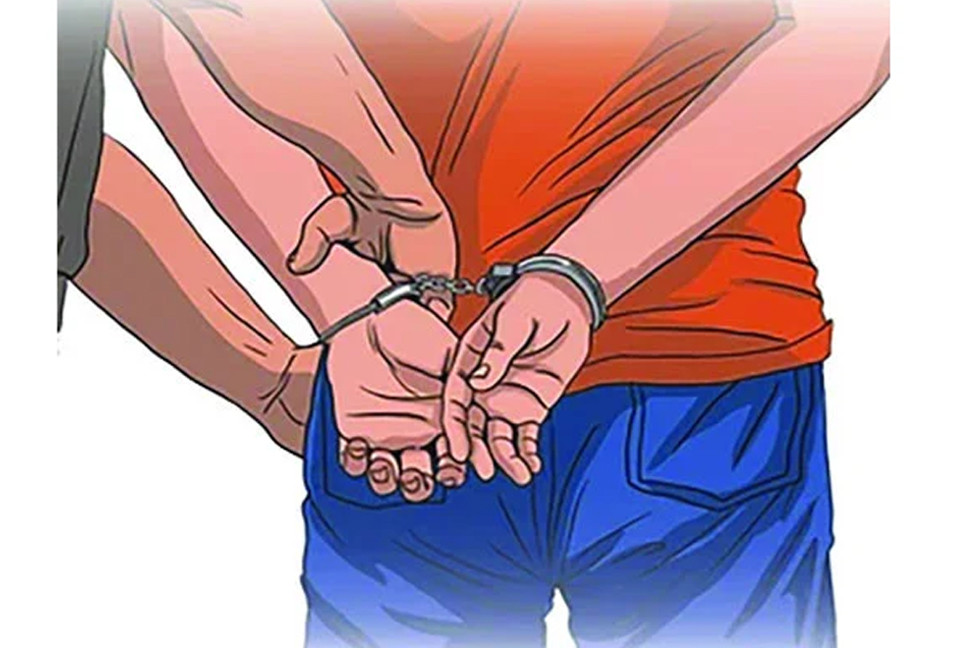
As the 13th national election approaches, the overall law and order situation in Bangladesh remains tense. However, police action has become increasingly strict, with the force now operating under a zero-tolerance policy. Special directives have been issued by police headquarters to curb illegal arms, drug trafficking, and extortion. The government’s high command is also considering a formal declaration of zero tolerance towards crime. Experts, however, stress that a significant gap still remains between expectations and reality, urging the government to swiftly identify root causes and provide clear solutions.
Recently, Home Affairs Adviser Lt. Gen. (Retd.) Jahangir Alam Chowdhury stated, “Given the current state of law and order, I believe holding the election won't be too difficult. We've even announced rewards for recovering illegal weapons. Our field-level election activities started well in advance. My role is not to manage polling centres, but to assess preparedness externally.”
At a high-level meeting held last Thursday at Dhaka Metropolitan Police Headquarters, Commissioner Sajjad Ali issued stern warnings. He instructed an all-out crackdown on mugging and extortion, ordering increased foot and motorcycle patrols. He also demanded inspections to ensure CCTV cameras at key points are functional and gave specific orders to dismantle mobile robbery gangs.
Sources say murders, extortion, political violence, and social unrest are rising in nearly all regions, including the capital. Smuggling of dangerous firearms and narcotics across borders continues unabated. According to police data, from July 2024 to June 2025, there were 3,857 murder cases filed nationwide—an average of 288 per month, up from 256 in the January–June period. In the Dhaka range alone, 903 murder cases were recorded, and the capital itself saw 217 murders in six months, mostly politically motivated.
Robbery and banditry cases have also surged, with 2,457 filed in the last year—838 more than the previous year—averaging 205 per month. The highest number of such cases were in the Dhaka range (580), followed by the metropolitan area (452). Highways are increasingly witnessing night-time mass robberies. Criminals posing as law enforcement have stopped buses and looted travellers, while villagers in many areas now stay up at night in fear, standing guard.
In the last 24 hours alone, police report 1,880 arrests nationwide.
Dr Touhidul Haque, Associate Professor at Dhaka University’s Institute of Social Welfare and Research and a crime expert, told Bangladesh Pratidin that the disparity between expectations and actual outcomes is stark. “The police's own data shows the situation is deteriorating. Crime will likely increase as the election nears—this is what past trends also suggest. The warning signs are already clear. The government’s biggest challenge now is to control crime and restore law and order,” he said.
He warned against treating criminals based on political identity, cautioning that such bias could have grave consequences. He added that the police’s morale—shaken after the events of the July uprising—has yet to fully recover, with many officers still working in fear during operations. Police are frequently attacked, and political pressure often interferes when trying to apprehend offenders.
Meanwhile, crime is becoming more brazen. Businesses are seized if shop space is denied, hospitals are attacked, and fish farms poisoned. In Banshkhali, Chattogram, a massive fish project has reportedly fallen prey to extortionists. In protest, hospital owners in Mymensingh have taken to the streets.
Several senior police officials admitted that they often face obstacles while enforcing the law. Members of various government agencies are described as "spectators in the gallery."
Sources report that 25 key spots in Karwan Bazar, Shahbagh, and Dhanmondi are under the control of mugging gangs. At least 900 active muggers are estimated to be operating in Dhaka. From 5 August to December alone, seven people were killed in mugging incidents. Most recently, Additional Deputy Commissioner of Bangabhaban Security, Sumon Reza, was injured in a stabbing in Karwan Bazar. Other incidents occurred in Shahbagh, Dhanmondi, and Old Dhaka.
Police headquarters confirms that robberies and muggings continue unabated. From January to July 2025, 1,363 robbery cases were filed—including 244 in May alone. Notable incidents include mass robberies on highways in Cumilla, Pabna, and Panchagarh, as well as house invasions and armed roadside lootings.
One particularly brutal killing—of businessman Suhag, alias Lal Chand, in Mitford on 9 July—is still fresh in many minds. Other murders, including contractor Anwar Hossain in Badda on 8 May, telecommunication businessman Teli Sumon in front of Police Plaza, and BNP leader Kamrul Ahsan Sadhan on 15 May, have raised serious questions about the state of law and order.
Concerns have also been raised at the highest levels of government about the activities of former army major Sadik and his wife, who are reportedly training Chhatra League activists.
Despite this, Inspector Baharul Alam has asserted that special plans are being implemented in preparation for the election.
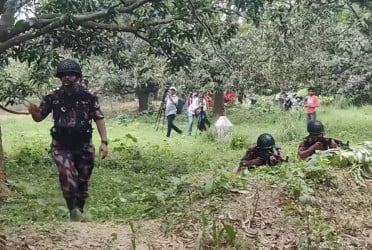
RAB’s Additional Director General (Operations), Colonel Iftekhar Ahmed, told Bangladesh Pratidin, “Every RAB officer is giving their utmost effort to maintain law and order.”
Bd-pratidin English/ ANI