In an environment of existing political instability, economic pressure, and international concerns over human rights, Bangladesh is not receiving good news. On top of that, there is a constant stream of setbacks—local, regional, and international. The country has lagged behind in global peace.
With political instability, the democracy index has also plummeted. Bangladesh’s weak position in various indices is also causing it to fall behind on the path to becoming a developing nation. The question of why the country is regressing in global indices remains unanswered. In this changing situation, a question naturally arises: How much has Bangladesh progressed in the past year? Amidst much hope, a piece of disappointing news was the decline in the Global Peace Index.
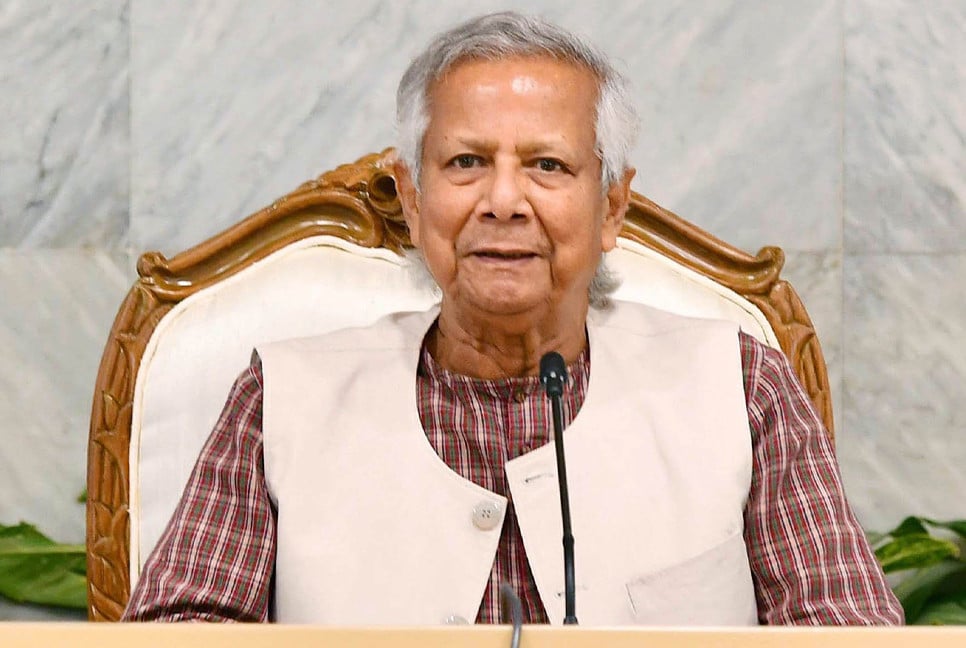
For a nation governed by a Nobel Peace Prize laureate, this is painful and embarrassing for everyone. Bangladesh’s position has also fallen in the Democracy Index published by the Economist Intelligence Unit. It has also regressed in environmental conservation, where Bangladesh ranks 173rd out of 180 countries, which is at the very bottom.
According to the Economist Intelligence Unit's report, Bangladesh's score in the Democracy Index for 2024 decreased by 1.44 compared to 2023. We now await the 2025 results. According to the Institute for Economics and Peace (IEP), an international research organization based in Sydney, Australia, Bangladesh's current position in the Global Peace Index 2025 has dropped 33 places from the previous year to 123.
It is difficult to predict what will happen in the coming year, 2026. Last year, Bangladesh saw a significant deterioration in its security and safety due to widespread student protests and political instability. The then-Awami League government's tough stance resulted in widespread violence and extrajudicial killings. There were also numerous allegations of forced disappearances. In addition to Bangladesh, the countries that have fallen furthest behind in the peace index are Ukraine, Russia, Myanmar, and Congo. In a different context, Bangladesh is now on the verge of postponing its graduation from the list of least developed countries (LDCs). Business leaders argue that the country is already going through a difficult time, and graduating from LDC status now would have a negative impact on the export sector and other areas.
After this demand from business leaders, the issue of LDC graduation has come back into the discussion. There are mixed opinions on whether postponing LDC graduation is rational and realistic. Questions have been raised about what rational reasons the government has for seeking an extension and whether it can simply delay the process. This is because in March, the interim government's advisory council decided to graduate from LDC in 2026. After eight years of various processes and multiple assessments, the United Nations had decided that Bangladesh would graduate from the LDC list on November 24, 2026. That means Bangladesh has 15 months to graduate from LDC status. The issue of postponing graduation has emerged at this time.
In the past year, Bangladesh's overall situation has reached a point of extreme stagnation in every aspect, including the economy, trade, development activities, law and order, and social conditions. Everything is just limping along. Amidst all these setbacks, there is good news about the reserves. The country's reserves have increased slightly, and the flow of remittances remains stable. The country's economy is now almost entirely dependent on foreign currency reserves and remittances. At one point, when the country's foreign currency reserves were more than $48 billion, they have now dropped below $30 billion. This massive decline in reserves has made it difficult for the government to meet import costs. The import of essential goods like fuel oil, gas, and food grains has decreased. The only hope for filling this gap is now the remittances sent by expatriates. However, this is not a permanent solution, as this dependency will only increase without diversification in domestic production and the export sector.
The LC process for import-export has not yet normalized. As a result, trade and investment activities are only falling behind. Businesspeople cannot import raw materials, production is being hampered, and investors are hesitant to start new ventures. The banking sector's condition is even more dire. Almost all banks, except for three or four, are on the brink of bankruptcy. Customers are unable to withdraw even minimal amounts of money, creating severe uncertainty in people's lives. The breakdown of trust in the banking system means that the entire foundation of the economy is becoming shaky. Development projects are one by one being shut down. Due to budget shortages, many projects cannot be completed on time.
Many of the major infrastructure projects announced by the government have stalled due to a lack of funds and corruption. At the same time, the job market has become stagnant. The youth are spending their days in despair. The combination of old and new unemployment has reached an extreme level. In addition, extortion, tender manipulation, and drug trafficking have taken on a pandemic-like form in society. The youth are becoming addicted to drugs. Taking advantage of the weakness of the rule of law and political instability, criminal gangs are gaining influence. The country's law and order situation has also taken a terrible turn. From rural areas to urban centers, people feel insecure. Theft, robbery, murder, rape, and other crimes are increasing. A country's overall development depends on its economy, social stability, employment, the implementation of development projects, and a robust banking system. But the current picture in Bangladesh is the opposite. Due to a stalled economy, a failed banking sector, stagnant investment and development, the dominance of drugs and extortion, and the deterioration of law and order, the country has fallen back at least 10 years in the past year! Time does not recognize individuals; it waits for no one. But if a state is trapped in its own inefficiency, corruption, and mismanagement, a country can fall back a decade in just one year. Bangladesh's recent situation is a cruel reflection of that reality.
It is urgent to take swift and effective measures to break free from this disease of regression. Otherwise, the wheel of Bangladesh's development will fall further behind, and the lives of ordinary people will become even more miserable. The people of the country are in no way prepared for this bad news of regression and decline, especially under the rule of the world-renowned Nobel laureate, Professor Dr. Yunus, after a student-people's uprising that captivated the world. The regression has now reached the local level in Bangladesh's academic activities. Academic years are on the verge of falling behind because classes, exams, and admissions are not starting and ending on time. There is a terrible situation from the primary level to higher education.
The blame for this obsession with backwardness in everything is being directed at the unelected government of Dr. Yunus. Leaders of the main opposition party, the BNP, are regularly firing this arrow. Secretary-General Mirza Fakhrul Islam Alamgir is saying it. The party's Standing Committee member, Amir Khosru Mahmud Chowdhury, who understands business and the economy well, says it at every event. Their main point is that if an elected government comes to power, there will be no more regression or decline in any index. According to them, otherwise, Bangladesh will only continue to fall behind. Investment will not come. Mobocracy will increase. The judicial system will collapse. The law and order situation will further deteriorate. These comments are certainly not just empty words. Each one is an important message.
Writer: Journalist-Columnist; Deputy Head of News, Banglavision