The National Consensus Commission, formed by the Interim Government, began its journey with full support from the political parties but faced two major challenges. However, due to differences in opinions and approaches among the parties, the July Charter is failing to make progress, plunging the commission into uncertainty and stagnation.
Of the two challenges, neither has been fixed, indicating a difficult journey ahead for the commission. Although a draft of the July Charter has been prepared, the commission is yet to find a way to implement it, despite receiving diverse opinions from experts.
Meanwhile, members of the commission have held several informal meetings with representatives of influential political parties. Yet, these efforts have yielded no progress, as the top leaders of the parties continue to differ in both opinion and view.
Discussions with commission policymakers and party leaders reveal that experts have suggested four possible approaches for implementation. These are a referendum, seeking the Supreme Court’s opinion, adopting special measures in exceptional circumstances, and issuing ordinances.
However, experts caution that while implementation through an ordinance is possible, its effectiveness would be short-lived without subsequent approval from parliament. In this context, Bangladesh Jamaat-e-Islami, Islami Andolon, and the National Citizen Party have stated that the upcoming elections should be held on the basis of the July Charter.
They also stated that they would not sign the charter without a clear legal foundation and an effective implementation framework, emphasizing, “There is no way to leave the implementation of the reform process in the hands of the next parliament.”
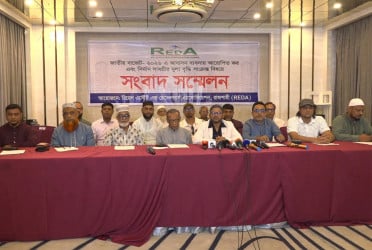
Jamaat has warned that it will file a lawsuit against the interim government and the commission if the July Charter is not granted legal status. The party maintains that relying solely on promises will not ensure implementation, and without a legal basis, the charter would become worthless.
Meanwhile, the NCP has declared that no concessions will be made regarding the July Charter. The BNP, on the other hand, stated that the declaration has been pledged to be implemented under the sovereign authority of the people, adding that there can be no greater expression of national consensus than this.
On the other hand, the commission announced that it will hold discussions with political parties next week to finalize the charter and determine its implementation framework. Following the initial round of meetings with experts, a third round of consultations with political parties will be held to make a final decision on the implementation of the July Charter.
In the meantime, the commission has shared a draft of the charter with political parties. Several parties strongly criticized the draft, pointing out various inconsistencies and demanding that these discrepancies be resolved before moving forward.
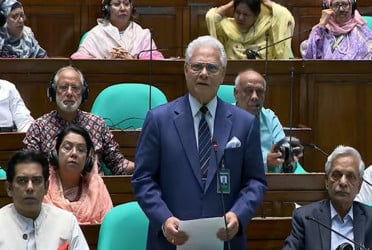
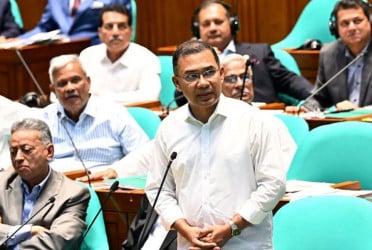
BNP Standing Committee Member Salahuddin Ahmed said there are inconsistencies in the charter, and certain issues have not been properly addressed. He added, “The government must take proper initiatives to implement the charter, and parliament is needed to give it a constitutional foundation.”
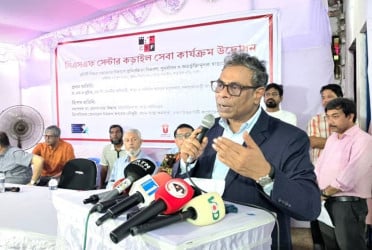
NCP also expressed its concern because of the absence of the implementation of the charter. Party Joint Convenor Javed Rasin said, “The implementation process was not mentioned in the final draft of the July Charter. We had discussed the implementation process several times before. Even then, the implementation process was not mentioned in the draft of the Charter.”
“Two things were brought in with a lot of confusion. One is that the government will implement those that will be implementable before the elections. But it did not clarify the implementable issues and it did not clarify how they will be implemented,” he continued, adding, “At the same time, some issues were brought at the beginning of the pledge. Through these, the Commission is trying to take us in the wrong direction. Therefore, we are disappointed to receive the draft that the consensus commission has.”
Communist Party of Bangladesh (CPB) General Secretary Ruhin Hossain Prince said, “The charter cannot be questioned in any court. This is a dangerous issue. The proposal to complete the charter work with the current government is not acceptable, because only the elected parliament has the right to amend the constitution.”
The draft of the July Charter sent to political parties outlines proposed reforms in the state constitution, electoral system, judiciary, public administration, police administration, and anti-corruption measures. It includes areas of consensus and notes of dissent, a background, the formation of reform commissions, a brief introduction to the National Consensus Commission and its activities, the issues on which consensus has been reached, and an eight-point commitment to implement the July National Charter.
The 'July Charter' has been discussed as a framework for state reform and a new political foundation following the 24th mass uprising. However, the Consensus Commission could not finalize its outline even after 68 days of meetings. As a result, disagreements have arisen among political parties over the implementation process and its legal basis.
Translated by AM