The draft of the July National Charter 2025 has proposed that its eight pledges and 84 recommendations take precedence over the constitution, with the 2024 mass uprising given constitutional recognition. It also calls for sweeping reforms, including restrictions on the Prime Minister holding multiple positions, a bicameral legislature with proportional representation, and selection committee-based appointments to key constitutional bodies.
However, BNP and several like-minded political parties have lodged notes of dissent on at least ten proposals, strongly objecting to provisions curbing the Prime Minister’s dual role, the PR system in the lower house, and mandatory women’s representation quotas.
They also objected changes to the caretaker government framework, presidential powers, and appointment mechanisms for institutions such as the Bangladesh Bank, Public Service Commission, and Anti-Corruption Commission.
BNP and like-minded political parties have objected to two issues regarding the powers and responsibilities of the president. These two issues are- The President will not appoint the Governor of Bangladesh Bank and the Chairman and members of the Energy Regulatory Commission. Currently, these two positions are appointed by order of the President.
The draft charter sent to the political parties mentions equality, human dignity and social justice, democracy, and religious freedom and harmony in the four fundamental principles of the existing constitution. The existing constitution mentions the citizens of Bangladesh as Bengalis as a nation and Bangladeshis as citizens. The provision has been replaced and it says that ‘the citizens of Bangladesh shall be known as ‘Bangladeshis’.
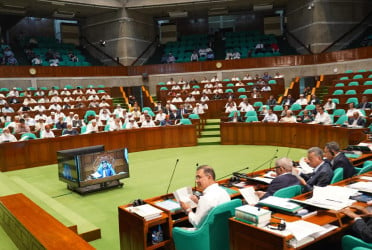
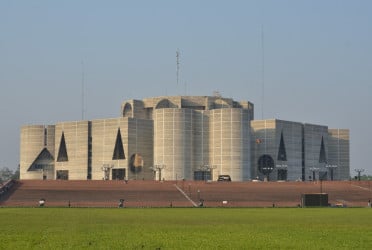
The proposal of the charter states that Bangladesh will have a bicameral legislature, which will consist of the lower house, the National Assembly, and 100 members. The CPB has given a note of dissent on this issue. It has been said that 100 members of the upper house will be elected through the proportional representation PR system of the votes received in the lower house elections. BNP and NDM have given notes of dissent on this proposal.
Political parties will simultaneously publish the list of candidates for the upper house while publishing the final list of candidates for the general election of the lower house. BNP and NDM have given notes of dissent on the proposal to have at least 10 percent women candidates in the list.
The draft charter has provisions to gradually increase the representation of women in the National Assembly to 100 seats; an independent Judicial Appointments Commission will be formed under the leadership of the Chief Justice to appoint judges of the Supreme Court; provisions will be made to take disciplinary action by considering the display of political loyalty or expression of political views by judges as misconduct; there will be an Election Commission of Bangladesh consisting of the Chief Election Commissioner and the number of Election Commissioners determined by law. Suitable candidates will be selected through a selection committee formed by law. There will be an ombudsman in the country under the constitution; an independent investigation commission will be formed against officials involved in genocide and vote fraud; an independent 'Police Commission' will be formed to ensure the professionalism and accountability of the police force and establish the police service as people-friendly.
The draft of the July Charter proposal was sent to the political parties on Saturday. In the wake of the anti-discrimination student movement, the students and people of the country demanded state reforms after the fall of the fascist Awami League government.
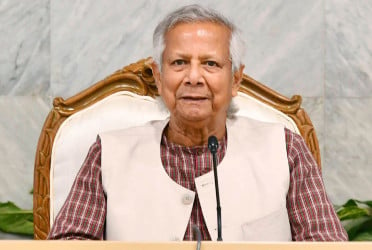
In view of that demand, six reform commissions were formed through a notification on October 7, 2024. Later, to advance the overall reform process based on national consensus, the government formed the National Consensus Commission with the Chief Advisor as the chairman on February 12 of this year.
The commission decided to formulate the 'July National Charter 2025' after two rounds of discussions with the political parties of the country. This draft was sent to the political parties on Saturday. The commission has decided to hold a third round of meetings with the parties on this issue next week. The commission's term is scheduled to end on September 15.
(Tanslated by Tanvir Raihan)