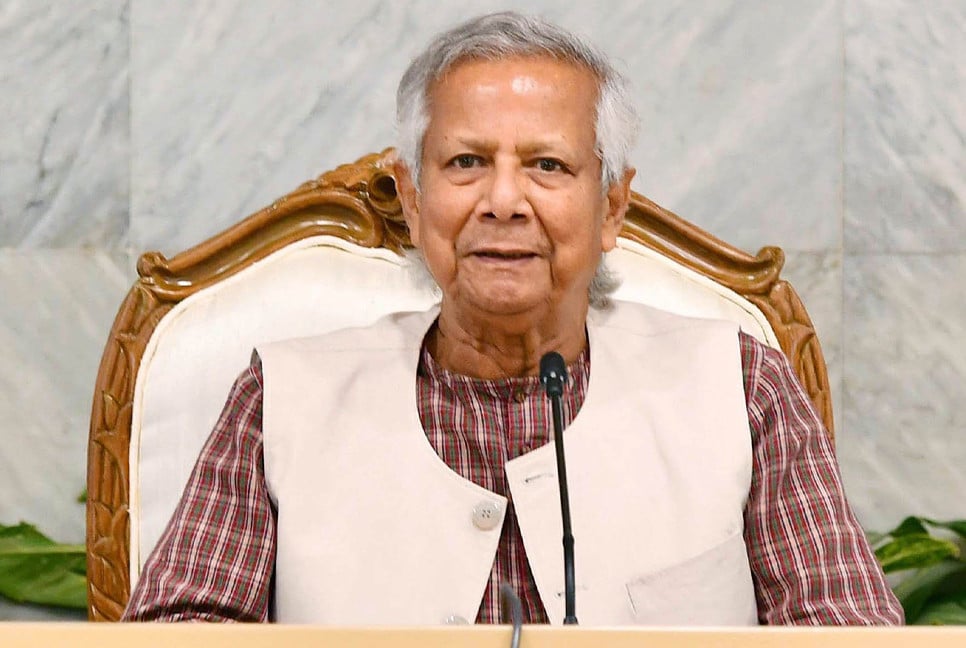
Chief Adviser of the interim government Dr Muhammad Yunus has repeatedly said his administration had three core responsibilities- reform, justice, and election. In other words, to reform all the major collapsed state institutions, to ensure justice by trying the autocrats and their accomplices, and to hold a fair and acceptable election.
On 5 August, at a rally on Manik Mia Avenue in Dhaka, he declared, “We will enter our final and most important chapter. We will now begin the process of handing over power to an elected government.”
In line with this promise, he sent a letter to the Election Commission the very next day, instructing them to organize the election. This initiative reassured the people, and most political parties welcomed it.
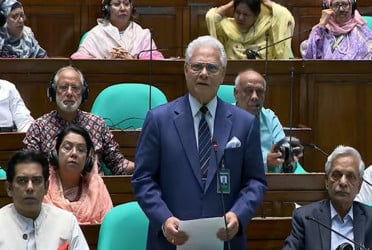
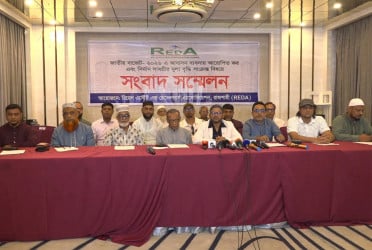
But only one month and six days later, his beloved “revolutionaries” have openly declared there will be no election in February. This announcement stunned the nation. The question now is -what will Dr Yunus do? Will he try to satisfy both sides, or will he take a firm stand? Is my dear reader Mahtab Uddin’s fear about to come true? Or will the anti-election revolutionaries now face a counter-revolution?
Before and after 5 August 2024, certain lofty terms were used with great flourish—“new arrangement” and “second independence,” among them. If we review the history of state formation and independence in our country, the Liberation War remains the most memorable and significant chapter. A “new arrangement” was indeed necessary then - hence the break-up of Pakistan and the birth of Bangladesh. But the Pakistani rulers never felt this necessity, and some people in our own country also did not. That is why they stood against our Liberation War. As Razakars, Al-Badr, Al-Shams, and Peace Committee members, they sided with the Pakistanis.
Today, the same forces who could not accept Bangladesh in 1971 are talking about a “second independence” under the guise of a “new arrangement.” In other words, those who rejected the independence of 1971 are now trying to deny that very independence by claiming we need another one. Their faces were well-known in 1971. But behind these familiar faces, new ones have appeared. Some are even misusing the “Nehru Doctrine” to question 1971. Those who could not accept the Liberation War, could not accept the independence of 1971, or even acknowledge Ziaur Rahman’s declaration of independence, now want to impose this so-called “second independence” or “new arrangement.”
In present-day politics, these very people are now BNP’s opponents. As a party, BNP had no role in the Liberation War- it did not even exist then. But no honest history of Bangladesh’s independence can ignore BNP’s founder, Shaheed President Ziaur Rahman. Major Zia was one of the sector commanders of the Liberation War. He not only fought in the war but also declared the country’s independence- at a time when Bangabandhu Sheikh Mujibur Rahman had been arrested. Zia’s declaration was the very first recognition of Bangladesh as a new state, like a baby’s first cry after birth.
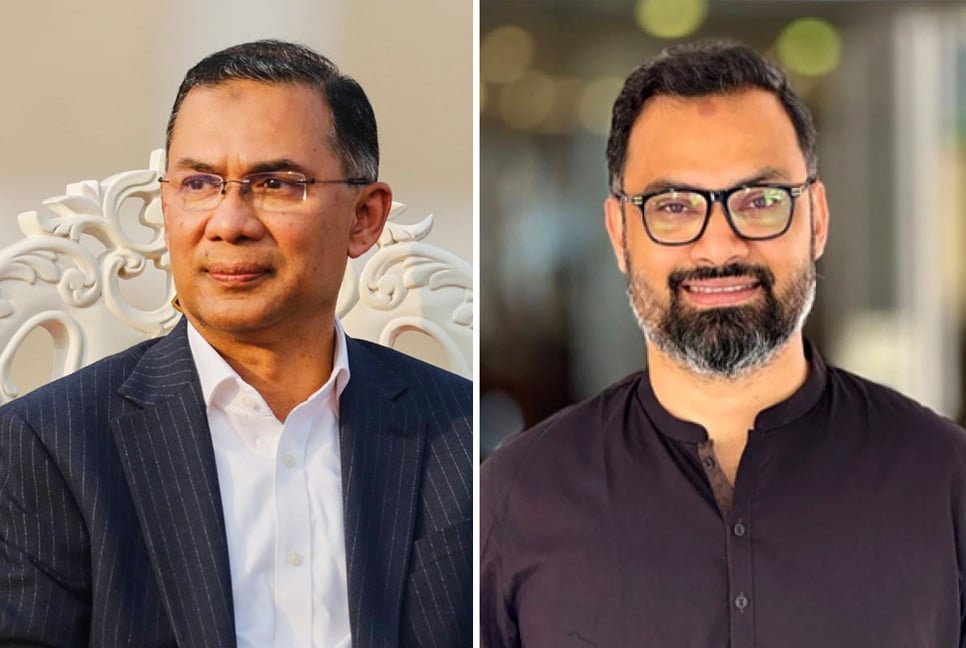
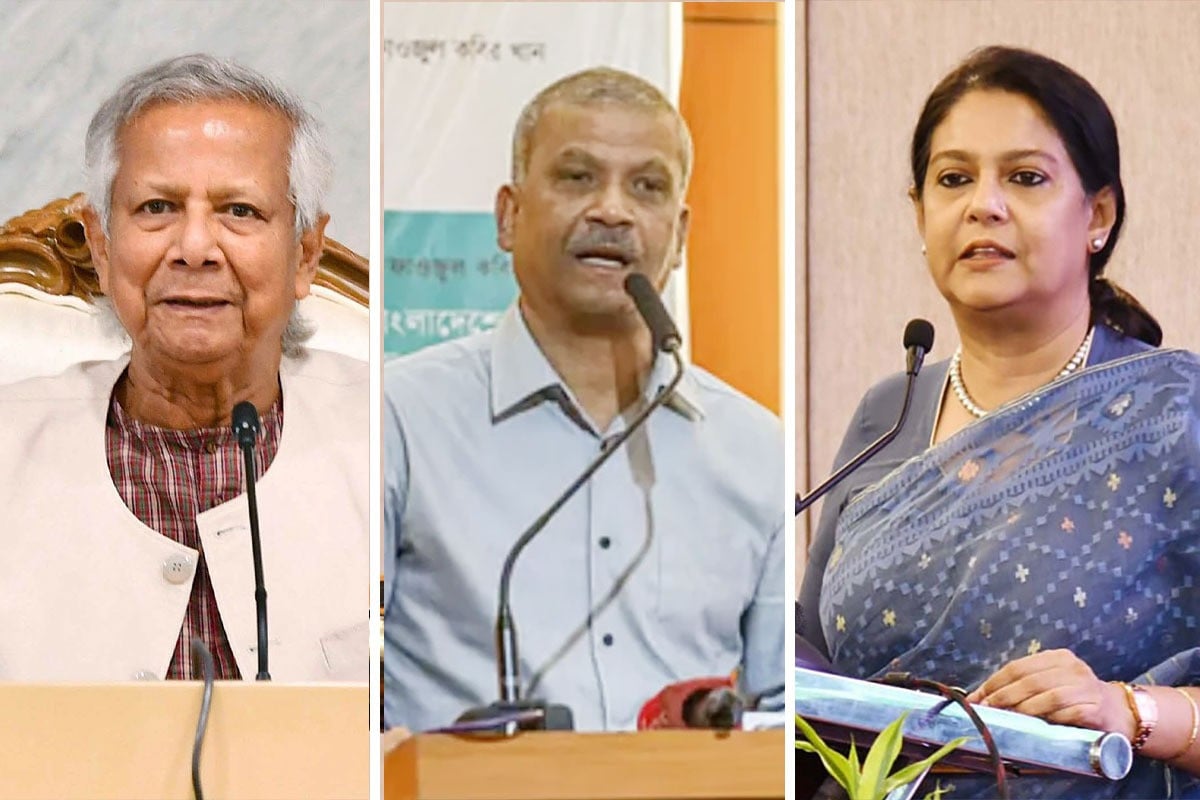
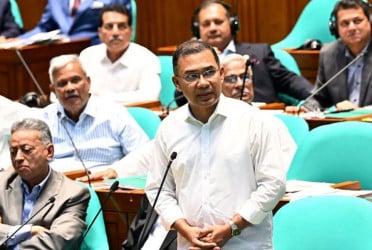
A party whose founder directly participated in the Liberation War and declared independence naturally bears greater responsibility to protect that independence and sovereignty. Today, BNP- the party of Shaheed Zia- is the sole helmsman of the spirit of 1971. Nobel laureate Dr Muhammad Yunus, BNP Chairperson Begum Khaleda Zia (thrice elected prime minister), and Tarique Rahman, the dreamer of a new Bangladesh, all understand the dangerous conspiracy at play against democracy, independence, and sovereignty. These three leaders realise that democracy can only be restored through an election. That is why they agreed at their meeting in London that a national election must be held in February.
On the other hand, those who have declared that there will be no election in February are Dr Yunus’s own favorites. If a decision by a highly respected elder like him is rejected by his own ideological juniors, one must ask why. It won’t take long to uncover the reasons. If the declaration to stop the election is truly a conspiracy against the country and democracy, the people will resist it, just as they have resisted such conspiracies in the past. It would be naïve to think that no counter-revolution will come after the 5 August Uprising. Those who want to block the election may now face that counter-revolution.
The sandalwood tree bears deep lessons for our personal, social, and political life. If one reflects carefully, it can bring tears to the eyes. We are passing through a barren, gray time. Everyone wants to break the old and build the new- but in doing so, we are losing sight of which is truly old and which is truly new. This current instability touches every aspect of life- individual, family, social, and political. Self-interest increasingly consumes us. The present time, devoid of ideals, devours us like an octopus. Children can no longer look to their parents as role models. Enlightened leaders are vanishing. In politics, too, there is a deep crisis- the scarcity of sandalwood-like leaders who spread fragrance even when they are gone. Instead of sacrifice, most leaders today seek comfort and luxury.
There is a touching story about two university friends- one a history student, the other a botany student. One day, the history student asked to see a sandalwood tree. They went to the botanical garden, and the botany student pointed out a white sandalwood tree. The history student touched it, smelled its leaves, pressed his nose to its trunk- but found no fragrance. Disappointed, he said, “I’m let down. I thought sandalwood would smell sweet all over.”
His friend explained, “Listen. Sandalwood is special. While alive, it gives us cool shade. Only when it is cut down and becomes timber does it release its fragrance. It has countless uses. Our parents and guardians are like sandalwood. While alive, they protect us with their cool shade. When they pass away, their love, their reputation, their ideals- their fragrance- remains with us. For this reason, we must cherish our parents while they live, and follow their ideals when they are gone. Sandalwood is extremely precious- like our parents and guardians, whose worth cannot be measured by anything.”
As the friend spoke, tears rolled down the history student’s face- he had lost his father only two months earlier. Overcome with grief, he hugged the sandalwood tree and wept loudly. His botany friend hugged him and wept too- he had lost his father in childhood and his mother just last year. Both had lost their “sandalwood trees” and now lived only with their fragrance.
In today’s barren and troubled times, there are only two people more precious than sandalwood- Dr Muhammad Yunus and Begum Khaleda Zia. As of 22 June, there are 51 registered political parties in Bangladesh, with 143 more seeking registration. Among this vast number, how many leaders are truly as rare and valuable as sandalwood? Almost none.
To be like sandalwood, one must learn sacrifice and dedicate oneself to the people. Begum Khaleda Zia has spent her entire life sacrificing for the nation, serving selflessly, and as prime minister three times stood as a vigilant guardian of independence and sovereignty. Today, Dr Muhammad Yunus is the helmsman guiding the nation through its greatest crisis. These two priceless sandalwood trees alone can rescue Bangladesh from this perilous moment.
Whatever obstacles arise, if a timely election can be held as promised, and democracy restored, we will be saved. Under the cool shade of sandalwood, we will find the path to our future.
The writer is the Executive Editor of Bangladesh Pratidin. He can be reached at [email protected]