The National Consensus Commission (NCC) is exploring ways to implement the July Charter, a reform roadmap based on discussions with political parties, but uncertainty looms over when and how it will be signed.
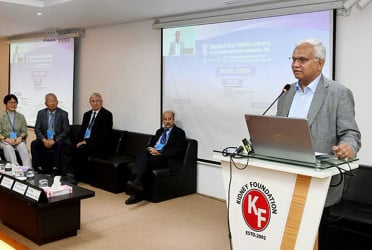
NCC Vice Chair Prof. Ali Riaz said on Friday the commission will consult both political leaders and independent experts—though it has yet to specify what kind of expertise will be sought. “We are mainly looking for a way to implement the July Charter,” he told reporters, adding that the third phase of talks will begin next week to gather opinions.
Prof. Ali Riaz said that the Consensus Commission is now looking at experts and political parties to see what the path of the July Charter implementation process will be. The third phase of discussions will begin in the short term next week to get their opinions. The Consensus Commission is not making any decision on whether the implementation of the charter will be the time of the interim government or will be left to the next parliament.
Ali Riaz said that the Consensus Commission is not recommending any path of implementation from any predetermined position.
In response to a question about the success of the commission, he said, “Success always depends on perspective. The goal we wanted to achieve from our side was to establish consensus among political parties on reforms. We wanted to do that by July. We were able to achieve it by July 31 - initially there was consensus on 62. Later, 10 out of 19 were agreed upon.”
In October last year, the interim government formed the Constitution, Electoral System, Judiciary, Anti-Corruption Commission, Public Administration and Police Reform Commission.
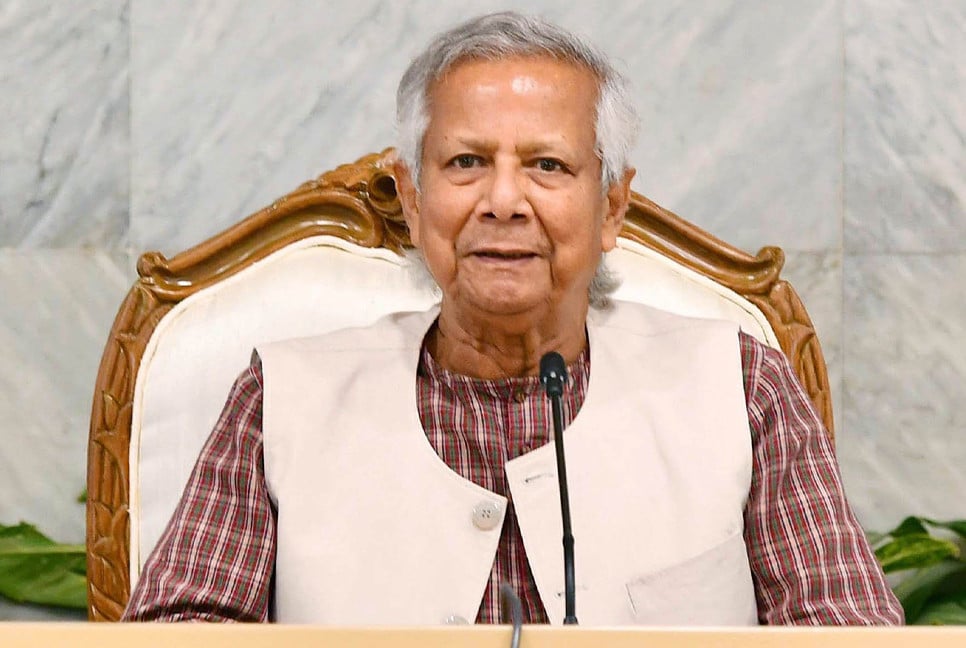
The commissions submitted their reports in February. Later, the NCC was formed under the leadership of Chief Adviser Professor Muhammad Yunus to build consensus on the reform issue.
Later, the recommendations of the six reform commissions were divided into two parts. In one part, there were 165 'immediately implementable' recommendations from the remaining five commissions, excluding the Constitution Reform Commission. Work is underway to implement them.
In another part, there were 166 important recommendations. These were discussed separately with 33 parties in the first phase. The consensus commission discussed the 20 basic reform proposals that were not agreed upon in the first phase with 30 parties in the second phase. The July National Charter is being prepared based on the reform proposals on which consensus and decisions were made. The draft of this charter has already been prepared.
It says that the government formed through the next election will pledge to implement these reforms within two years. BNP agrees on this.
However, several parties, including Jamaat-e-Islami and the National Citizens Party (NCP), have objections to making such a pledge. They are demanding that the July Charter be brought into a legal framework and the method of implementing the reforms be fixed.
The commission said that consensus was reached on 62 issues in the first phase of the discussion. In the second phase, decisions were made on 9 of the 20 basic reform proposals with notes of dissent.
Ali Riaz said, “We will talk to experts on the legal and constitutional aspects of the note of dissent. In fact, what is the global experience in such situations? We were hoping that all 166 expected issues would be agreed upon in the preparation of the national charter. That did not happen, nor will it happen.”
“The first thing is that I know there will not be a consensus on all issues. The second thing is that we do not want to impose it. As a result, notes of dissent are coming in some cases. For example, in the initial stage of discussions on 25 issues, the differences between the parties are so huge that even if we discuss them for months in the second stage, we will not be able to come to an agreement. So we left them out. As a result, efforts have been made to create a consensus in the areas where, in practical terms, consensus can be created,” he added.
(Translated by Tanvir Raihan)