Bangladesh’s path forward has, time and again, been obstructed not by a lack of opportunity, but by the failings—be it incompetence or inexperience—of its national leaders. The most significant achievement in our history was, without doubt, the independence gained in 1971. While Sheikh Mujibur Rahman was imprisoned in Pakistan, he was, unknowingly, appointed President of the Bangladesh government-in-exile. Syed Nazrul Islam served as the Acting President—a tale not unlike the Ramayana, where, during Ram’s exile, the administration of Ayodhya was entrusted to his younger half-brother, Bharat, who governed with utmost humility, placing Ram’s sandals on the throne while sitting himself on a lower seat. Syed Nazrul Islam governed in much the same spirit.
On 10 January 1972, Sheikh Mujibur Rahman returned to Dhaka from Pakistan via London, Delhi, and Kolkata. Two days later, on 12 January, he assumed office as Prime Minister of independent Bangladesh. Under a parliamentary system, where the Prime Minister wields unquestioned power, remaining as a symbolic President would have been redundant. At that time, Mujib was both the most popular and, seemingly, the most unassailable political figure in the country. If he commanded his party members to rise, they rose; if he asked them to sit, they sat. The public’s reverence for him knew no bounds—many died during the war chanting his name.
Just 80 days after becoming Prime Minister, on the first of April 1972, he declared: “I will not be able to give you anything for the next three years.” The people accepted it without protest, and when famine struck in 1974, leading to the deaths of hundreds of thousands of Bengalis, there was still no revolt.
However, it would be unjust to say Sheikh Mujib gave the nation nothing in those three years. He was a man of his word and a master of rhetoric. He kept his promises. As his three-year moratorium ended, he presented the nation with the gift of one-party rule—BAKSAL. In this new system, Mujib was the singular source of power as President, and the head of a state party. He believed, perhaps naively, that the entire world—excluding a handful of nations opposed to the liberation war—saw him as a heroic leader of the Third World, even of “Afro-Asia-Latin America.” Surely, for the governance of a small country like Bangladesh, his individual leadership was enough. After all, he was no ordinary man, but almost a divine avatar—thus was born the narrative of Mujibism. Fidel Castro of Cuba, whose country was a fraction of Bangladesh in both size and population, was even quoted as saying, “I have not seen the Himalayas, but I have seen Sheikh Mujib.”
And so, his personal freedom became synonymous with the country’s freedom. Ensuring his and his family’s safety became the state’s top priority—because Mujib and the state were viewed as one and the same. To that end, he had pre-emptively created a brutal and unaccountable force known as the Rakkhi Bahini.
History repeated itself when Sheikh Hasina, Mujib’s capable daughter, took no step away from her father’s path. In fact, after assuming office as Prime Minister in 2009, she enacted the Father of the Nation Family Members' Security Act 2009, ensuring state-funded protection for herself, her sister, their children, their children’s spouses, and even grandchildren—no matter where in the world they resided. In doing so, she went several steps beyond her father.
But what happens when power is pushed too far? Just as it had for her father, destiny had a harsh twist in store. Perhaps they were both politically competent, experienced, and immensely popular, but neither managed to elevate the nation to the heights they could have, had they not prioritised the welfare of themselves and their extended family above all. And while they may not have been wholly indifferent to the consequences, they failed to foresee their fate. Like Lakhindar, even in a fortified residence, safety proved an illusion.
In dividing the population with walls of conflicting ideologies and loyalties, and in surrendering the nation’s sovereignty to Indian dominance, they betrayed the soul of the liberation war, the dreams of the nation, and the sacrifices of our martyrs.
Fifty-three years after independence, in July of last year, another chance presented itself—a chance to uplift the nation’s fortune and restore genuine democratic governance. It came through an unexpected victory against tyranny. A seemingly spontaneous movement by students against Sheikh Hasina’s authoritarian regime swelled into a massive uprising within two weeks, toppling the regime. When armed state forces, reduced to party thugs, failed to suppress the unarmed waves of students and citizens, Hasina and her accomplices fled the country to save their lives.
Typically, the people’s expectations after such revolutions are sky-high—often higher than the hope they once placed in independence itself.
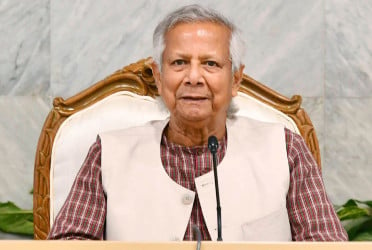
The interim government installed after the uprising came to power with overwhelming public trust, especially from the youth. But Hasina, during her 15.5 years of uninterrupted rule, had deliberately created a legacy of administrative rot, corruption, and nepotism to make it nearly impossible for any successor to govern effectively. The interim government was tasked not only with clearing this mess but also with swiftly establishing justice via special tribunals for those responsible for the genocides during the uprising, as well as the prior 15 years of enforced disappearances, murders, abductions, and secret detentions in notorious black sites like Aynaghar. Yet, one year later, they have failed. They have also failed to restore order in the administration. Law enforcement’s passivity has allowed vigilante justice, killings, and lawlessness to surge unchecked. Extortion and land grabbing have multiplied. The people have grown so disillusioned that they can no longer distinguish between the fascist oppression of the Awami League and the apathetic governance of the interim rulers.
As with every revolution, a group of opportunists has emerged. If the post-revolution government does not clamp down on them, instability follows. That is exactly what is unfolding under this interim regime. Despite enjoying vast public support, the government's indecisiveness has rendered it the weakest in Bangladesh’s history—something no one wanted.
This is tragic, as the interim government had, from the outset, favourable conditions for restoring stability. While its Chief Adviser and aides may be personally honest, they are politically inexperienced. For that reason, they should have acted swiftly, completing their tasks and transferring power to elected representatives without delay. Their gravest error was failing to repeal the constitution.
They put the cart before the horse by introducing reform proposals without first dismantling the flawed structure. How do they expect to implement reforms while retaining the current constitution? How can laws be amended based on these proposals? Should they not have first established a clear framework of authority? As it stands, the current process towards elections lacks credibility. If elections are held under these conditions, they will mirror the past three rigged elections under Sheikh Hasina. A major political force, long absent from power, could exploit the situation to seize power—most likely walking the same path laid by the Awami League. There’s little doubt of that now.
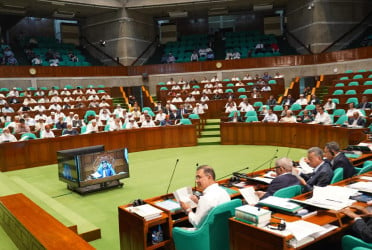
The interim government has announced elections for February next year. There are still five months—plenty of time. The Election Commission is expected to announce the schedule soon. Parties and candidates are beginning preparations. Before Hasina scrapped the caretaker system, several relatively fair elections were held under such neutral governments, with peaceful power transfers. The current interim government should now focus solely on maintaining law and order to ensure a credible election.
The scars of the uprising remain. The tears of 1,500 mothers have not yet dried. Mothers who lost sons, sisters who lost brothers, and young people who became disabled for life—all still hope that their sacrifices were not in vain. The new government must lead with sound political direction and build a prosperous nation, so that the people are no longer made to suffer repeated political trials. They must also take heed from the downfall of the authoritarian regime just past—that injustice and tyranny always come with consequences.
The author is a senior journalist and translator based in the United States.