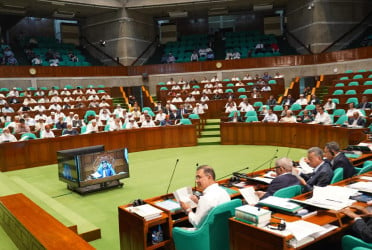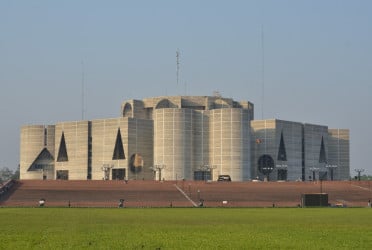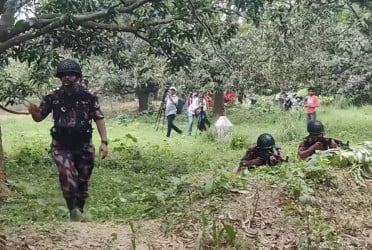
It is undeniable that, before presenting the proposed July Charter to the nation, the successful conclusion of the second phase of extensive discussions between the National Consensus Commission and various political parties on 19 fundamental reforms is a historic event.
The 1969 mass uprising that toppled the then-dictator Ayub Khan was a chapter in Pakistan's political history. In contrast, the anti-discrimination revolution by students and the masses in July-August of the post-independence year 2024, which overthrew domestic fascist ruler Sheikh Hasina, created a new chapter in our struggle—a chapter even more poignant and significant than the ousting of General Hussain Muhammad Ershad, another military dictator of Bangladesh.
The suddenness and scale of that mass uprising eventually forced Sheikh Hasina to flee the country and take refuge in India.
The entire world watched that event in stunned disbelief.
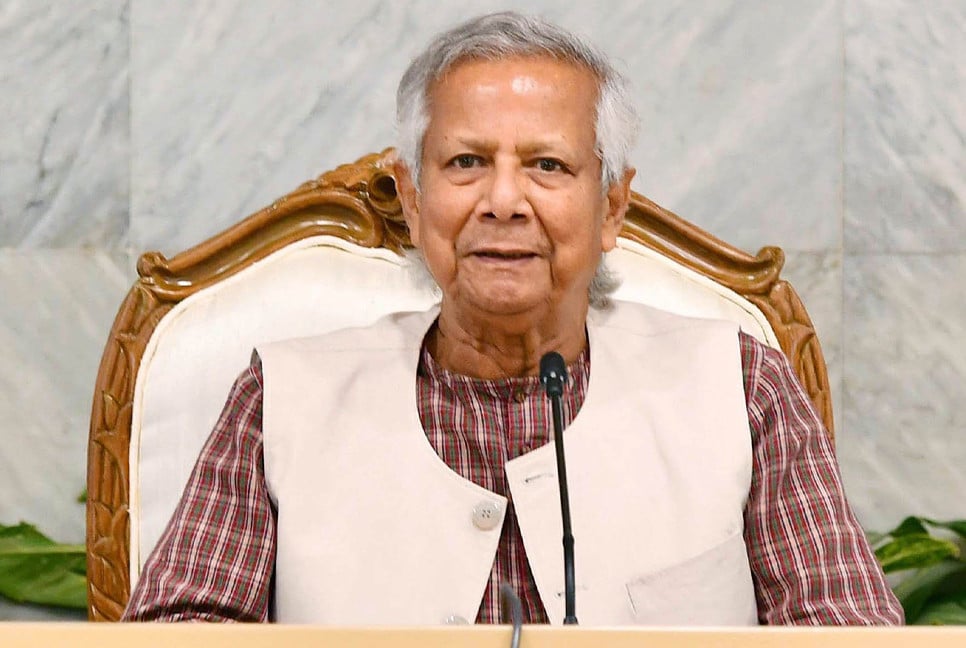
Under the leadership of Nobel Laureate Professor Dr. Muhammad Yunus, the freedom-seeking students and citizens formed an interim government, whose primary objective was to rescue the devastated state of Bangladesh and realize the hopes and aspirations of the oppressed and deprived people.
The people of Bangladesh have never made such sacrifices for state reforms. That’s why Dr. Asif Nazrul, the current Adviser on Law, Justice, and Parliamentary Affairs of the interim government, said that it would not be easy for the next government to ignore the expectations of these persecuted, oppressed, and disenfranchised people.
The Chief Adviser of the Interim Government, Dr. Yunus, stated, “July is the month of our rebirth. Therefore, we must pave a new path.”
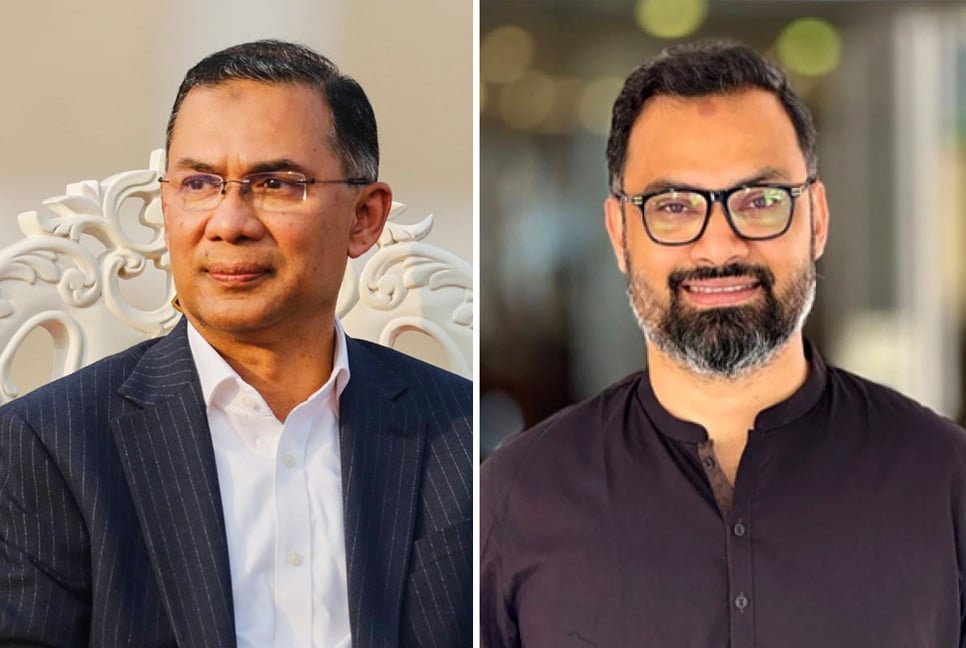
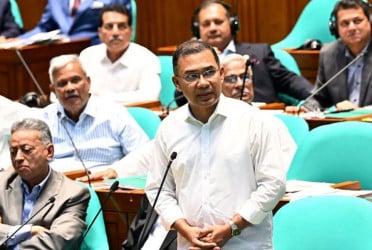
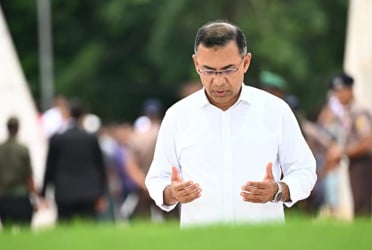
Tarique Rahman, Acting Chairman of the BNP, said, “Considering everything, we must take necessary measures to ensure fascism never rises again, and everyone must remain vigilant.”
It is understood that the much-anticipated July Charter may be announced by August 5. In Bangladesh’s 53-year history, numerous political movements and uprisings have taken place, with many changes of rulers, yet the fate of the people has hardly improved.
The corroded state machinery or any sector of national life has not seen significant reforms. Although some improvements occurred during the BNP regimes under President Ziaur Rahman and Prime Minister Khaleda Zia, those periods couldn’t be prolonged due to conspiracies and exploitation by vested interests.
Therefore, under Dr. Yunus’s leadership, the current Interim Government, within less than a year, has succeeded—through demands from the struggling student masses and a second round of talks called by the National Consensus Commission—in reaching a consensus on 19 fundamental reforms.
Up until July 31, discussions spanned 23 days with over 30 political parties, including BNP, Jamaat-e-Islami, and the National Citizen Party (NCP), on reform proposals. A total of 166 recommendations were deliberated. Excluding those issues where consensus was already established, agreement was achieved on 19 key reform areas; however, in some cases, ‘notes of dissent’ were registered, which has been accepted as a democratic expression.
It would be remiss not to mention that in Bangladesh’s nearly 53-year political history, except for some constitutional amendments, additions, or deletions for self-serving purposes during various regimes, no comprehensive all-party initiative had been taken for fundamental reforms.
Consequently, fascism, corruption, and lawlessness gradually entrenched themselves within the governance system. Thus, this collective initiative for fundamental reforms is being regarded, albeit modestly, as a historic step toward establishing democracy, human rights, and the rule of law.
However, everything now hinges on the successful implementation of these agreed-upon state repairs and reforms. Political and constitutional change is an ongoing process. Never in history has it been possible to execute all reforms overnight. Hence, every step has been taken gradually, a process often referred to by democratic circles as “political process.”
In 1954, Maulana Bhashani’s Awami Muslim League and Sher-e-Bangla Fazlul Huq’s Krishak Sramik Praja Party, the United Front won a landslide victory in the provincial elections of East Pakistan. But Pakistan’s central leadership dissolved that cabinet, after which Bhashani continued to steer politics towards a separatist and liberation movement.
In 1957, at a meeting in Kagmari, Bhashani resigned from the Awami League over principled disagreements. Young Awami League leader Sheikh Mujibur Rahman subsequently announced his six-point political program, which eventually culminated in the 1969 mass uprising.
This led to the resignation of Pakistan’s Iron Man Ayub Khan and the unconditional release of Sheikh Mujib from the Agartala Conspiracy Case. That student-led uprising was spearheaded by Maulana Bhashani.
Although Sheikh Mujib secured a majority in the 1970 elections, he could not attain state power in Pakistan. On the other hand, Maulana Bhashani called for independence. When Pakistani forces attacked unarmed Bengalis in 1971, Major Ziaur Rahman proclaimed Bangladesh’s independence.
Later, through a sepoy-people’s uprising, Ziaur Rahman ascended to state power in independent Bangladesh.
During the regimes of the Awami League and later, after Ziaur Rahman’s assassination, under the military dictatorship of Hussain Muhammad Ershad, numerous movements were waged with the participation of students and the masses. Yet, the absence of democracy, human rights, and the rule of law in the fragmented political sphere of Bangladesh prevented lasting stability. Due to persistent plots for power grabs and conspiratorial politics, democratic ideals never truly took root in Bangladesh. Thus, fascism and authoritarianism kept resurfacing.
In this political continuity, the recent anti-discrimination student-mass-led uprising of July-August 2024, proposals for state repair and necessary reforms, and the impending July Declaration are undoubtedly parts of a long-term strategic process.
As a major political party, BNP has significantly contributed to this state's repair and reform process. We hope that through everyone’s collective efforts, a golden path will be built for Bangladesh’s future.
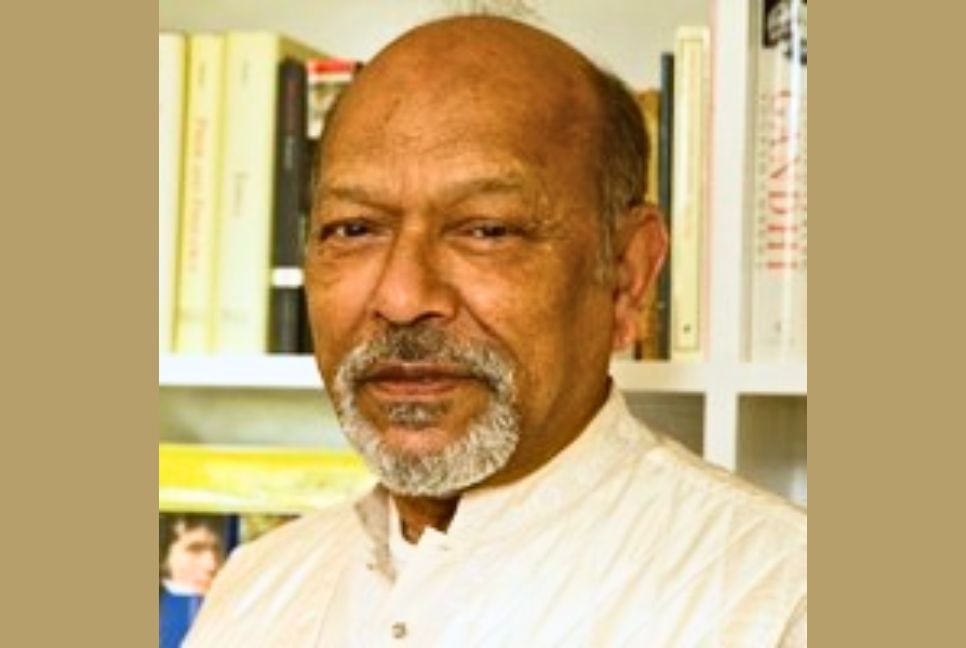
The author is the former chief editor and managing director of Bangladesh Sangbad Sangstha (BSS).