One: Democracy—A People's Invention
Democracy means the freedom of speech for the people. Democracy means the right to vote and take part in governing the country. To our knowledge, democracy didn’t exist anywhere in the world 200 years ago. But the people of Bangladesh can take pride in the fact that democratic practices existed here some 1,300 years ago. The first king of the Pala dynasty, Gopal, was elected through a democratic process. At that time, this region was going through a dark age.
After the fall of the Shashanka dynasty, Bengal had no central rule for about a century. Law and order had completely broken down. In the absence of central authority, landlords and local elites had become tyrants. The entire country fell into a state of lawlessness—like the rule of the fish, where the big fish eat the small ones. "Might is right" became the law. Tired of this chaos, ordinary people decided they could take it no more. They came together and decided to elect a king through consensus to bring order. A righteous and brave young man, Gopal, was chosen as king. Thus began the Pala dynasty.
A fascinating story exists about Gopal’s election, one that rivals tales from folklore. According to Tibetan historian Lama Taranatha (writing in 1608 AD), and supported by inscriptions in the Khalimpur copper plate, Bengal’s people suffered greatly during a century of anarchy. Leaders decided to elect a lawful king. But the elected kings kept getting killed overnight by a demoness. One day, a devotee of the goddess Chundadevi came to a household where the young man chosen to be king was about to meet the same fate. The devotee took his place, fought the demoness, and killed her. The next morning, people were surprised to find the king alive. He continued temporarily for seven days and was then made the permanent king. He was named Gopal. His Pala dynasty ruled Bengal for 400 years and expanded its empire to Bihar, Odisha, and Kamrup. The Pala rulers earned wide fame across the Indian subcontinent.
As with all beginnings, there is an end. Though the Pala dynasty lasted 400 years, it eventually fell to the Senas from Karnataka. The Sena rulers were once vassals of the Palas but eventually declared independence. The last strong Sena ruler, Lakshman Sena, was dethroned after a surprise attack by Ikhtiyar Uddin Bakhtiyar Khilji in Nadia. Without resistance, the aging Lakshman Sena fled by river to Bikrampur, where he continued to rule a portion of Bengal. Bakhtiyar Khilji’s focus was on the western parts of Bengal, not the eastern wetlands (Bhatir). He dreamt of invading Tibet, a dream that led to his death at the hands of his own men.
Despite this deep-rooted democratic heritage, democracy has remained largely elusive in this region. In the last 77 years—23 under Pakistan and 54 under independent Bangladesh—democracy has made brief appearances but never lasted. Governments, opposition parties, and even voters all share the blame. The lack of a democratic mindset has made democracy an abstract concept—intangible and unreachable. The upcoming February elections once again raise questions: will the nation of 180 million finally grasp the golden deer of democracy? It seems unlikely.
As in 2014, 2018, and 2024, preparations are underway for a one-sided election. In the previous three elections, BNP and Jamaat did not participate. In the next one, Awami League and its allies are likely to be left out. Yet, conscious citizens of the country hope for an election—flawed or not—that brings a political government to power. At the very least, this would spare Bangladesh from being ruled by an apolitical, NGO-style caretaker regime. It would help the country move forward rather than backward, like a ghost in a fairy tale.
Two: The Caretaker Government of Dr. Yunus
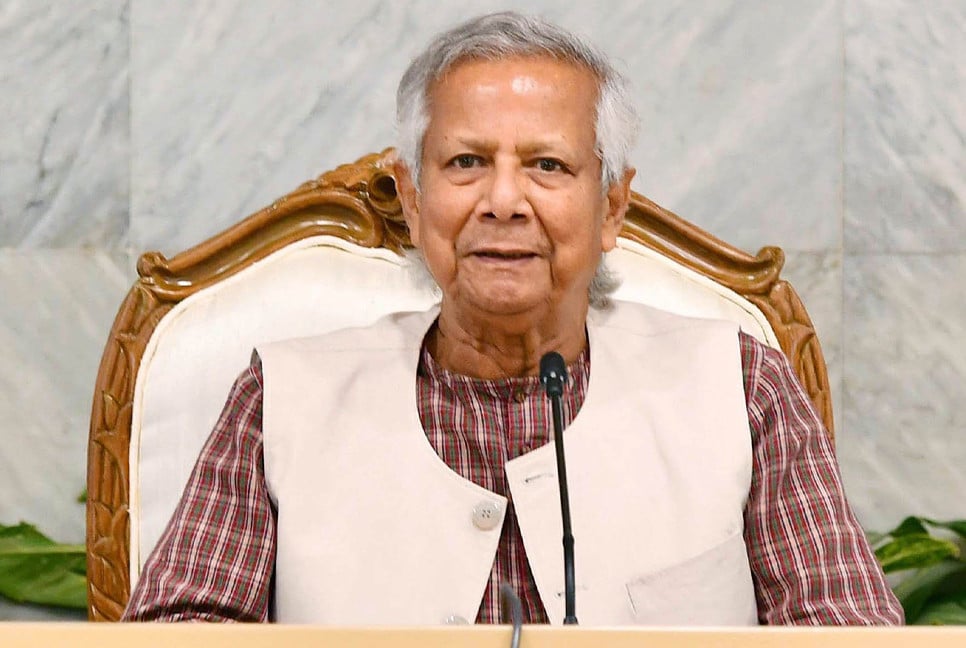
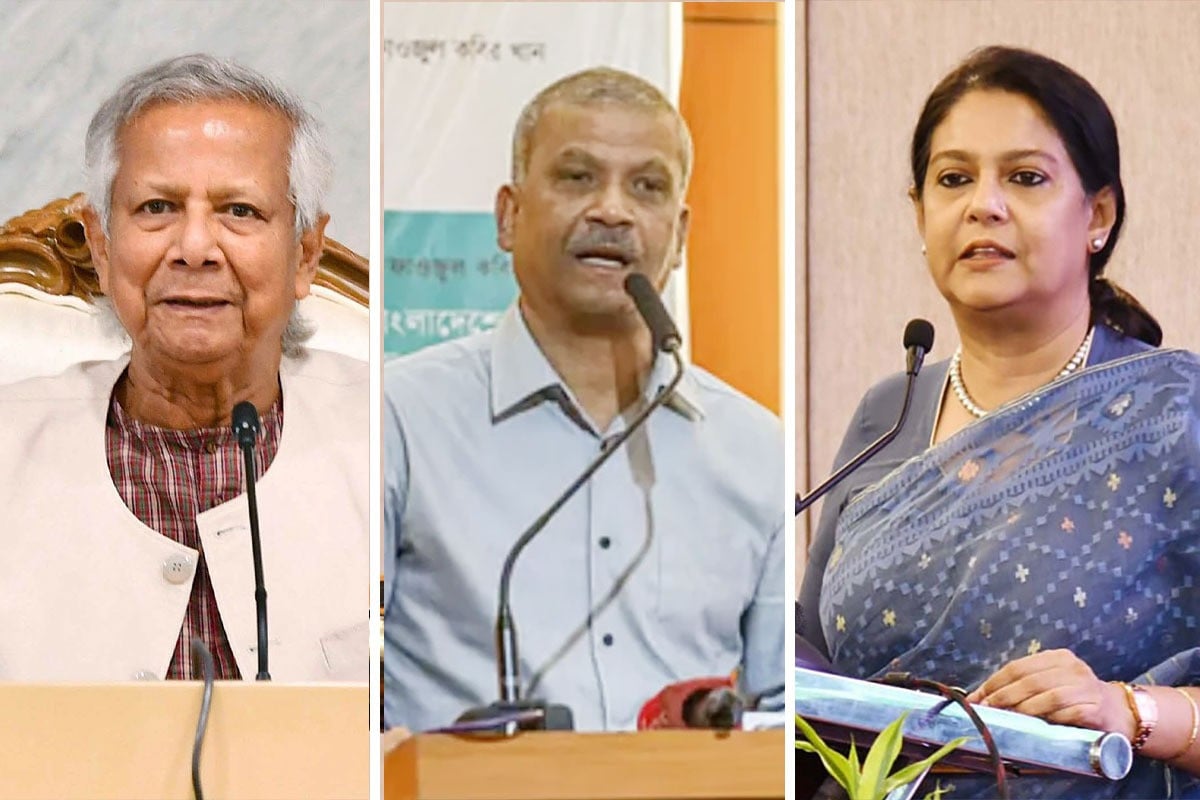
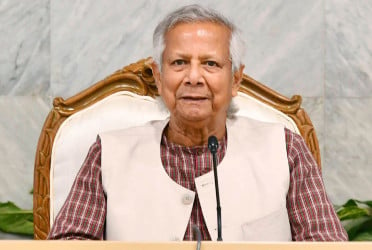
It will soon be a year since Nobel Peace Prize laureate Dr. Muhammad Yunus took charge of the caretaker government. Globally known as a renowned economist and dreamer of change, Dr. Yunus’s appointment had initially stirred hope among the people of Bangladesh. But that hope has turned into disillusionment. The economy is now in a crippled state.
It’s known that the mass uprising in July had U.S. backing. But during the tenure of Dr. Yunus’s caretaker government, the U.S. imposed a 35% additional duty on Bangladeshi products. The government failed to negotiate effectively. This has had a serious impact on the country’s garment exports. The naïve advisors and officials of the caretaker administration believed that Yunus’s Nobel laureate status and presumed U.S. support would help resolve the issue. But instead of negotiating actively, they wasted the 90-day grace period they had.
Only after receiving a second notice did the government respond. By then, the situation had worsened, prompting the commerce advisor to rush to Washington—but even then, no business representative was included in the delegation. During this time, many of Bangladesh’s competitors successfully struck deals with the U.S.
The commerce secretary admitted that the ministry had never been in such a difficult situation. Garment exporters have complained that the government kept them out of crucial discussions. In the past, political governments always included business communities in decisions related to trade. But the caretaker regime chose to sideline them—an act of self-sabotage. To appease the U.S., the government even approved the purchase of 25 Boeing aircraft, costing billions. Bangladesh Biman is traditionally a loss-making entity, and this huge investment will only increase the burden. Proposals have also been made to buy cotton, soybeans, and wheat from the U.S. at inflated prices. Yet, the Trump administration reportedly wants “something bigger.”
Three: Political Governments Built This Nation
All of Bangladesh’s greatest achievements have come under political leadership. Independence is the highest honor for any nation, and our political leaders led that struggle. The Liberation War was run by the Mujibnagar government in exile. The head of the freedom fighters, General Osmany, was an elected public representative, as was Deputy Commander Abdur Rab. To make the freedom fighters a true people’s army, elected representatives were put in charge.
In the 54 years since independence, it is not civil society but political governments that turned Bangladesh from one of the world’s poorest nations into a middle-income country. The Mujib government started from scratch—there was zero foreign exchange in the central bank. They had to rebuild a war-ravaged country and rehabilitate 10 million refugees. In just 3.5 years, that government achieved 7% GDP growth.
In 1991, the BNP under Khaleda Zia came to power and laid out the blueprint for national prosperity. It was during their rule that market economy was formally introduced in parliament—with the opposition Awami League offering support, putting aside its tradition of opposing for the sake of opposition.
It was under these political governments that Bangladesh began to advance. Today, Bangladesh ranks 34th in the world economically. Once a country whose people wore second-hand clothes from abroad, it is now the world’s second-largest exporter of garments. These achievements all came after 1990, under political governments.
That’s why, with so many problems now weighing on the country, there is no alternative to a political government.
Author: Senior Assistant Editor, Bangladesh Pratidin
Email: [email protected]