Bangladesh’s political landscape continues to show signs of division, with significant disagreements surfacing among political parties on key national issues. At the same time, political instability is visibly on the rise, fuelling public concern — and understandably so.
Naturally, discussions around elections are now taking centre stage. Yet political parties remain divided over the electoral process. There are doubts as to whether these parties are truly reaching out to the public, or even trying to. In any democratic country, the primary means of changing a government is through elections.
According to the Constitution of Bangladesh, elections are the standard mechanism for government transition. However, this process has been disrupted at times due to political unrest and disputes between parties. The more these tensions escalate, the greater the uncertainty in the political environment. The main role of the current interim government should be to create the conditions for a fair and credible election by initiating necessary reforms.
Yet uncertainty surrounding the election is only deepening. No one can definitively say when the next general election will be held. The position and perspective of the newly formed Nationalist Citizens' Party (NCP) on the timing and format of the election is particularly important — as they have emerged as a significant factor in national politics. Given the party’s roots in the student and youth-led mass movement, it is clear that it carries unique political weight.
Some believe that the government's intentions are now being reflected through this party. The timeline, format, and conditions under which the NCP seeks elections — whether before or after reforms and justice — are all closely tied to the sincerity of the ruling authorities.
It has already been almost 11 months since the formation of the interim government, yet there is still no clear election roadmap from the government or any concrete policy blueprint from political parties. No party has yet presented a clear and compelling political vision for the public.
Although the NCP’s current “July March” campaign is a promising step toward connecting with citizens, questions remain over how effectively it is engaging people nationwide in such a short time. Meanwhile, Jamaat-e-Islami is holding national rallies and voicing ambitions of returning to power, while the BNP appears increasingly desperate to bring about a swift election that would return them to government.
In a democracy, the ultimate aim of every political party should be public welfare. Their actions must align with the people’s expectations.
However, merely fixing a date for the election will not resolve the country’s political problems. If political conflicts continue, so too will instability. All sides must move toward a fair and constructive resolution. A win-win approach is essential, which requires all parties to show a spirit of compromise. Without mutual concessions, such an outcome is unlikely.
Bangladesh currently has over a hundred unregistered and personality-driven political parties in addition to the registered ones. Reports indicate that many of these new parties applying for registration have no proper offices — with some using their leaders’ living rooms as headquarters. The Election Commission has noted that most fail to meet even the basic eligibility criteria.
Some parties only have a known president, with no information available about their general secretary. Among the registered parties, many exist in name only, lacking any meaningful public support. These so-called “signboard parties” become visible only during election season — when their value increases due to negotiations over alliances, nominations, and power-sharing deals with larger parties.
In reality, a political party can only mature through legitimate, constitutional engagement in governance. Often, parties aim to gain power by forming alliances, and sometimes they succeed. However, most of the so-called minor parties have no genuine public backing.
We hope that political parties in Bangladesh will work sincerely for the people. All political actors and their leaders must demonstrate tolerance and restraint, drawing on lessons from the past to establish a politics focused on public good. Only then can Bangladesh stay on a healthy democratic path and prevent the rise of destructive forces in future.
Reducing vengeance and conflict in politics will ultimately benefit the nation. All sides must be willing to take a fair and appropriate path, as there is no alternative to constructive, responsible politics.
Parties must remember that the key to winning elections lies in strong organisational capacity and public support. Without these, no party can have electoral impact. New political forces should strive to attract voters by offering fresh ideas and people-centred programmes. Many parties fail to connect with citizens due to impractical ideologies, which not only prevents them from gaining support but also fosters a climate of conflict and animosity — ultimately resulting in poor election outcomes.
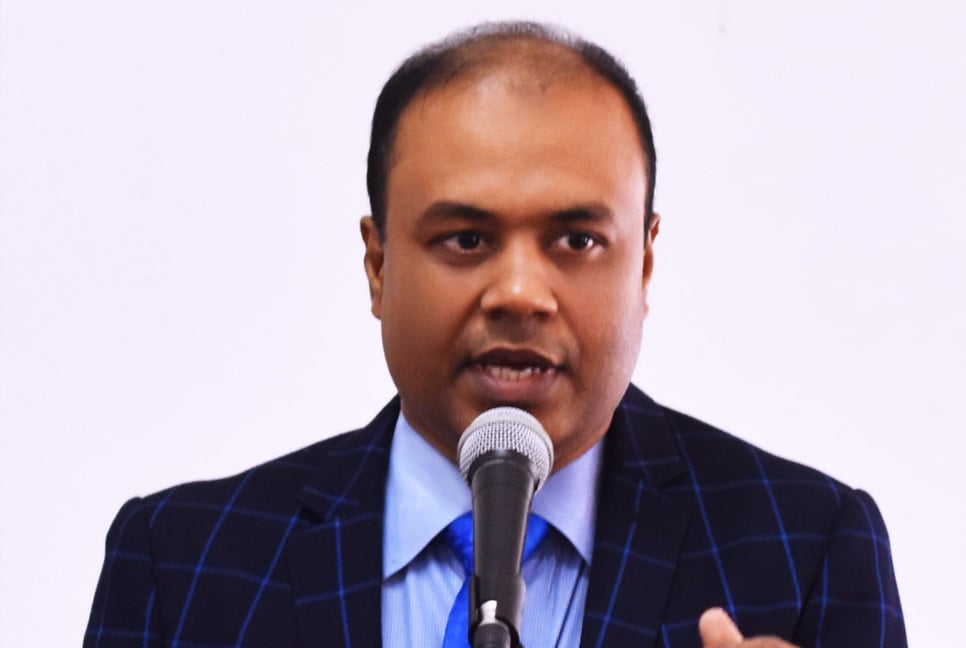
The author is a Professor in the Department of Political Science, University of Rajshahi.