Since the fall of the fascist Sheikh Hasina-led government on August 5 last year, bribery across country’s public service sectors has reportedly surged, with the cost of unofficial payments increasing by up to five times in some areas.
Experts said that if effective steps are not taken quickly, the trust of the general public in the state service system will further decrease. At the same time, this culture of bribery can break the discipline of the administration in the long run.
Service recipients said that for work that used to cost 10,000 taka, now they have to pay up to 50,000 taka. They further alleged that the activity of new lobbyists is increasing in this system of bribery. Especially in state-owned commercial banks, the rate of bribery has increased a lot in the areas of loan interest waiver, new loan approval and bail in cases.
Although some well-known people lobbied in these sectors earlier, new faces have now gained power, who are demanding large bribes using their influence.
BNP Secretary General Mirza Fakhrul Islam Alamgir echoed the concerns, citing a businessman who claimed that “a bribe of Tk 1 lakh before July 2024 now requires Tk 5 lakh.”
A victim said on condition of anonymity, “I would have done the work by paying 15 thousand taka to correct my land records. Now they say that it will take at least 70 thousand taka. Some new people have come who are demanding big sums in the name of “showing cooperation”.”
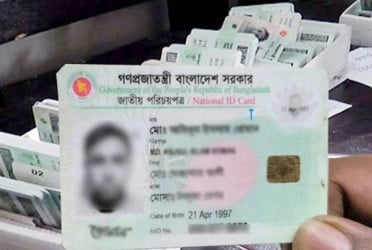
Transparency International Bangladesh (TIB) Executive Director Dr. Iftekharuzzaman said corruption in the justice system and law enforcement remains a major barrier to access to justice. “Basic services like land, passports, NID and BRTA are plagued with bribery, affecting fundamental rights,” he said.
According to TIB, the total estimated bribe transactions in 2023 amounted to Tk 10,902 crore—equivalent to 1.43% of the national budget and 0.22% of GDP. The three most corrupt sectors, each accounting for over Tk 2,500 crore in bribes, are land services, judicial services, and law enforcement.
In addition, passport and immigration - 1,350 crore taka; local government institutions - 840 crore taka; electricity - 309 crore taka; health - 235 crore taka and education - 213 crore taka. The report presents information on bribery in a total of 14 sectors, from which it is clear that bribery has become a permanent culture in almost all types of service sectors in the country.
An official of the Anti-Corruption Commission (ACC) said that they regularly receive such complaints and investigations have been started in some cases. However, he said that the weakness of the internal prevention system of the concerned departments is facilitating this corruption.
Dr. Touhidul Haque, associate professor at the Institute of Social Welfare and Research of Dhaka University told Bangladesh Pratidin, “Corruption, mismanagement, bribery, lobbying, and the trade of corruption are the mismanagement that hold a state back. We will get a new Bangladesh by overcoming the July Revolution, which was our dream. We had to stumble at that point. In the areas of bribery and lobbying, the system has not changed, but the person has changed. If the system has not changed, but only the hands have changed, irregularities will remain.”
(Translated by Tanvir Raihan)