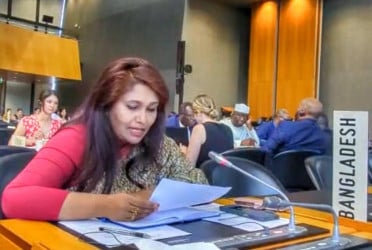
The present government was established through a mass uprising in which women stood firmly at the forefront. Women have always played a role in every movement in our country, but their participation in the July-August uprising was unprecedented, even extraordinary. Not only university students but also school and college girls took to the streets.
This was not limited to Dhaka alone but was seen in every city. Women coming out from their dormitories late at night to join anti-authoritarian marches and rallies was unheard of before. They fought bravely and also provided care and medical support.
According to official figures, 11 women were martyred and 132 children lost their lives. Many believed that the women’s participation signalled a social transformation. Yet, at the end of the day, what do we see? The same old faces, the same power struggles.
Violence against women has not diminished; on the contrary, it has increased. Two examples illustrate this painful reality — although these are mere instances and not a measure of the full extent. One concerns Lamia Akter, a college student from Patuakhali, and the other Nadira Yasmin, an assistant professor at a government college in Narsingdi.
Nadira, who serves as secretary of the organisation ‘Nari Ongan’ and the portal ‘Hisya’, advocates for gender equality and women’s equal share in property. Such views were intolerable to Hefazat supporters in Narsingdi, who demanded her removal from the college. No formal inquiry was conducted to investigate the complaints or possible ulterior motives. Instead, she was transferred to Satkhira.
Upon hearing this, Nadira was alarmed, knowing the fundamentalists’ strong presence there. Yet she could not foresee the full extent of hostility. Some students submitted petitions to the college’s acting principal and district commissioner to prevent her from joining the college. The district commissioner assured action would follow an investigation.
However, before any inquiry, Nadira was transferred again — this time to Tangail. Who will stand for Nadira now? A few groups have protested quietly, but their voices lack strength, and who listens to the righteous nowadays? Will Nadira ultimately lose her job? We do not know.
The shifting of power has brought even more heartbreaking situations.
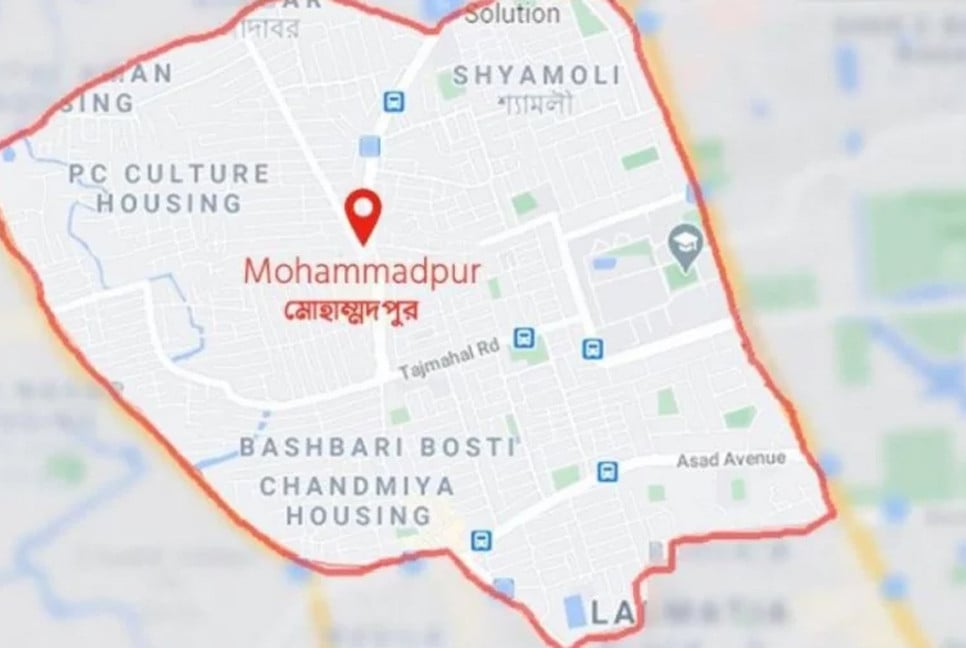
Consider Lamia Akter, only 17 years old, who paid with her life — a fact well known to those who follow the news. Lamia’s father, Jasim Uddin, was also killed. He was a driver for a non-governmental organisation and lost his life not in an accident but during the July-August uprising in Mohammadpur, Dhaka.
Jasim Uddin was the sole breadwinner of a family of four, living in Adabor, Dhaka. His death plunged the family into despair. He was buried in his native village.
One afternoon, Lamia visited her father’s grave and was returning to her maternal home when she was abducted and raped by criminals. The horror did not end there — to silence her, the perpetrators recorded and threatened to release nude videos of her on Facebook. The daughter of a martyr and a victim of rape — her family shattered, Lamia despondent and helpless.
Is this the true, discrimination-free face of Bangladesh today? Perhaps not; generalisations are always dangerous. But one thing is clear — a heartless society shields the criminals and dishonours the victims. Lamia’s plight mirrors the honourable Birangonas of 1971.
She is a brave girl who lodged a complaint with the police, leading to the arrest of two culprits. Yet, justice feels distant, and Lamia remains uncertain if the criminals will face punishment.
Compensation of Tk 2,00,000 was allocated in Jasim Uddin’s name as martyrdom support. Lamia was to collect it from the district commissioner’s office in Patuakhali, but the weight of grief, humiliation, delayed justice, and financial hardship overwhelmed her.
Instead of waiting till Monday, she ended her suffering by hanging herself on Saturday night. Her injured father died after ten days in hospital, and Lamia endured 38 days of agony before succumbing to despair.
In any society, the status of women offers insight into its culture. Women in Bangladesh are active in all spheres — professionally, politically, and socially — yet their safety remains precarious. Groups like Hefazat and elements within the ‘waz’ culture propagate hostility towards women so vehemently that it chills the soul. One wonders whether they have wives, daughters, sisters, or female relatives themselves.
Though we have advanced technologically and digitally, why does such disrespect towards women persist? The answer partly lies in our capitalist development model, which embraces the darker sides of society. Within this darkness thrives a culture of exploitation, with men’s lust for women growing particularly pronounced among the youth.
A brutal truth is that our country lacks healthy entertainment, and cultural activities have sharply declined. Cinema halls, once vibrant, are closing, replaced by malls where cinemas have no place. Public libraries, places of social learning and culture, are dying due to a lack of readership. Schools now have librarians, but student interest in reading is diminishing.
Opposition to libraries from conservative clerics is well known, despite Islam’s historic contribution to knowledge and education. The religious community built libraries and schools, significantly advancing civilisation. Yet their ideological successors continue to destroy cultural assets.
Recently, in Tangail, over 500 books were stolen from a library, and furniture was damaged, causing losses of nearly Tk 50,000. Although the books were not burnt, but handed over to officials, the message is clear — no libraries will remain. This is shocking given Tangail’s rich cultural history, home to luminaries like Mir Mosharraf Hossain and Fazilatunnesa, the first Muslim woman to graduate with first-class honours from Dhaka University in 1924.
The rise in juvenile delinquency is linked to the absence of cultural engagement. We once had vibrant youth organisations and movements, but these have faded. Universities lack student councils, a situation unimaginable even under colonial rule, yet accepted today.
__________________________
The writer is an emeritus professor of Dhaka University.