More than five decades after Bangladesh's independence, the Sundarbans, the world's largest mangrove forest, remains without a dedicated master plan. Stakeholders in the tourism sector are calling for an integrated ecotourism master plan to ensure the sustainable development and conservation of the mangrove forest. They emphasize that a well-structured plan could balance environmental preservation with responsible tourism, safeguarding the Sundarbans' unique biodiversity and cultural significance for future generations. There still remains a lack of comprehensive framework that has left the Sundarbans vulnerable to unplanned tourism and unsustainable resource extraction, threatening its ecological integrity. The absence of such a plan underscores the pressing need for coordinated efforts to protect its quintessential natural resources. Spanning approximately 10,000 square kilometers, the Sundarbans is the largest mangrove forest in the world, with the majority of it located in Bangladesh. The Bangladeshi portion covers an area of 6,517 square kilometers and stretches across the districts of Khulna, Satkhira, Bagerhat, Patuakhali, and Barguna. Recognized for its unparalleled ecological and cultural significance, the Sundarbans was designated a UNESCO World Heritage Site in 1997. This acknowledgment underscores its global importance and the urgent need for sustainable management to preserve its unique biodiversity.
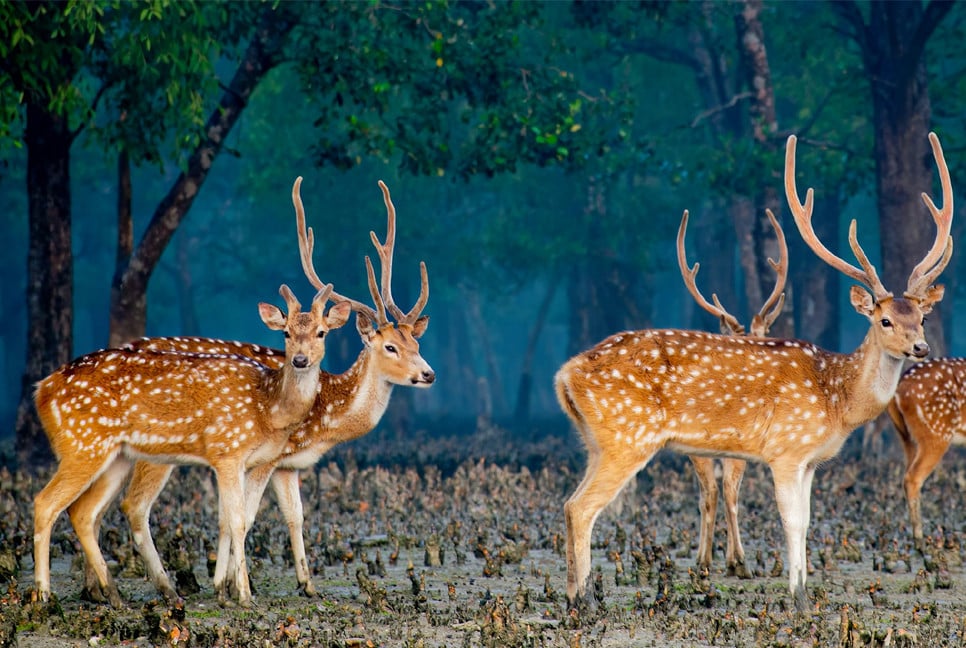
The Sundarbans, a haven of natural beauty and biodiversity, is renowned as the habitat of numerous animal species, including the iconic Royal Bengal Tiger, a wide variety of birds, axis deer, crocodiles, and snakes. This unique mangrove forest is also home to approximately 350 plant species, 120 fish species, 270 bird species, 42 mammals, 35 reptiles, and eight amphibians. Its rich ecological diversity includes flora such as Sundari, Gewa, Jhamti Goran (Ceriops decandra), and Keora, making it a vital natural treasure. Despite its significance, no standalone master plan has been created for the conservation of the Sundarbans in the five decades since Bangladesh's independence. In 1995, a 20-year national afforestation master plan was adopted, aiming to invest approximately Tk 6,000 crore in reforestation efforts nationwide. However, only Tk 2,300 crore—around 38% of the target—was ultimately invested. The effectiveness of this plan remains unclear, as no evaluation of its outcomes was conducted after its conclusion in 2015.
Following the expiration of that plan, the Forest Department initiated steps to develop a new master plan for forests across the country, including the Sundarbans. However, experts argue that the Sundarbans, with its distinct ecological characteristics, requires a dedicated strategy. They emphasize the importance of an integrated master plan to protect its environment and ecosystem while promoting sustainable ecotourism. Journey Plus CEO Toufiq Rahman said, "Our country has the largest mangrove area in the world, yet no separate master plan has been adopted for it to date." He noted that while the government has taken steps to formulate a "Sundarbans Eco-Tourism Master Plan," the initiative is being led by the Forest Department without involvement from key stakeholders like the Tourism Corporation or Tourism Board. Experts believe that a collaborative approach is essential to ensure the preservation of this invaluable natural heritage. Taufiq Rahman emphasized that the Sundarbans, as a protected forest area, cannot be treated like other tourist destinations and requires a comprehensive master plan to facilitate sustainable tourism. He urged the involvement of all relevant government agencies to ensure the effective implementation of such a plan.
Addressing the absence of a dedicated master plan, Deputy Chief Conservator of Forests MD Moyeen Uddin Khan explained that the Sundarbans has traditionally been included in Bangladesh's broader forest master plan. However, efforts are currently underway to prepare a Sundarbans Eco-Tourism Master Plan, focusing on three sanctuaries within the Integrated Mangrove Zone. He highlighted that the plan aims to provide alternative income sources for the approximately 3.5 million people dependent on the forest, balancing conservation and livelihood needs. Khan also noted that the stakeholder input, including from the Tourism Board, is being considered in drafting the plan, even though the objectives of the Forest Department and the Tourism Board differ significantly. "Their job is to encourage tourism. But we do not want to encourage tourism in the Sundarbans indiscriminately," MD Moyeen Uddin Khan stated, emphasizing the priority of preserving the forest's ecological diversity. M. Nazmul Azam David, project leader of Rupantar Ecotourism Ltd., added that discouraging tourism alone will not protect the Sundarbans. He stressed the importance of creating alternative income opportunities for the millions reliant on the forest, enabling the development of an ideal ecotourism model capable of attracting foreign visitors while safeguarding the region's natural heritage.
BD-Pratidin English/Mazdud