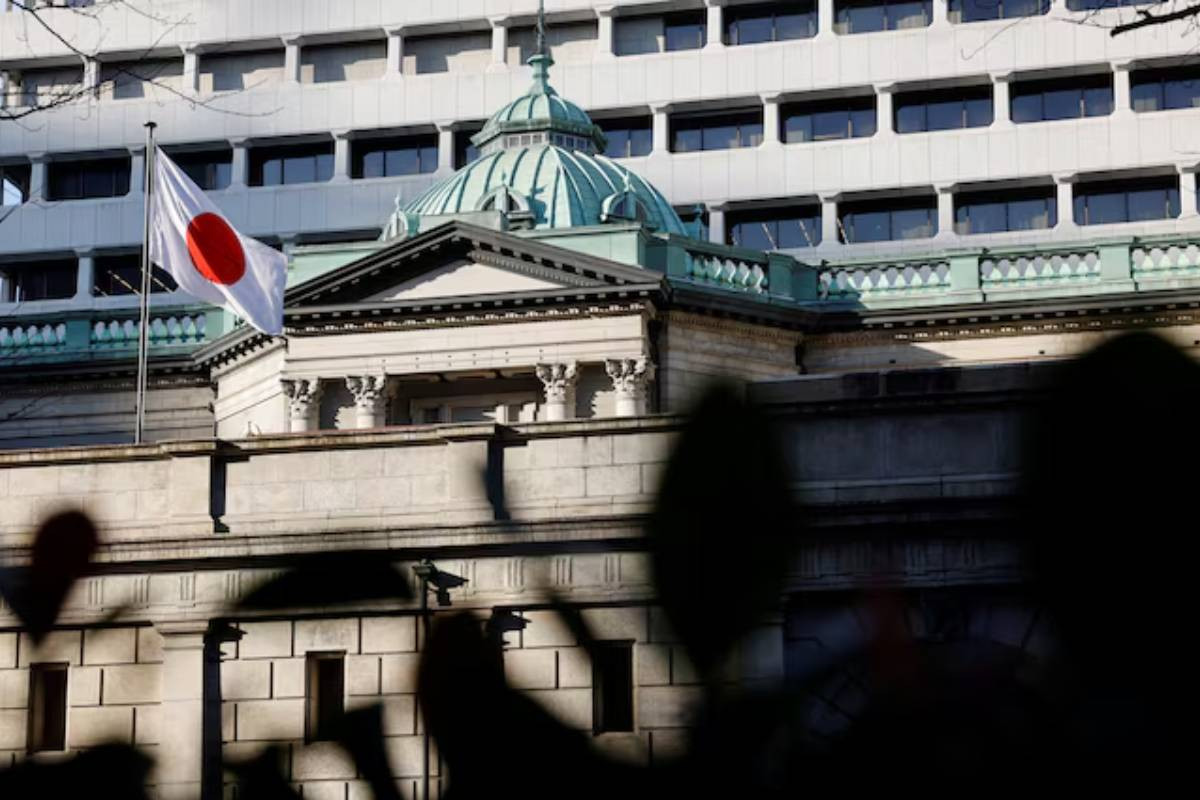
The Bank of Japan (BOJ) on Friday raised interest rates to their highest level in three decades and signalled further increases ahead, marking another decisive step away from decades of ultra-loose monetary policy, reports Reuters.
In a widely anticipated move, the central bank lifted its short-term policy rate to 0.75% from 0.5%—the first increase since January—by a unanimous vote. The hike takes borrowing costs to levels last seen in 1995, when Japan was struggling with the fallout from the collapse of its asset bubble.
The BOJ also removed earlier language warning that economic growth and inflation could stagnate due to higher U.S. tariffs, reflecting greater confidence that Japan is on course to sustainably achieve its 2% inflation target, supported by steady wage gains.
“Judging from recent data and surveys, there is a high chance that the mechanism in which wages and inflation rise moderately in tandem will be sustained,” the central bank said in its policy statement.
With real interest rates still at “significantly low” levels, the BOJ said it would continue raising rates if its economic and price forecasts materialise.
The central bank offered a more upbeat assessment of the economy, saying growth is likely to continue at a “moderate pace,” compared with its October outlook that warned of possible stagnation. It also revised its view on underlying inflation, saying it is expected to gradually rise rather than remain flat.
Governor Kazuo Ueda, however, avoided giving clear guidance on the timing or pace of future rate hikes, saying policy decisions would depend on economic, price and financial developments at each meeting.
Financial markets reacted swiftly, with the yen weakening, the Nikkei stock index rising, and the benchmark 10-year government bond yield climbing to a 26-year high.
While the BOJ maintained its forecast that underlying inflation would converge around its 2% target in the latter half of its three-year projection period through fiscal 2027, two board members dissented, arguing inflation had already reached—or would soon reach—the target.
Core consumer inflation stood at 3.0% in November, remaining well above the BOJ’s goal, while rising wages, strong business confidence and easing uncertainty over the U.S. economy have strengthened the case for further policy tightening.
Bd-pratidin English/ Jisan