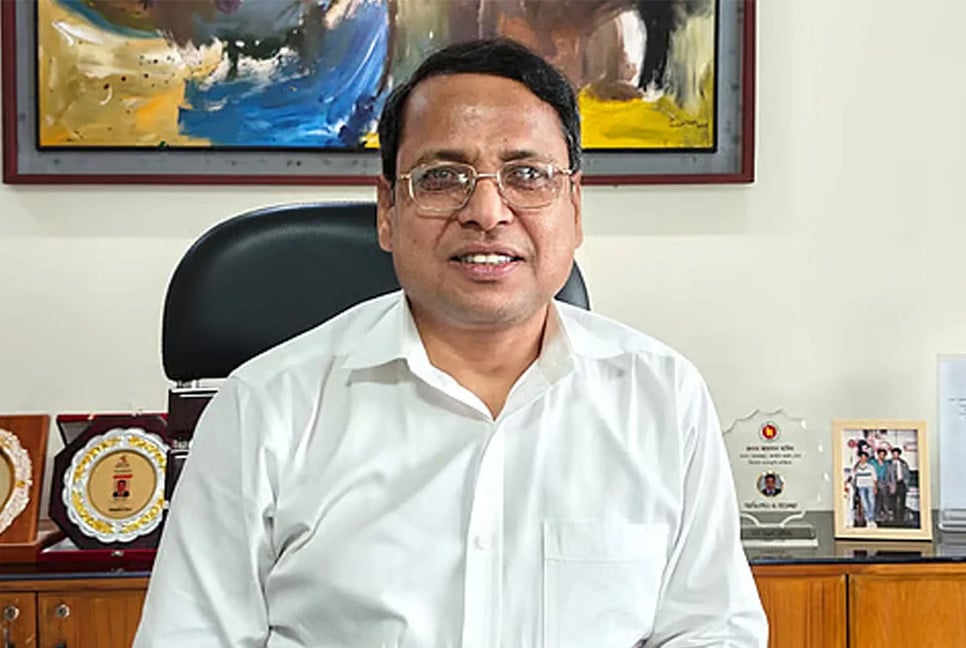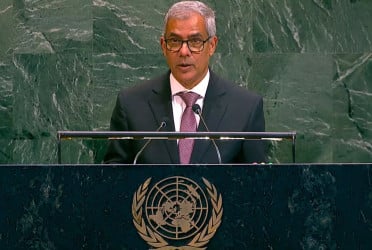
Bangladesh’s economy is “struggling but could be far worse,” said Dr. Zahid Hussain, former Lead Economist at the World Bank’s Dhaka office. Speaking at a seminar on the Bangladesh State of the Economy 2025 and Sustainable Development Goals: Bangladesh Progress Report 2025, Dr. Hussain noted that the country’s future now depends on maintaining reform momentum and ensuring a smooth electoral process.
“The economy presents a mix of positive and negative indicators, with the negative ones still outweighing the positive,” Dr. Hussain remarked. “The economy is struggling, and so are livelihoods, but it could have been much worse.” He pointed to several areas where the country has made progress, including record-high remittances, a reduction in illicit financial outflows, slightly improved revenue mobilization, stable electricity supply, and a stronger-than-expected response to recent natural disasters. "These are the indicators in my 'positive basket,'" he said.
However, Dr. Hussain also noted significant ongoing challenges. Inflation remains "very high," economic growth has slowed, real wages have decreased, and employment has stalled. Exports have weakened in recent months, and investment remains depressed. He also cited a recent World Bank report showing an increase in the number of people either living in poverty or at risk of falling into poverty.
Dr. Hussain identified three key factors that have helped prevent the economic situation from worsening. First, he emphasized Bangladesh’s “deep social resilience,” which became particularly evident during the August 2024 upheaval when state institutions were largely absent. “There was no government, no police on the streets, no secretaries, no vice-chancellors, no central bank governor—and yet society did not collapse,” he remarked. “Thomas Hobbes would turn in his grave seeing this,” he added, referring to the philosopher’s view of the importance of strong state control.
Second, Dr. Hussain praised the interim government’s political management, which he said has helped reduce the intensity of partisan hostility. He described this shift as a “cultural change,” where political actors increasingly criticize policies rather than targeting individuals by name. Dr. Hussain highlighted the impact of sustained dialogue and more inclusive political engagement over the past nine months, which he believes has contributed to a more civil political environment. He even described the paradox that while all political parties criticize the interim government for bias, this actually serves as a sign of neutrality.
The third and most critical factor, according to Dr. Hussain, is macroeconomic management and the ongoing reform drive. He pointed out that Bangladesh has long engaged in “self-destructive” economic behaviors that had become institutionalized. Over the past 18 months, there have been attempts to correct this course, but he stressed that real progress has been limited. “Willingness alone is not enough. There is no guarantee of success simply because the intention exists,” Dr. Hussain said. Despite numerous commissions, reports, and consultations signaling a desire for reform, he noted that the number of ordinances and Cabinet decisions translating these plans into action remains “very small.” As a result, the country has yet to see major visible results on the ground.
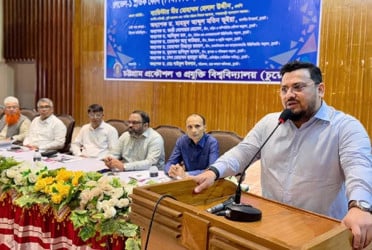
The seminar, attended by senior economists, policymakers, and development practitioners, provided a comprehensive analysis of Bangladesh’s economic outlook and its progress toward the Sustainable Development Goals. While Dr. Hussain acknowledged the challenges, he underscored the importance of continuing the reform efforts, ensuring political stability, and improving macroeconomic management to navigate the country’s economic difficulties.
Source: UNB
Bd-pratidin English/ Jisan