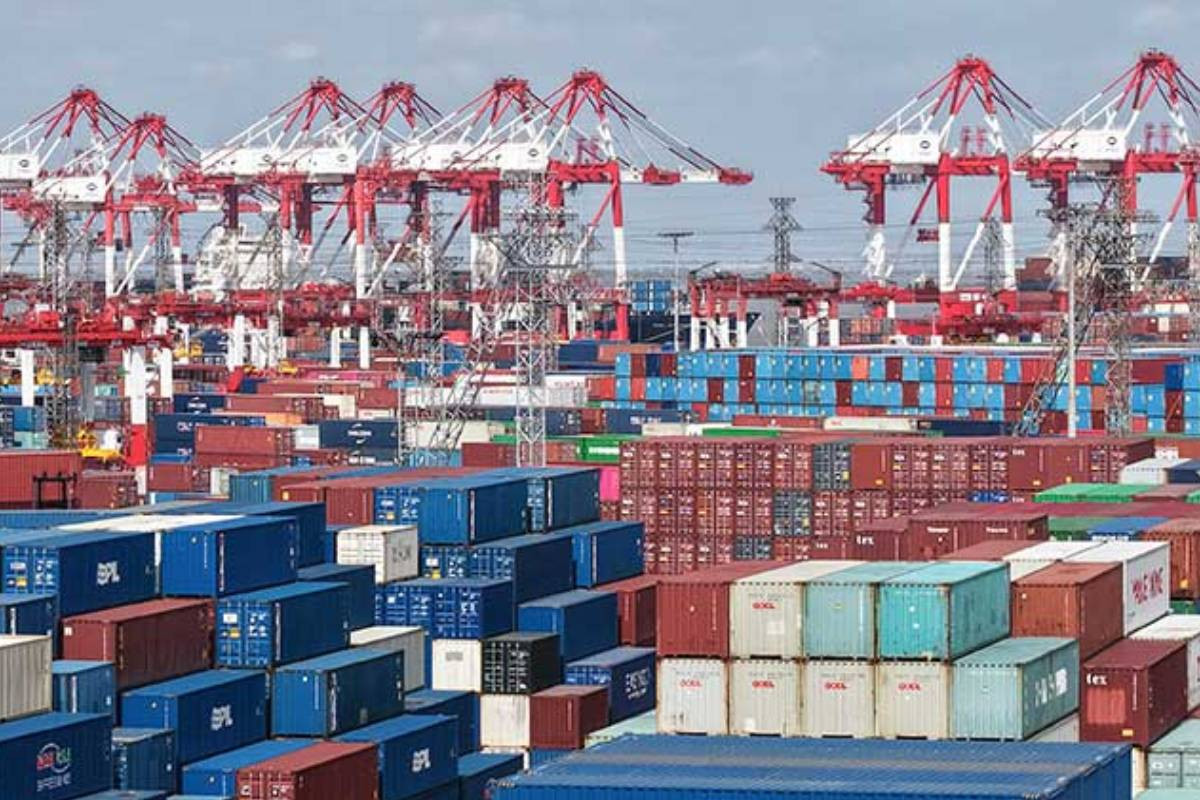
China’s annual trade surplus exceeded $1 trillion for the first time last month, as a sharp decline in exports to the United States was offset by rising shipments to other major markets, official data showed Monday, reports AFP.
Exports climbed 5.9% year-on-year in November, reversing a slight decline in October and surpassing Bloomberg’s forecast of 4% growth, according to the General Administration of Customs. U.S.-bound exports, however, fell 28.6% to $33.8 billion. “Weakness in exports to the United States was more than offset by shipments to other markets,” said Zichun Huang of Capital Economics.
China’s exports have been a vital economic lifeline, helping mitigate pressures from a prolonged debt crisis in the property sector and sluggish domestic consumption. The surge in shipments last month pushed the cumulative trade surplus for the first 11 months of the year to $1.08 trillion, already exceeding last year’s total. Analysts expect the surplus to continue widening next year.
“Exports are likely to remain resilient, thanks to trade rerouting and rising price competitiveness as deflation pushes down China’s real effective exchange rate,” Huang added.
The large surplus has long drawn criticism from major Western trading partners. French President Emmanuel Macron, concluding a state visit to China last week, warned in Les Echos that Europe may impose tariffs if Beijing fails to reduce its trade imbalance with the European Union.
Imports, however, rose only 1.9% year-on-year in November, below Bloomberg’s forecast of 3%, highlighting weak domestic consumption. “The rebound of export growth in November helps to mitigate weak domestic demand,” said Zhiwei Zhang, chief economist at Pinpoint Asset Management. “Economic momentum slowed in Q4 partly due to continued weakness in the property sector,” he added.
In October, Presidents Xi Jinping and Donald Trump reached a temporary truce on the U.S.-China trade war, scaling back tariffs and export controls. The agreement, due to expire late next year, leaves time for officials to negotiate a permanent deal, though experts warn a breakthrough will be challenging.
“There’s no guarantee this uneasy truce will last that long,” said Lynn Song, ING chief economist for Greater China. “It seems prudent to expect a softer external demand backdrop for next year.”
China’s leaders, targeting 5% overall growth for the year, are expected to hold a key economic planning meeting this week to address ongoing domestic and international challenges.
Bd-pratidin English/ Jisan