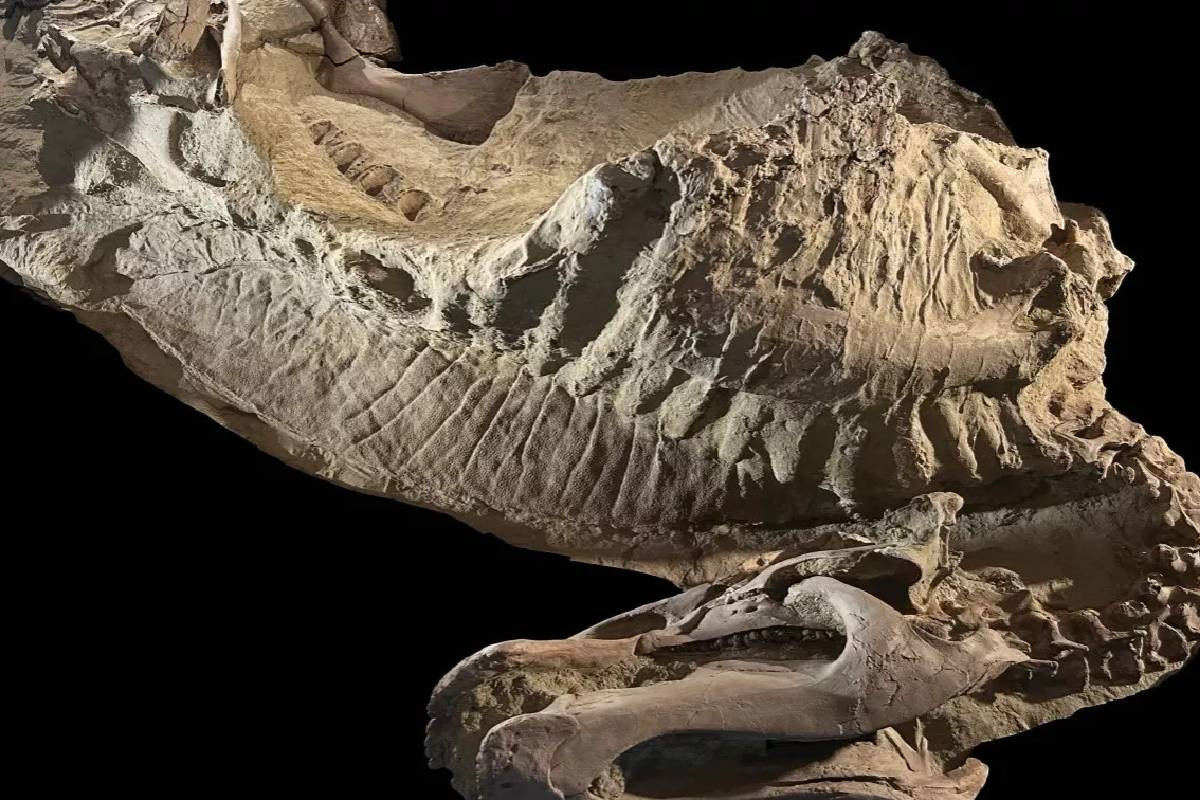
Researchers have uncovered an exceptionally rare pair of dinosaur “mummies” in eastern Wyoming, preserved in an unexpected way that offers fresh insights into prehistoric life, reports AP.
Unlike human mummies, dinosaur mummies form when skin and soft tissues fossilize over millions of years, providing an extraordinary window into their appearance and anatomy.
The newly studied fossils, found in the so-called “mummy zone,” include a juvenile duck-billed dinosaur estimated to have been only a few years old at death.
“This is the first juvenile of a dinosaur that really is mummified,” said Paul Sereno, a University of Chicago paleontologist involved in the discovery.
Remarkably, these fossils lacked fossilized skin. Instead, skin and scale patterns left impressions on a thin clay layer that hardened over time, aided by microbes — a process previously thought limited to aquatic environments.
Using these clay imprints, researchers reconstructed the dinosaurs’ appearance, including tail spikes and hoof-like feet, producing the most detailed depiction yet of this species. The study was published Thursday in Science.
Experts say understanding this type of preservation could guide future fossil hunts, encouraging paleontologists to search for subtle traces of skin or tissue often overlooked.
“Every single time we find one, there’s such a treasure trove of information about these animals,” said Stephanie Drumheller, a vertebrate paleontologist at the University of Tennessee, Knoxville, who was not involved in the study.
Each discovery of a mummified dinosaur adds invaluable insight into how these creatures lived, grew, and interacted with their environments millions of years ago.
Bd-Pratidin English/ Jisan