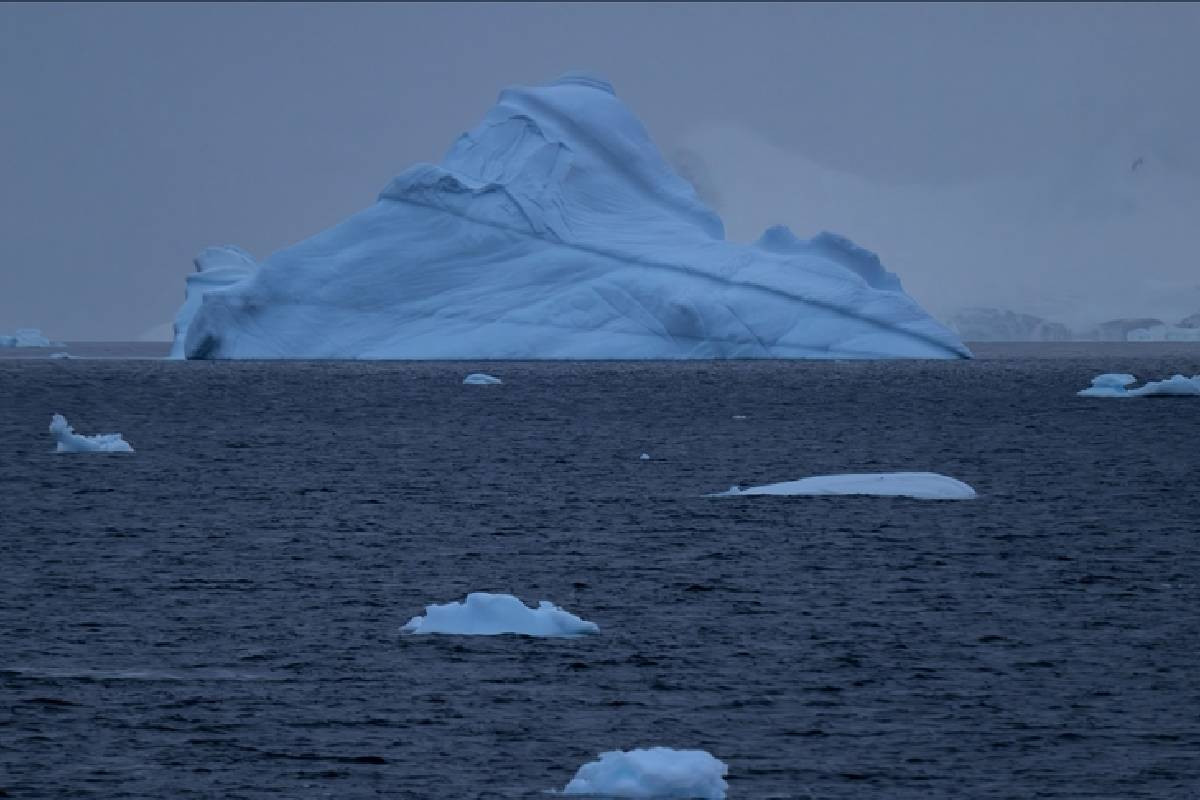
Artificial intelligence is revolutionizing how scientists explore the Antarctic seafloor—home to one of Earth’s richest and most fragile marine ecosystems.
A new AI tool developed by the British Antarctic Survey (BAS) can identify marine species in high-resolution seafloor images in just seconds, compared to the several hours manual analysis once required. This leap allows researchers aboard Antarctic research vessels to assess habitats in real time and prioritize areas for protection.
“Before this tool, analyzing a single image could take up to eight hours,” said Cameron Trotter, a machine learning scientist at BAS. “Now, with AI supporting human experts, we can process each image in seconds.”
The AI was trained on images from Germany’s RV Polarstern in the Weddell Sea, an area rich with rare and often unknown species. “The training data was full of bizarrely shaped animals, many of which had never been documented,” Trotter added.
By learning from just 100 expertly labeled images, the system can now identify common seafloor organisms like starfish, corals, sponges, and fish with high accuracy.
“This is a game-changer,” said BAS paleobiologist Rowan Whittle. “It allows us to unlock massive volumes of ecological data critical to protecting Antarctic ecosystems.”
Researchers are now processing more than 30,000 images from the Antarctic Peninsula and Weddell Sea. Their findings could lead to the discovery of new species and inform conservation strategies in a region under increasing threat from climate change.
With over 94% of Southern Ocean species living on the seafloor—many unique to the region—the technology marks a major advance in understanding and preserving Earth’s polar biodiversity.
Source: Anadolu Agency
Bd-Pratidin English/ Jisan