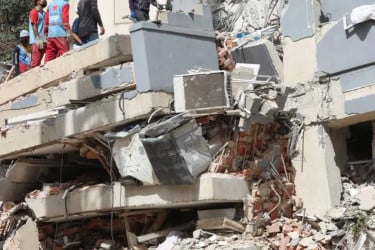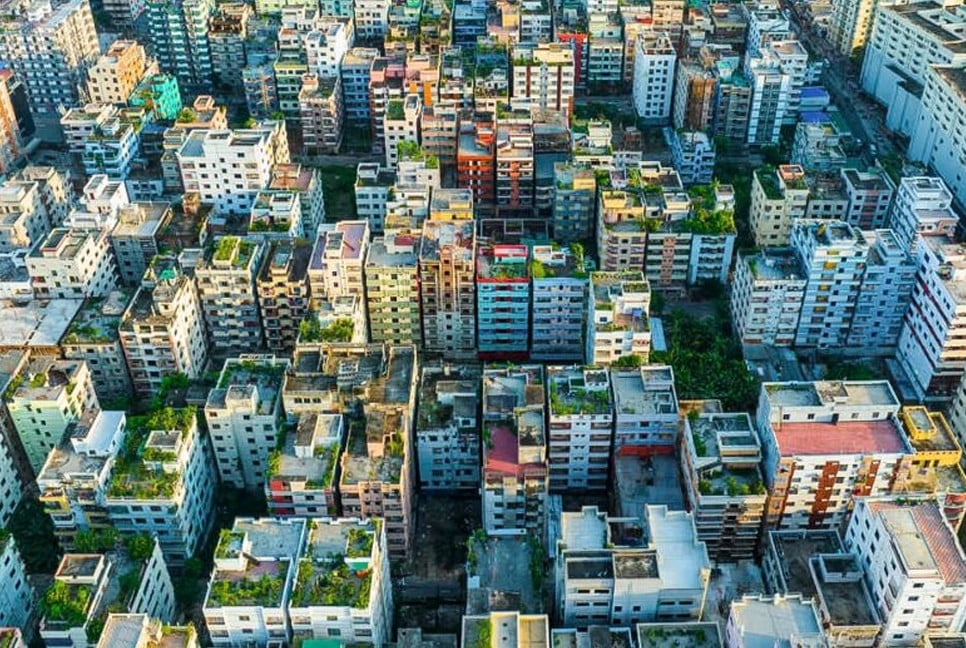
Bangladesh’s housing sector is facing a severe downturn, with real estate companies under significant strain due to a sharp fall in apartment sales alongside a steep rise in construction costs.
At the same time, nearly 269 categories of construction materials including steel rods, cement, sand, bricks, and stones are also facing a severe market slowdown. Traders say falling sales are eroding their capital.
Industry insiders say prolonged high inflation, elevated bank lending rates, dollar market instability, and uncontrolled increases in construction material prices have created stagnation in the housing sector. Many developers are unable to launch new projects, while ongoing projects are progressing slowly.
Experts believe urgent policy support is needed for businesses in this sector to overcome the downturn. They also stress the need for low-interest home loans for buyers.
According to data from REHAB (Real Estate and Housing Association of Bangladesh), monthly sales across the industry have dropped from around 1,000 units to just 250-300 units. Instead of the expected annual price growth of 5-8%, the market has become stagnant. Some projects have even seen growth decline by 5-10%.
The luxury apartment market has been hit hardest. Sales of high-end apartments in areas such as Bashundhara, Gulshan, Banani, and Dhanmondi have fallen by 60-70%.
Stakeholders warn that the real estate sector is one of the pillars of Bangladesh’s economy. If the sector remains in crisis, the wider economy could face serious consequences. The industry contributes around 18% to the country’s GDP but is now struggling due to multiple challenges. Prices of rods, cement, bricks, sand, and stone have increased by nearly 30%.
Visits to several construction material markets in the capital revealed that sales have fallen by nearly half over the last two years.
Md. Ziad, manager of Jannat Enterprise at Banglamotor Tiles Market, told Bangladesh Pratidin that business conditions have been extremely poor for the past two and a half years.
“Previously, we sold tiles worth Tk 300,000 to Tk 400,000 daily. Now daily sales are only around Tk 50,000 to Tk 60,000. Some days we do not get any customers at all,” he said. “We are struggling to pay bank loan installments, warehouse rent, and labor costs.”
Construction costs for apartments and buildings have risen by nearly 30%, reducing buyers’ purchasing power. In addition, reductions in Floor Area Ratio (FAR) limits mean developers who previously could build 8-9-story buildings are now restricted to 5-6 floors. As a result, landowners are losing interest in handing over land to developers.
REHAB Senior Vice President Abdur Razzak said the entire sector is under pressure.
“Sales have fallen to only 20-25% of previous levels. New project launches have also declined. As a result, not only developers but also thousands of businesses linked to construction materials are in crisis,” he said.
“Bank lending rates have increased, construction costs have gone up, but the number of buyers has declined. To survive, the housing and construction materials sectors need special policy support.”
Industry insiders note that more than 169 backward linkage industries are connected to the housing sector. These include steel, cement, ceramics, glass, paint, bricks, electrical equipment, aluminum, wood, and sanitary products. The slowdown in real estate is directly affecting these industries as well.
Mohammad Amirul Haque, Managing Director of Premier Cement and President of the Bangladesh Cement Manufacturers Association (BCMA), said the cement industry is also facing a severe downturn.
“Due to weak demand, factories are operating at only 55-60% of their production capacity. The construction materials sector is now fighting for survival,” he said.
“To keep businesses running, easy-term loans and policy support are essential. If large industrial groups suffer major losses, future industrial development will also be affected.”
He added that more than 20 million people are directly and indirectly connected to the construction industry.
“Running businesses with loans carrying 14-15% interest rates is extremely difficult. However, I remain hopeful because of the positive initiatives taken by the finance ministry, commerce ministry, and the central bank governor,” he said.
Real estate entrepreneurs also pointed to complications in opening letters of credit (LCs) and high dollar exchange rates, which have made importing raw materials increasingly expensive.
They argue that support should not only target real estate developers but also construction material businesses. In particular, low-interest loans, tax exemptions, and easier financing could help the sector recover.
Md. Almas Shimul, Additional Managing Director of GPH Ispat, said the stagnation in the housing market has heavily impacted the steel industry.
“Rod production has dropped to one-third of previous levels. If this situation continues, it will become impossible to keep the industry operational. Due to weak demand, we have been forced to cut production by two-thirds,” he said.
Professor Mustafizur Rahman, Distinguished Fellow at the Centre for Policy Dialogue (CPD), said the housing sector is one of the key drivers of Bangladesh’s economy.
“When the sector remains active, employment rises, industrial production grows, and government revenue increases. Therefore, effective policy support is urgently needed to protect the industry,” he said.
Industry stakeholders also stressed the importance of stronger market monitoring to keep construction material prices at reasonable levels, along with policy incentives for production and imports. Otherwise, they warned, the crisis in the housing sector could deepen further.
According to Bangladesh Bank data, the maximum home loan interest rate was 9% in January 2022. It rose to 17% in January 2024 and stood at 14% as of April 2026.
Industry experts cited the example of the United States, where the housing sector recovered through policy support and low-interest loans. During the economic downturn in 2003, interest rates were reduced to 1%, which significantly boosted home sales.
Syed Mahbubur Rahman, Managing Director of Mutual Trust Bank, said high interest rates on home and construction loans are discouraging customers from taking bank financing.
“In many countries, specialized institutions provide long-term housing finance. But in Bangladesh, such institutions are very limited,” he said.
“Only three specialized public and private financial institutions currently provide housing loans. Although banks also offer loans, the interest rates remain high. If the government takes initiative, there is scope to provide low-interest financing for the housing sector.”
He further added that government policies also bear some responsibility for the rise in prices.
Bd-pratidin English/ ANI