Bangladesh’s fast-growing lithium battery market is facing serious environmental and safety risks as old, end-of-life and scrap batteries are reportedly entering the country alongside new ones.
The use of easy bikes, electric vehicles and solar power systems has increased rapidly in recent years, boosting demand for lithium batteries. But industry insiders say discarded lithium batteries, mostly from China, are being imported and resold in the local market after being repackaged.
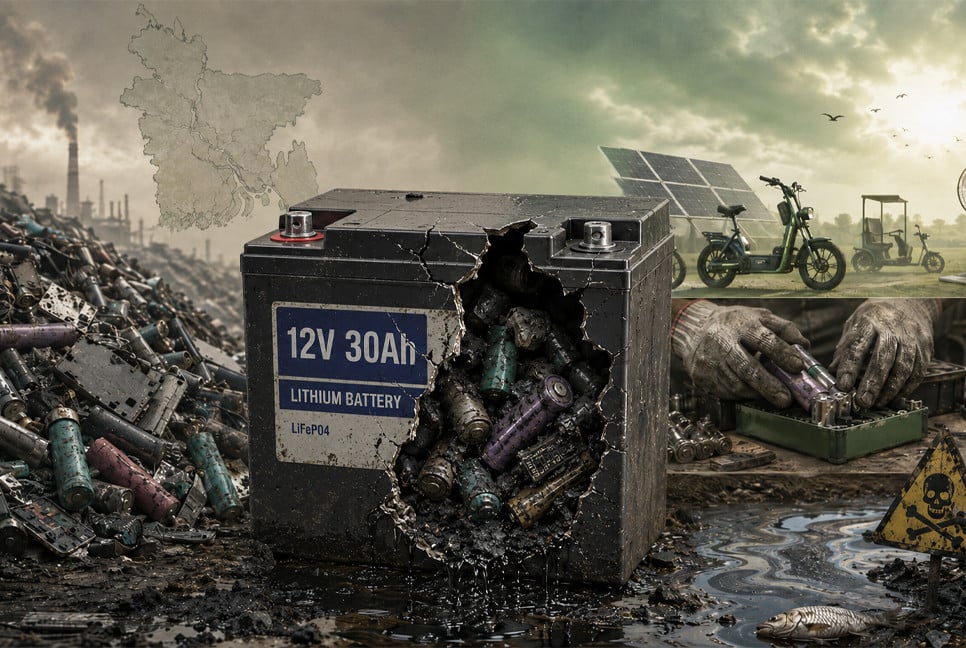
According to traders, usable cells are separated from old batteries and fitted with new casings and battery management systems before being sold as new products. Buyers are often attracted by the lower prices, but such batteries usually lose capacity within one or two years and eventually become hazardous e-waste.
Experts said that a good quality lithium battery can play a major role in the country's energy security. A good quality lithium battery can be used for 5 to 80 years. Lithium iron phosphate (LiFePO4) batteries can be used continuously for 5 to 30 years and lithium titanate (LTO) batteries can be used continuously for 25 to 80 years. That is, a battery can be used for multiple generations.
But in Bangladesh, the import of old and discarded batteries along with new batteries is increasing, putting the entire sector at risk.
A market survey has shown that currently, a 12-volt 30 ampere-hour battery with a life cycle of 12,000 is available for Tk 20,000. By adding just a solar panel, two 18-watt DC fans and four 5-watt DC LED bulbs can be operated together for 6 hours a day (at night) for 32 years.
Again, lithium ion batteries of the same capacity are available for 7 thousand taka, which lose their energy and become waste within two years.
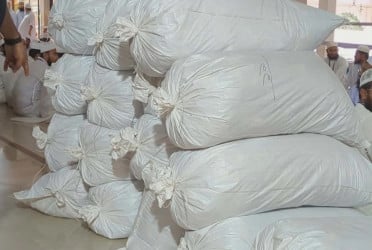
Several traders in the capital's Kaptan Bazar said that good cells are separated from batteries that come as scrap, and new casings and BMS are installed and sold in the market as new batteries. Buyers are attracted because of the low price. Batteries made from old cells also come to the country. In most cases, buyers do not understand this.
Both individual and institutional traders are involved in importing old batteries. These batteries are entering the country under the names of 'scrap batteries', 'energy storage modules', 'solar storage equipment', 'electronic parts', etc. using different HS codes.
Attempts to contact several officials of the Department of Environment in this regard did not yield a response.
According to experts, lithium batteries increase the risk of fire and explosion. Lithium, cobalt, nickel, manganese and toxic electrolytes in batteries mix with soil and water and pollute the environment. It poses a threat to public health and biodiversity. There is also a risk of toxic gas being released if batteries are dismantled unregulated.
Bangladesh has not yet developed a modern lithium battery recycling industry. As a result, batteries are being dismantled in unsafe environments in scrap hubs in Old Dhaka, Jatrabari, Kadamtali, Narayanganj and Chattogram. They are being sent to unlicensed factories to separate valuable metals.
According to experts, lithium batteries are not just waste; they are also called ‘urban mines’. Because valuable materials like lithium, cobalt, nickel, copper, aluminum and graphite can be recovered from these batteries through recycling. However, it is not possible to safely recycle such batteries without modern recycling plants.
Battery recycling in China is highly regulated. There are more than a hundred government-approved operators working there. Battery manufacturers and car companies are responsible for collecting and recycling old batteries. Large EV batteries are digitally tracked. All information is monitored, including who made it, where it is being used, when it was discarded, and who is recycling it.
According to relevant research, in China, the collection and transportation of old batteries alone costs about $1 per kilogram. Then, large investments are needed to recycle them using advanced technology.
Experts believe that scrap batteries are being sold at low prices in developing countries to avoid this cost.
Associate Professor at Daffodil International University Dr. Mahfuza Parveen said, "To ensure the future of renewable energy and electric vehicles, it is important to develop safe battery management now. The import of old and scrap lithium batteries must be strictly controlled. A modern recycling industry must be built. Otherwise, Bangladesh will become a destination for hazardous e-waste under the guise of "green energy."
Bd-pratidin English/TR