Since the birth of Bangladesh, two groups — pro-India and anti-India — have been operating, both openly and quietly. Many among them regard anti-India sentiment as an ideology. Some have been seen fiercely denouncing India like meteors at public rallies during the day, only to spend their evenings in drawing-room gatherings with India sympathisers.
For certain political parties, anti-India rhetoric is their core politics, while for others, affection for India defines their politics. During the Awami League’s 16 years in power, an overflowing sense of pro-India sentiment was evident. Following the student-public uprising of 2024, however, the opposite occurred. The entire country was swept by a tidal wave of anti-India emotion.
The question, however, is how many among the anti-India and pro-India camps are genuinely pro-Bangladesh. In particular, how many of those who have fuelled anti-India sentiment can place a hand on their heart and truly claim to love Bangladesh? Being anti-India does not automatically make one patriotic. Meanwhile, the Bharatiya Janata Party (BJP) has already consolidated its position. West Bengal, long a target, is now under its control. Upon assuming office, the new Chief Minister Suvendu Adhikari immediately began installing barbed-wire fencing along the Bangladesh border. He may undertake many more such measures. Naturally, he will pursue his party’s politics and his own political agenda. Therefore, we too must strengthen our own political identity and patriotism. Mere anti-India sloganeering is not patriotism.
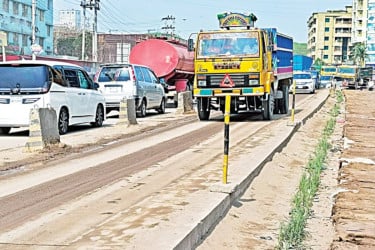
The Bangladesh-India land border stretches 4,096 kilometres. By last December, India had fenced 3,239 kilometres of this frontier. Bangladesh shares 2,216 kilometres of border with West Bengal alone. According to the Kolkata branch of India’s Press Information Bureau, as of last August, 569 kilometres remained unfenced. The new West Bengal government has now stepped up efforts to complete the unfinished fencing. At his very first cabinet meeting, Suvendu decided to proceed with the fencing project. During the cabinet meeting held on 11 May, he announced that land would be handed over to the Border Security Force (BSF) within 45 days. Reports indicate that, in compliance with a Calcutta High Court order, fencing will be constructed along vulnerable stretches of the border in nine districts of the state. The court had instructed the Mamata government to hand over the land for the fencing by 31 March, and Suvendu is now implementing that directive.
India has the right to construct fencing to ensure security along the border, but in doing so Suvendu must adhere to international law. It should be remembered that, as in the past, any unauthorised construction within 150 yards of the zero line would create fresh distrust between the two countries. Under the border guidelines formulated in 1975 on the basis of the 1972 Bangladesh-India Friendship Treaty, neither country is permitted to build defensive structures or fences within 150 yards of the zero line. Even developmental activities within this zone require the consent of both parties. Yet, in the past, barbed-wire fencing has repeatedly led to tensions between the two countries. For example, unauthorised fencing by the BSF along the zero line at Binodpur in Chapainawabganj, Dhamoirhat in Naogaon, Dahagram in Lalmonirhat and Matila in Maheshpur triggered tense situations with the Border Guard Bangladesh (BGB).
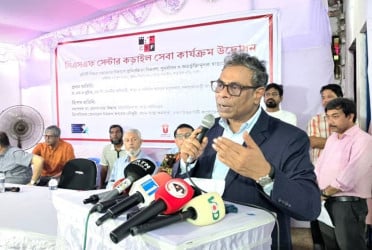
On the issue of fencing along the border, Home Minister Salahuddin Ahmed stated: “The matter of barbed-wire fencing will be discussed through diplomatic channels with the Indian central government. Our concern is security and ensuring that push-ins do not occur.” The Prime Minister’s foreign affairs adviser Humayun Kabir said: “There is no scope for frightening a country like Bangladesh with barbed wire anymore. The people of Bangladesh are not afraid of barbed wire, nor is the government. Where we need to speak, we will speak. During Sheikh Hasina’s government we witnessed incidents of people being shot dead at the border or bodies hanging from barbed wire. Inshallah, the border will never return to that pattern. And if anyone attempts to impose such a border regime again, this Bangladesh is not a subservient Bangladesh that will sit back and watch. We have plans for what needs to be done.”
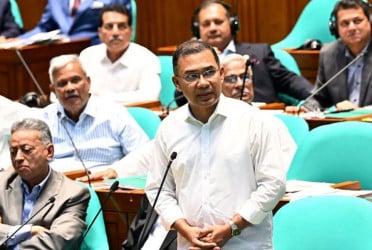
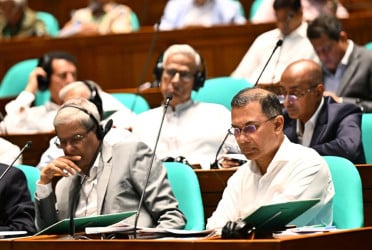
Nahid Islam, convener of the National Citizen Party (NCP) and opposition chief whip in parliament, said: “Killings are happening at the border again. New barbed-wire fencing is being erected again. If someone kills the people of my country and still talks about friendship, friendship with them is impossible. One cannot build friendship with barbed wire. One day, the people of that country themselves will uproot this fencing and build friendship with the people of Bangladesh. It is the responsibility of this government to protect Bangladesh’s borders. If the government fails, the people will take up that responsibility themselves. Protecting Bangladesh’s borders is our duty. It is also our responsibility to secure our fair share of river water.”
Most recently, on Tuesday, Indian Foreign Ministry spokesperson Randhir Jaiswal said regarding the fencing and border tensions: “India’s Lok Sabha Speaker attended the swearing-in ceremony of Bangladesh’s elected government. Bangladesh Foreign Minister Dr Khalilur Rahman recently visited India. We are interested in advancing the trajectory of relations. Illegal infiltration is a bilateral issue between India and Bangladesh. The Bangladesh government has already been asked to identify 2,850 illegal Bangladeshi nationals. Bangladesh has not yet commented. Following the formation of the new government in West Bengal, land is being handed over to the BSF for fencing construction. Border security is a priority for India.” He expressed hope that relations between the two countries would not deteriorate.
It should be noted that under India’s “Special Intensive Revision” (SIR) of voter lists, a large number of voters have been removed across various states. Around 52 million voters have reportedly been excluded across 12 states and union territories. In West Bengal alone, nearly 9.1 million names have been removed from the electoral rolls. Reports suggest that between 20.5 million and 28.9 million voters have been excluded in Uttar Pradesh, while in Bihar the figure ranges from 4.7 million to 6.5 million. The issue has sparked controversy across India. However, if these people are falsely labelled as infiltrators from Bangladesh and attempts are made to push them into Bangladesh, or if border killings increase, deterioration in bilateral relations will be inevitable.
One matter must be considered: India’s bordering states of West Bengal, Assam, Meghalaya, Tripura and Mizoram are in no way economically better off than Bangladesh. Therefore, the claim that Bangladeshis are living or seeking work in those states is hardly credible. Among SAARC countries, Bangladeshis go abroad for work primarily to the Maldives, where many Bangladeshis are employed. In contrast, many Indians work in Bangladesh in sectors such as IT, garments, buying houses and other technical fields. Most of them work illegally without work permits and pay no taxes to the Bangladeshi government, despite earning salaries in dollars. The Bangladeshi government should now identify such Indians working without authorisation and take appropriate measures. India appears to identify anyone who speaks Bengali or is Muslim as Bangladeshi. The attitude of the BJP government suggests that such people may gradually be pushed into Bangladesh. Under these circumstances, India must act wisely to maintain normal relations, while Bangladesh must also prepare accordingly.
If India creates unrest along the border and pushes people in simply because they are Muslim, communal tensions in both countries will intensify. India is our large neighbour, and Bangladesh’s independence is historically linked to India’s assistance. Yet India has repeatedly behaved not as a friendly neighbour but in a domineering manner. As a result, anti-India sentiment is increasing in Bangladesh. Particularly during the previous Awami League government, India failed to maintain friendly relations with the people of Bangladesh. Instead, India maintained ties primarily with the Sheikh family and the Awami League. During those 16 years, India’s relationship with ordinary Bangladeshis deteriorated significantly. The student-public uprising of 2024 was directed not only against the Awami League government but also against India. During the July uprising, anti-India sentiment became more widely discussed in Bangladesh than at any time in the past 55 years. India itself is responsible for this situation. Had the country sought to establish better relations with the people of Bangladesh, perhaps matters would not have reached this point. This is undoubtedly a failure on India’s part. India may now be holding the diplomats who served in Bangladesh responsible for the current situation. Perhaps for this reason, it is now placing greater emphasis on improving political relations.
Dinesh Trivedi has been appointed as India’s next High Commissioner to Bangladesh. Born in 1950, he is a veteran Indian politician and diplomat. He served as Railway Minister for the Trinamool Congress before later joining the BJP. He represented Barrackpore in both the Lok Sabha and the Rajya Sabha. Fluent in Bengali, he is also a trained pilot and received the “Outstanding Parliamentarian Award” for 2016–17. It remains to be seen how a political leader succeeds where professional diplomats have failed.
Neighbours cannot be changed. We must always remember that India is our large neighbour. Our government must therefore strengthen diplomatic relations with great skill. Unresolved issues affecting the mutual interests of both countries must be settled. It has long been argued that India failed to conclude the Teesta agreement because of opposition from the state government. Now it remains to be seen what the BJP government does. Every citizen of Bangladesh seeks a dignified resolution to issues such as the Teesta and Ganges agreements. However, merely demanding solutions is not enough — we must become genuinely pro-Bangladesh. If the numbers of India-lovers, Pakistan-lovers, America-lovers, China-lovers, Iran-lovers and Turkey-lovers continue to rise among us, naturally the number of Bangladesh-lovers will decline. The nation will lose the strength of unity. Therefore, to secure justice from a powerful neighbour, we must be wholeheartedly devoted to Bangladesh. We must remember that there is no love greater than love for one’s country.
In the context of the current debate over barbed-wire fencing, the poem Why This Passport? by poet Jahangir Firoz is especially relevant. He wrote: “I am the sibling of the world, and the world is mine — why this passport, passport; this game of barbed wire, barbed wire?”
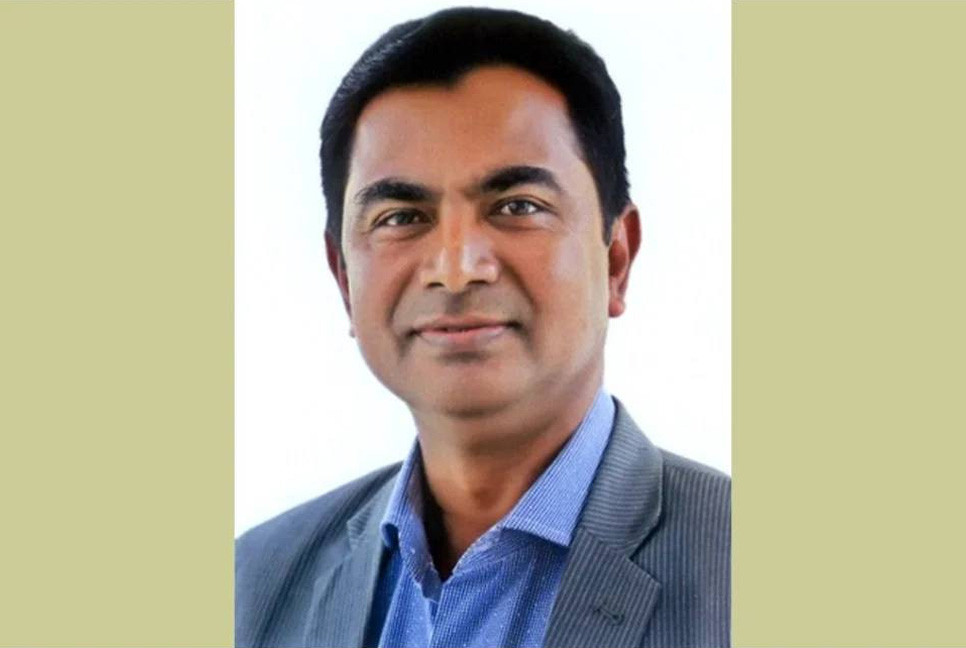
Writer: Executive Editor, Bangladesh Pratidin